The global aviation landscape is undergoing a massive transformation, driven by a dramatic rise in air passenger traffic, rapid infrastructure development, and an urgent need for heightened defense security. As airports scale up to accommodate millions of more travelers annually, the systems keeping our skies safe must evolve alongside them. At the core of this modern air traffic control (ATC) evolution is the Airport Surveillance Radar (ASR) system.
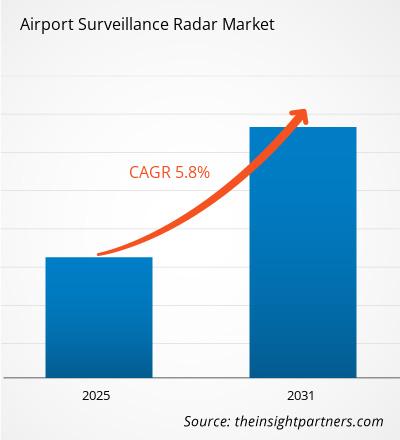
According to a comprehensive study by The Insight Partners, the global Airport Surveillance Radar Market size is expected to reach US$ 19.21 billion by 2031. This vital safety and infrastructure market is anticipated to register a compounding annual growth rate (CAGR) of 9.3% during the forecast period from 2025 to 2031, up from a base valuation of US$ 10.31 billion in 2024. This growth reflects a global push toward modernizing radar assets to meet stringent safety mandates and seamlessly coordinate dense modern air traffic.
Driving Forces Behind Market Expansion
The impressive trajectory of the Airport Surveillance Radar market is propelled by several critical factors:
1. Exponential Rise in Global Air Traffic
The continuous increase in commercial, private, and cargo air travel remains the primary catalyst for the radar market. As skies grow more congested, air traffic management (ATM) systems must minimize flight delays, prevent runway incursions, and maintain strict separation protocols. Modern digital radar systems allow controllers to monitor aircraft positions with pinpoint accuracy, even during severe weather conditions.
2. Global Airport Expansion and Modernization
To combat airspace congestion, governments worldwide are funding massive airport expansion projects and constructing entirely new greenfield airports. Concurrently, regional airports are being upgraded to handle larger aircraft and higher flight frequencies. These new terminals and runways require sophisticated, multi-layered surveillance networks—such as Primary Surveillance Radars (PSR) for non-cooperative targets and Secondary Surveillance Radars (SSR) for identifying transponder-equipped aircraft—to secure their surrounding airspace.
3. Heightened Focus on National Security and Military Airbase Upgrades
Geopolitical tensions have pushed nations to aggressively upgrade their military airbases. Modern defense strategies rely on high-fidelity surveillance systems capable of detecting advanced stealth assets, unmanned aerial vehicles (UAVs), and low-flying threats. Consequently, the defense sector is emerging as a massive customer for dual-use and ruggedized tactical surveillance radars.
Get a PDF Sample– https://www.theinsightpartners.com/sample/TIPRE00004612
Market Segmentation and Technical Evolution
To understand the market’s inner workings, it is helpful to look at how these systems are categorized and deployed:
By Product Type: The market is divided into Primary Surveillance Radar (PSR) and Secondary Surveillance Radar (SSR). PSR systems operate by transmitting electromagnetic energy and listening for reflected echoes, detecting any physical object in the sky regardless of whether it wants to be found. SSR systems rely on active communication, interrogating the aircraft’s onboard transponder to retrieve specific data like altitude, identity, and flight status. Together, they create a comprehensive operating picture for air traffic controllers.
By Application: Systems are deployed across Civil Airports—where the focus is on optimizing high-throughput commercial passenger flows—and Military Airports, which prioritize tactical adaptability, electronic counter-countermeasures (ECCM), and threat detection.
Modern technical innovations, such as solid-state transmitter designs and active electronically scanned arrays (AESA), are progressively replacing older, vacuum-tube-based systems. These newer architectures offer significantly higher reliability, lower power consumption, and drastically reduced maintenance down-time.
Key Industry Players
The global airport surveillance radar market is highly competitive, characterized by established defense giants and highly specialized aerospace technology firms. Key market participants driving innovation and deploying next-generation radar installations across the globe include:
ADACEL TECHNOLOGIES LIMITED
BAE Systems plc
Collins Aerospace (United Technologies Corp.)
Harris Corporation
Indra Sistemas, S. A.
Intelcan Technosystems Inc.
Leonardo S. p. A
Lockheed Martin Corporation
Northrop Grumman Corporation
Raytheon Company
Thales Group
These key players are actively engaging in strategic partnerships, securing lucrative government defense contracts, and investing heavily in research and development to launch integrated, multi-sensor surveillance platforms.
Get Full Copy of This Report- https://www.theinsightpartners.com/buy/TIPRE00004612
Future Outlook
The future of the airport surveillance radar market lies in the deep integration of multi-sensor fusion. Moving forward, standalone radar installations will increasingly give way to unified networks that blend traditional ASR data with next-generation technologies like Automatic Dependent Surveillance-Broadcast (ADS-B), Multilateration (MLAT), and AI-driven predictive tracking algorithms.
Related Reports-
Airborne Persistent Surveillance System Market
Ground Surveillance Radar Market
Military Communication Navigation and Surveillance (CNS) Market
About Us
The Insight Partners is a one-stop industry research provider of actionable intelligence. We help our clients in getting solutions to their research requirements through our syndicated and consulting research services. We specialize in industries such as Semiconductor and Electronics, Aerospace and Defense, Automotive and Transportation, Biotechnology, Healthcare IT, Manufacturing and Construction, Medical Devices, Technology, Media, and Telecommunications, as well as chemicals and Materials.
Contact Us
If you have any queries about this report or if you would like further information, don’t hesitate to get in touch with us:
Contact Person: Ankit Mathur
E-mail: ankit.mathur@theinsightpartners.com
