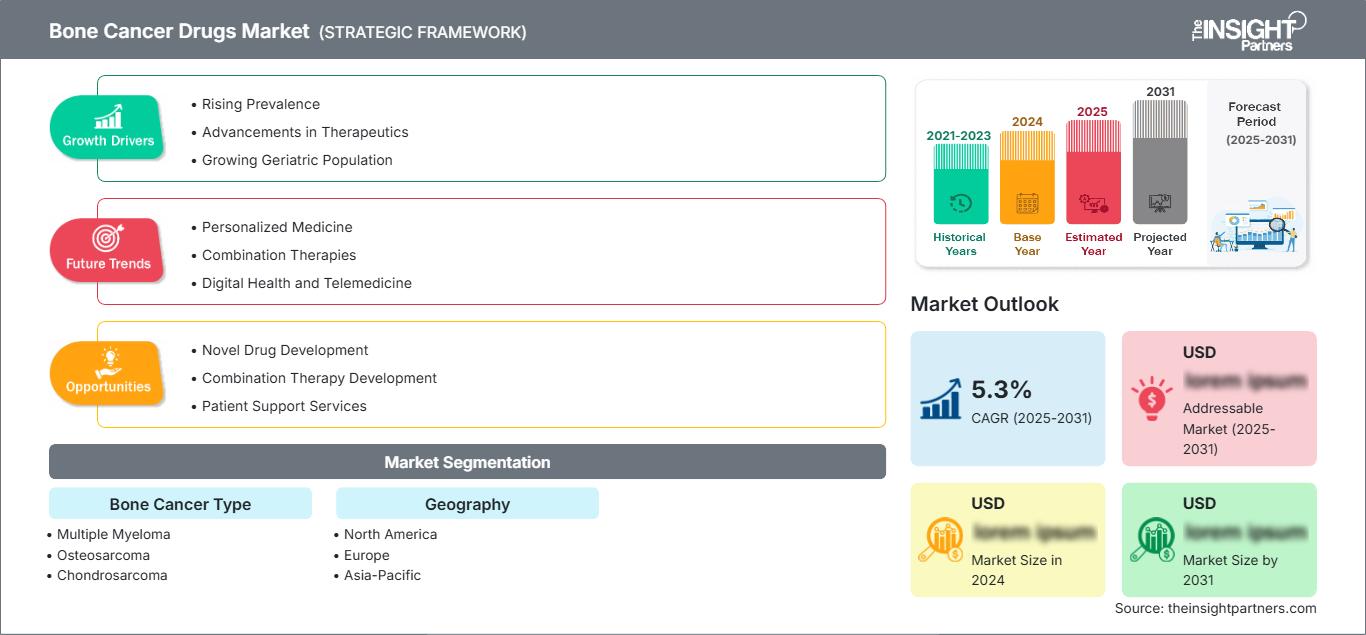
The treatment landscape for bone malignancies is undergoing a significant transformation as precision medicine, targeted biologics, and immunotherapy continue to improve clinical outcomes. Growing awareness, advances in molecular diagnostics, and increasing investment in oncology research are supporting the development of innovative therapies for both primary and metastatic bone cancers.
Global Bone Cancer Drugs Market Trends indicate sustained growth as pharmaceutical companies expand their portfolios with targeted therapies, monoclonal antibodies, RANKL inhibitors, and next generation immunotherapies. According to The Insight Partners, The industry was valued at US$ 1.49 billion in 2025 and is projected to reach US$ 2.28 billion by 2034, registering a CAGR of 4.79% during the forecast period from 2026 to 2034. The increasing incidence of osteosarcoma, Ewing’s sarcoma, and bone metastases associated with breast, prostate, and lung cancers continues to strengthen demand for advanced treatment solutions across global healthcare systems.
Get Sample PDF @ https://www.theinsightpartners.com/sample/TIPRE00004417
Rising Disease Burden and Innovation Fuel Industry Expansion
The increasing prevalence of primary bone cancers and metastatic bone disease remains one of the strongest growth drivers. Approximately 70% of patients with advanced prostate and breast cancer develop secondary bone complications, increasing the need for therapies that reduce skeletal related events, pain, and fractures.
Healthcare providers are increasingly adopting molecular profiling to identify genetic mutations that can be treated using precision oncology approaches. This transition from conventional chemotherapy toward targeted therapies allows clinicians to improve survival rates while reducing systemic toxicity. In parallel, regulatory agencies continue to support innovation through Orphan Drug and Fast Track designations, accelerating approvals for treatments targeting rare bone malignancies.
Growing investments in oncology infrastructure, particularly across emerging economies, are further expanding patient access to specialized treatment centers and advanced biologic therapies.
Targeted Therapies Continue to Transform Treatment Strategies
The therapeutic landscape is rapidly evolving beyond traditional chemotherapy. Targeted therapies have become one of the fastest growing treatment categories due to their ability to selectively attack cancer cells while minimizing damage to healthy tissue.
Modern treatment approaches include RANKL inhibitors, second generation bisphosphonates, immune checkpoint inhibitors, monoclonal antibodies, and antimetabolites. Combination therapy strategies integrating immunotherapy with chemotherapy are also attracting considerable research attention, especially for aggressive cancers such as osteosarcoma.
Development of pediatric formulations with improved safety profiles represents another promising opportunity, particularly as bone cancers remain among the more common malignancies affecting children and adolescents.
Segment Analysis Highlights Diverse Growth Opportunities
The industry demonstrates strong diversity across disease types, administration routes, and distribution channels.
By bone cancer type, Multiple Myeloma accounts for significant therapeutic demand due to extensive drug utilization. Osteosarcoma continues to represent one of the largest primary bone cancer segments, while Ewing’s Sarcoma offers substantial opportunities for innovative biologic therapies. Chondrosarcoma remains an important research focus because of its resistance to conventional radiation treatments.
From a route of administration perspective, injectable therapies continue to dominate due to widespread use of biologics and chemotherapy. However, oral therapies are gaining popularity as pharmaceutical companies introduce convenient kinase inhibitors and maintenance treatments that improve patient compliance.
Distribution channels are also evolving. Direct tenders remain the preferred procurement model for government hospitals, while online pharmacy platforms continue to expand as patients increasingly seek convenient access to maintenance medications and supportive care products.
Regional Landscape and Competitive Environment
North America continues to lead global revenue generation due to its advanced clinical research ecosystem, strong reimbursement infrastructure, and broad adoption of targeted oncology therapies. The United States remains the largest contributor, supported by continuous pharmaceutical innovation and increasing healthcare investments.
Europe maintains steady growth through extensive cancer screening programs and strong regulatory support for innovative medicines. Meanwhile, Asia Pacific is emerging as one of the fastest growing regions, driven by expanding manufacturing capabilities, improving healthcare infrastructure, and increasing partnerships between multinational pharmaceutical companies and regional distributors across China and India.
Competition is intensifying as manufacturers invest in precision medicine, biomarker guided therapies, and combination treatment regimens. Companies are also focusing on expanding biologics production while strengthening cold chain logistics to support global commercialization.
Key Players
- Amgen
- Bayer AG
- Bristol-Myers Squibb Company
- Merck & Co. Inc.
- Pfizer Inc.
- Fresenius Kabi USA, LLC
- Mylan Institutional LLC
- Hospira, Inc.
- Sun Pharmaceutical Industries, Inc.
- Teva Pharmaceutical Industries Ltd.
Interested in Purchasing this Report? Click here @ https://www.theinsightpartners.com/buy/TIPRE00004417
Future Outlook
The outlook for the global Bone Cancer Drugs industry remains positive through 2034 as precision oncology, targeted biologics, and immunotherapy continue to redefine treatment standards. Growing investments in biomarker research, pediatric oncology, and combination therapies are expected to create new commercial opportunities. Expansion of specialized oncology centers, increasing availability of oral therapies, and stronger healthcare infrastructure across emerging economies will further support long term growth.
Related Report:
1) Biologics Market Growth, Trends, and Analysis by 2031
2) Antibody Production Market Share, Growth & Forecast by 2034
3) Contract Research Organization Market Analysis and Forecast by Size
About Us –
The Insight Partners provides comprehensive syndicated and tailored market research services in the healthcare, technology, and industrial domains. Renowned for delivering strategic intelligence and practical insights, the firm empowers businesses to remain competitive in ever-evolving global markets.
Contact Us:
Ankit Mathur | The Insight Partners
E-mail: ankit.mathur@theinsightpartners.com
Phone: +1-646-491-9876
Also Available in : Korean German Japanese French Chinese Italian Spanish
