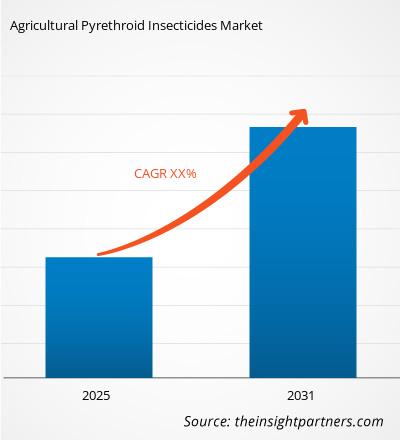
Feeding a growing global population means fighting a constant battle against crop-destroying pests. The Agricultural Pyrethroid Insecticides Market was valued at US$ 2.09 Billion in 2025 and is projected to reach US$ 3.28 Billion by 2034, growing at a CAGR of 5.83% during 2026–2034. Farmers worldwide depend on these compounds to protect yields, and steady agricultural expansion across emerging economies keeps demand climbing year after year.
What Are Agricultural Pyrethroid Insecticides?
Agricultural pyrethroid insecticides are chemical compounds used to control a broad range of crop-damaging insects. They work by disrupting the nervous systems of pests while remaining effective at relatively low application rates. Farmers rely on them across staple crops, cash crops, and horticultural production alike.
Request a Sample Copy of the Report: https://www.theinsightpartners.com/sample/TIPRE00005758
Market Drivers
Crop-based applications drive the bulk of demand in this market. Cereals, oilseeds, fruits, and vegetables all face constant pest pressure, and yield losses from unmanaged infestations can be severe. As global food demand rises alongside population growth, farmers are under increasing pressure to protect every acre of production, keeping insecticide consumption on a steady upward trend.
Resistance management is reshaping how these products are used. Pests have developed resistance to some older active ingredients over decades of heavy use, pushing agronomists to rotate chemistries and combine active ingredients more strategically. This has actually supported market growth, since farmers now often use multiple products across a season rather than relying on a single compound.
Expanding arable land and intensifying agriculture across parts of Asia, Africa, and Latin America is another strong growth driver. As these regions shift from subsistence farming toward commercial-scale production, adoption of chemical crop protection tools, including pyrethroid-class products, tends to rise sharply. This shift represents one of the largest incremental demand pools for the industry going forward.
Why does non-crop-based demand keep growing steadily too? Public health and urban pest control. Municipalities and pest control operators use these compounds for mosquito control and general insect management in urban and peri-urban settings. As urbanization expands and vector-borne disease control remains a public health priority in many regions, this smaller but resilient application continues contributing consistent volume.
Segmentation Overview
Segments Covered
By Active Ingredients: Chloropyriphos and Malathion hold significant shares given their long-established use across major crop types. Glyphosate and Diazinon serve widespread application in cereal and row crop production. Parathion, Dimethoate, and Methamidophos maintain steady demand in specific regional markets where they remain approved for use. Others includes newer formulations and regional specialty products.
By Application: Crop-based applications dominate the market, covering cereals, fruits, vegetables, and oilseeds. Non Crop-based applications, including public health and urban pest management, contribute a smaller but stable share of overall demand.
Key Market Players
- Adama Agricultural Solutions
- Arysta Lifescience India Limited
- Basf Corporation
- Bayer Cropscience Ag.
- Fmc Corporation
- Nufarm
- Sinoharvest Corporation
- Sumitomo Chemical Co. Ltd.
- Syngenta Ag.
- United Phosphorus Limited
These companies compete on product efficacy, regulatory approvals, and distribution reach across major agricultural regions. Several are investing in reformulated products designed to address resistance concerns and meet tightening residue standards. Partnerships with regional distributors remain essential for reaching smallholder farmers in emerging markets.
Sustainability and Innovation Trends
Regulatory scrutiny around chemical residues and environmental impact continues to intensify, particularly across Europe. Producers are responding by developing lower-dose formulations and improved application technologies that reduce total chemical usage while maintaining pest control effectiveness.
Integrated pest management adoption is also influencing product development. Rather than relying solely on chemical control, many producers now position their insecticides as part of a broader strategy combining biological controls, crop rotation, and targeted application timing. This approach helps address both resistance concerns and environmental compliance simultaneously.
Buy Premium Report: https://www.theinsightpartners.com/buy/TIPRE00005758
Regional Outlook
Asia Pacific leads the market, driven by extensive agricultural production across China, India, and Southeast Asia. Rising farm incomes and growing awareness of crop protection benefits continue to support strong adoption across the region.
North America follows, supported by large-scale commercial farming operations and well-established distribution networks. Regulatory standards here also shape which active ingredients remain in widespread use.
Europe holds a smaller but significant share, shaped heavily by strict pesticide regulations that continue to phase out certain older active ingredients in favor of newer, lower-residue alternatives.
South and Central America shows strong growth potential, driven by Brazil and Argentina’s large-scale soybean, corn, and sugarcane production, which requires consistent pest management investment.
Related Reports:
Plant Growth Regulators Market
Agricultural Biologicals Market
About The Insight Partners
The Insight Partners is among the leading market research and consulting firms in the world. We take pride in delivering exclusive reports along with sophisticated strategic and tactical insights into the industry. Reports are generated through a combination of primary and secondary research, solely aimed at giving our clientele a knowledge-based insight into the market and domain. This is done to assist clients in making wiser business decisions. A holistic perspective in every study undertaken forms an integral part of our research methodology and makes the report unique and reliable.
Contact Us:
If you have any queries about this report or if you would like further information, please contact us:
Phone: +1-646-491-9876
E-mail: sales@theinsightpartners.com
Also Available in: Korean | German | Japanese | French | Chinese | Italian | Spanish
