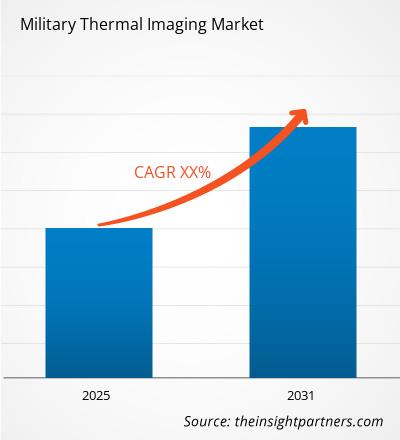
The landscape of modern warfare is shifting rapidly, marked by a transitions toward digitized battlefields, urban combat environments, and asymmetric threats. To maintain tactical superiority, armed forces worldwide are increasingly focusing on 24/7 operational readiness, demanding advanced technologies that can penetrate obscurants like smoke, dust, and absolute darkness. At the center of this defense paradigm shift is military thermal imaging technology. According to a comprehensive research report published by The Insight Partners, the global Military Thermal Imaging Market size is projected to reach US$ 17.08 billion by 2034 from US$ 10.7 billion in 2025. The market is anticipated to register a CAGR of 5.33% during the forecast period 2026-2034.
Market Drivers and Technological Dynamics
The prominent catalyst driving the adoption of military thermal imaging solutions is the global surge in defense budgets, fueled by escalating geopolitical tensions. According to recent data from global defense research bodies, nations across Europe, Asia-Pacific, and North America are prioritizing individual soldier modernization programs alongside comprehensive fleet upgrades.
Thermal imaging modules—specifically long-wave infrared (LWIR) and mid-wave infrared (MWIR) sensors—have transitioned from luxury defense implementations to standard military issue. In vehicle electronics, commonly referred to as vetronics, integrated thermal cameras enable armored vehicle crews to navigate safely, identify distant structural threats, and track enemy movements across vast ranges without exposing themselves to incoming fire.
Simultaneously, the infantry landscape is witnessing a structural overhaul. Dismounted soldiers are being equipped with lightweight, compact thermal weapon sights and handheld thermal monoculars. These advanced optics give ground forces the ability to see through thick battle smoke, vegetative cover, and varying weather anomalies, vastly enhancing survivability during nighttime operations or close-quarter urban combat.
Market Segmentation Highlights
The report segments the military thermal imaging marketplace across multiple domains to provide granular insights:
By (Imaging Module): Analyzed broadly across dedicated Cameras and high-precision Weapon Scopes. Cameras dominate overall market share due to vehicle, drone, and naval vessel integrations, while weapon scopes are exhibiting highly aggressive growth rates driven by infantry modernization plans.
By Technology: Categorized into Fixed systems (primarily used in border security checkpoint installations and naval mast mounts) and Portable options (handheld devices, soldier wearables, and UAV payloads).
By Application: Thoroughly mapped across critical operational use cases including Security and Surveillance, Monitoring and Inspection, Target Detection, and Situational Awareness. Target detection and situational awareness lead the segment as automated target recognition systems gain traction.
By Industry End-User: Broken down across the three main defense pillars—the Army, Navy, and Air Force. While the Army commands significant volume due to troop numbers and ground vehicle volume, Air Force demand is rising rapidly due to infrared search and track (IRST) systems for fighter jets and surveillance drones.
Get a PDF Sample- https://www.theinsightpartners.com/sample/TIPRE00007000
Competitive Landscape and Key Players
The defense electronics manufacturing sector remains highly consolidated, characterized by intense competition, long-term government contracts, and substantial investments in research and development. Key defense contractors are focused on shrinking sensor footprints, lowering power consumption (SWaP – Size, Weight, and Power dynamics), and lowering manufacturing costs to cater to mass-procurement programs.
Prominent organizations leading the global marketplace include:
BAE Systems
Elbit Systems Ltd.
FLIR Systems (Teledyne FLIR)
L3Harris Technologies Inc.
Leonardo S.p.A
Lockheed Martin Corporation
Opgal
Rheinmetall AG
Teledyne Technologies Inc.
Thales Group
Strategic collaborations are defining the corporate landscape. Key players are forming strong partnerships with unmanned aerial vehicle (UAV) manufacturers to embed low-weight thermal payloads into reconnaissance drones, allowing real-time thermal data streams to be broadcast directly back to centralized command stations.
Get Full Copy of This Report- https://www.theinsightpartners.com/buy/TIPRE00007000
Future Outlook
Looking ahead, the next paradigm shift in the military thermal imaging market will center on the deep integration of Artificial Intelligence (AI) and Machine Learning (ML) algorithms directly into thermal optics. Next-generation systems will evolve beyond simply rendering heat signatures for human evaluation; instead, edge-computing AI will automatically classify detected signatures, instantly differentiating between civilian vehicles, enemy combatants, and friendly forces. Furthermore, the development of uncooled thermal technology is expected to gain substantial momentum, offering near-cooled performance metrics at a fraction of the weight and cost. As autonomous systems, drone swarms, and robotic combat vehicles become foundational to state-level defense strategies, the integration of advanced, intelligent thermal imaging sensors will remain a non-negotiable component of global military superiority.
Related Reports-
About Us
The Insight Partners is a one-stop industry research provider of actionable intelligence. We help our clients in getting solutions to their research requirements through our syndicated and consulting research services. We specialize in industries such as Semiconductor and Electronics, Aerospace and Defense, Automotive and Transportation, Biotechnology, Healthcare IT, Manufacturing and Construction, Medical Devices, Technology, Media, and Telecommunications, as well as chemicals and Materials.
Contact Us
If you have any queries about this report or if you would like further information, don’t hesitate to get in touch with us:
Contact Person: Ankit Mathur
E-mail: ankit.mathur@theinsightpartners.com
