The changing landscape of global security has forced defense departments around the world to reconsider their ground combat strategies. At the heart of this shift is the Infantry Fighting Vehicle (IFV), a critical armored platform engineered to transport mechanized infantry into conflict zones while providing direct, heavy fire support. The global demand for these sophisticated combat platforms is experiencing substantial expansion.
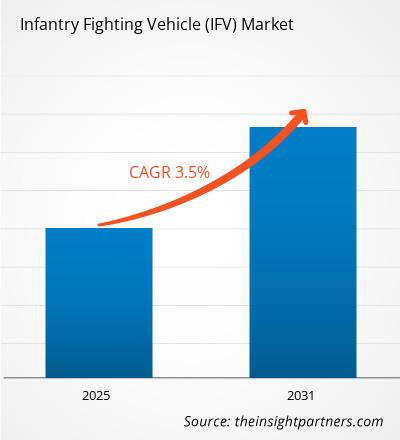
According to a comprehensive research study published by The Insight Partners, the Infantry Fighting Vehicle (IFV) Market size is expected to reach US$ 7.79 Billion by 2034 from US$ 4.71 Billion in 2025. The market is estimated to record a CAGR of 5.75% from 2026 to 2034. This upward trajectory underscores a systemic push by sovereign nations to replace legacy equipment with highly survival-oriented, digitally integrated, and heavily armed assets capable of operating in modern multi-domain battlefields.
Key Market Drivers and Dynamics
The steady growth of the IFV market is fueled by escalating geopolitical friction and the changing nature of modern warfare. Traditional warfare paradigms are rapidly merging with asymmetric threats, requiring infantry vehicles that can perform across diverse operational scenarios—ranging from high-intensity urban combat to peacekeeping missions and counter-terrorism initiatives.
A primary catalyst for this market expansion is the continuous increase in global defense budgets. Governments worldwide, particularly across North America, Europe, and the Asia-Pacific region, are allocating substantial capital to fortify their ground capabilities. Old Armored Personnel Carriers (APCs), which offer limited protection and minimal offensive capabilities, are being systematically phased out. In their place, modern militaries are prioritizing heavy IFVs that can withstand advanced ballistic threats, improvised explosive devices (IEDs), and anti-tank guided missiles (ATGMs).
Furthermore, the surge in high-value manufacturing contracts is driving industry growth. For instance, massive procurement initiatives, such as the multi-million dollar contract modifications by the US Army for additional Bradley Fighting Vehicles, highlight the ongoing reliance on proven armored chassis. At the same time, nations are investing heavily in new-generation platforms that blend speed, heavy protection, and immense firepower.
Get a PDF Sample– https://www.theinsightpartners.com/sample/TIPRE00010084
Technological Evolution and Opportunities
The integration of advanced technology is fundamentally changing the architectural profile of the modern IFV. One of the most notable trends is the adoption of advanced weapon systems. Modern platforms are no longer just troop transports; they are lethal combat systems equipped with automated or remote weapon stations (RWS), high-caliber autocannons, and sophisticated anti-tank missile systems. Remote operation allows the crew to engage hostile targets from inside the armored hull, drastically reducing exposure and enhancing overall survivability.
Another critical development is the shift toward digitization and network-centric warfare. Modern IFVs serve as mobile data hubs on the battlefield. Equipped with cutting-edge communication networks, satellite uplinks, electro-optical sensors, and battlefield management systems, these vehicles provide real-time situational awareness. They allow infantry squads to maintain seamless connectivity with unmanned aerial vehicles (UAVs), main battle tanks, and centralized command units, facilitating highly coordinated combined arms operations.
Geographically, North America currently holds a dominant position in the market due to robust defense spending and extensive modernization pipelines. However, the Asia-Pacific and European regions are expanding rapidly. Eastern Europe’s shifting security dynamics have prompted rapid land-force reinforcement, while regional tensions in the Asia-Pacific have led countries like Australia, South Korea, and India to scale up domestic manufacturing and international procurement of tracked and wheeled armored assets.
Key Market Players
The global market features a blend of established defense contractors and pioneering regional firms continuously competing for multi-year government procurement programs. The prominent players profiled in the market study include:
BAE Systems
FNSS Savunma Sistemleri A.Ş.
General Dynamics
Hanwha Defense
Iveco
Oto Melara Consortium
Krauss-Maffei Wegmann GmbH and Co. KG
Kurganmashzavod JSC
Paramount Group
Rheinmetall AG
Saab AB
These industry leaders focus heavily on strategic collaborations, mergers, acquisitions, and extensive research and development (R&D) to secure lucrative state defense contracts and pioneer modular vehicle designs.
Get Full Copy of This Report- https://www.theinsightpartners.com/buy/TIPRE00010084
Future Outlook
Looking ahead, the Infantry Fighting Vehicle market is poised for an era characterized by unmatched adaptability and technological sophistication. As armor technology evolves to combat increasingly lethal anti-tank threats, future developments will likely lean heavily toward the standard integration of Active Protection Systems (APS), which intercept incoming projectiles before impact.
Additionally, environmental sustainability and operational efficiency are beginning to influence the sector, creating an emerging demand for electric and hybrid propulsion infantry fighting vehicles. Hybrid drivetrains promise not only reduced fuel logistics but also a significantly lower thermal and acoustic signature, granting tactical stealth advantages during covert night operations. Fueled by autonomous wingman capabilities and AI-driven targeting systems, the IFV will remain an indispensable cornerstone of mechanized infantry infantry doctrine through 2034 and beyond.
Related Reports-
About Us
The Insight Partners is a one-stop industry research provider of actionable intelligence. We help our clients in getting solutions to their research requirements through our syndicated and consulting research services. We specialize in industries such as Semiconductor and Electronics, Aerospace and Defense, Automotive and Transportation, Biotechnology, Healthcare IT, Manufacturing and Construction, Medical Devices, Technology, Media, and Telecommunications, as well as chemicals and Materials.
Contact Us
If you have any queries about this report or if you would like further information, don’t hesitate to get in touch with us:
Contact Person: Ankit Mathur
E-mail: ankit.mathur@theinsightpartners.com
