The increasing burden of seasonal influenza and the need for rapid, accurate diagnosis are transforming infectious disease testing worldwide. Healthcare providers are investing in advanced molecular diagnostic technologies to improve clinical decision making and reduce disease transmission. Growing awareness of early disease detection, combined with technological innovation and expanding laboratory capabilities, continues to strengthen demand for highly sensitive influenza testing solutions across developed and emerging healthcare systems.
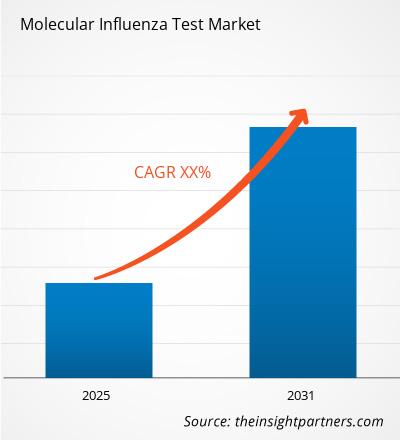
The Global Molecular Influenza Test Market Trends indicate strong growth potential as healthcare systems prioritize molecular diagnostics for accurate influenza detection. According to The Insight Partners, the market is projected to grow from US$ 1.61 billion in 2025 to US$ 3.57 billion by 2034, registering a CAGR of 9.27% during the forecast period from 2026 to 2034. The adoption of RT-PCR and other nucleic acid amplification technologies is increasing across hospitals, diagnostic laboratories, research institutes, and contract research organizations as demand for rapid and reliable influenza diagnosis continues to expand.
Get Sample PDF @ https://www.theinsightpartners.com/sample/TIPRE00022307
Rising Demand for Rapid and Accurate Molecular Diagnostics
The increasing prevalence of seasonal influenza outbreaks and the need for timely diagnosis are major factors driving industry expansion. Traditional diagnostic methods often require longer processing times or provide lower sensitivity compared to molecular technologies. As a result, healthcare providers are increasingly adopting RT-PCR, Loop Mediated Isothermal Amplification (LAMP), Nucleic Acid Sequence Based Amplification (NASBA), and Transcription Mediated Amplification (TMA) platforms.
Rapid molecular testing enables physicians to differentiate between Type A, Type B, and Type C influenza viruses with high accuracy. Early identification supports faster treatment decisions, improves infection control measures, and reduces unnecessary antibiotic prescriptions. Governments and healthcare organizations are also strengthening influenza surveillance programs, creating additional demand for advanced molecular testing platforms.
Technology Innovations Reshaping the Industry
Continuous technological innovation remains one of the most influential trends shaping the sector. Manufacturers are developing compact molecular testing systems capable of delivering laboratory quality results within significantly shorter turnaround times. Automation, improved assay sensitivity, and simplified workflows are helping laboratories increase testing capacity while minimizing human error.
Artificial intelligence is also emerging as a valuable tool for improving diagnostic interpretation and laboratory efficiency. AI assisted software supports result validation, workflow optimization, and surveillance analytics. Another notable trend is the growing availability of home based molecular influenza testing kits, providing greater convenience for patients while supporting decentralized healthcare delivery.
Affordable testing solutions designed for community healthcare settings are expected to expand access in developing economies where laboratory infrastructure continues to improve.
Market Segmentation Analysis
The industry is segmented across multiple categories to address diverse diagnostic requirements.
By Test Type:
- RT-PCR
- LAMP
- NASBA
- TMA
- Other molecular technologies
By Flu Type:
- Type A Flu
- Type B Flu
- Type C Flu
By End User:
- Hospitals
- Diagnostic Laboratories
- Research and Academic Institutes
- Contract Research Organizations (CROs)
Among these segments, RT-PCR continues to dominate due to its exceptional sensitivity, specificity, and widespread clinical acceptance. Hospitals and diagnostic laboratories account for a significant share of testing volumes as they manage increasing patient demand during influenza seasons.
Regional Growth and Competitive Landscape
North America continues to maintain a leading position due to advanced healthcare infrastructure, high adoption of molecular diagnostics, favorable reimbursement policies, and continuous investment in infectious disease surveillance. The United States remains a major contributor owing to strong diagnostic innovation and growing awareness of early influenza detection.
Europe also represents a mature landscape supported by established healthcare systems and expanding molecular testing capabilities. Meanwhile, Asia Pacific is expected to record the fastest growth throughout the forecast period as countries invest in healthcare modernization, laboratory expansion, and public health preparedness. South and Central America, along with the Middle East and Africa, are also witnessing gradual adoption supported by improving healthcare accessibility.
Key industry participants continue to strengthen their positions through product innovation, strategic collaborations, regulatory approvals, and portfolio expansion.
Key Players
- Hoffmann-La Roche
- Abbott Laboratories
- Quidel Corporation
- Becton, Dickinson, and Company
- Thermo Fisher Scientific
- DiaSorin
- bioMérieux SA
- Hologic
- Sekisui Diagnostics
- Danaher Corporation
- Siemens Healthineers
- Response Biomedical
- SA Scientific
Emerging Opportunities Driving Future Expansion
Several opportunities are expected to accelerate long term growth. Increasing investment in molecular surveillance programs, growing demand for multiplex respiratory testing, and the integration of digital health technologies are creating new revenue streams for manufacturers. Real time influenza monitoring supported by molecular diagnostics can strengthen public health responses during seasonal outbreaks and future pandemics.
Additionally, affordable molecular testing solutions and portable diagnostic platforms are expected to improve accessibility across resource limited settings. As healthcare systems continue emphasizing early diagnosis and precision medicine, demand for next generation molecular influenza testing technologies is anticipated to increase steadily.
Interested in Purchasing this Report? Click here @ https://www.theinsightpartners.com/buy/TIPRE00022307
Future Outlook
The outlook for the Global Molecular Influenza Test Market Trends remains highly positive through 2034. Continuous technological advancements, expanding adoption of molecular diagnostics, increasing awareness of infectious disease management, and stronger public health surveillance initiatives are expected to sustain industry growth.
Related Report:
1) Procedure Trays Market Overview and Growth by 2031
2) Embolization Coils Market Size, Share, and Forecast 2025-2031
3) Aortic Valve Replacement Devices Market Growth and Recent Trends by 2030
About Us –
The Insight Partners provides comprehensive syndicated and tailored market research services in the healthcare, technology, and industrial domains. Renowned for delivering strategic intelligence and practical insights, the firm empowers businesses to remain competitive in ever-evolving global markets.
Contact Us:
Ankit Mathur | The Insight Partners
E-mail: ankit.mathur@theinsightpartners.com
Phone: +1-646-491-9876
Also Available in : Korean German Japanese French Chinese Italian Spanish
