The global telecommunications landscape is undergoing a massive digital metamorphosis. As service providers transition from traditional connectivity vendors to integrated digital service enablers, the role of data has become paramount. The Telecom Analytics Market is projected to witness exponential growth by 2034, driven by the necessity to manage massive data volumes generated by 5G networks, Internet of Things (IoT) devices, and evolving consumer behaviors.
Telecom analytics industry refers to the sophisticated use of business intelligence (BI) tools and data mining techniques specifically tailored for the telecommunications sector. It allows operators to scrutinize vast datasets to improve operational efficiency, enhance customer experience, and reduce churn. In an era where connectivity is a commodity, analytics serves as the primary differentiator for companies seeking to maintain a competitive edge.
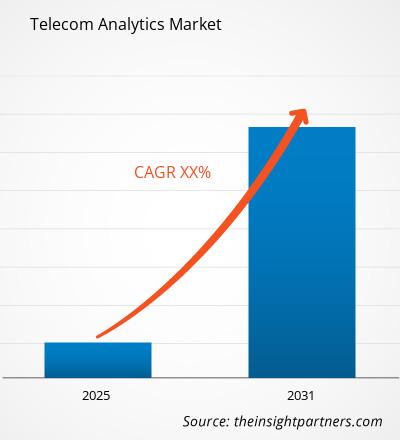
The global Telecom Analytics Market size is projected to reach US$ 17.06 billion by 2034 from US$ 7.12 billion in 2025. The market is anticipated to register a CAGR of 12.40% during the forecast period 2026–2034.
Market Dynamics and Key Growth Catalysts
The trajectory of the telecom analytics market through 2034 is defined by several pivotal factors. First and foremost is the global rollout of 5G infrastructure. Unlike its predecessors, 5G introduces ultra low latency and massive machine type communication. This creates a data deluge that is impossible to manage through manual processes. Analytics solutions provide the automation required to monitor network performance in real time and optimize bandwidth allocation.
Furthermore, the integration of Artificial Intelligence (AI) and Machine Learning (ML) into analytics platforms is a significant growth driver. Predictive analytics enables operators to anticipate network failures before they occur and identify customers who are likely to switch providers. By leveraging these insights, telecom companies can implement proactive retention strategies, thereby protecting their revenue streams.
Another critical factor is the rising demand for personalized customer experiences. Today’s consumers expect seamless service and tailored offerings. Telecom analytics allows companies to segment their audience based on usage patterns, location data, and service preferences. This level of granularity facilitates targeted marketing campaigns and improves the overall Customer Lifetime Value (CLV).
Download Sample PDF Report@ https://www.theinsightpartners.com/sample/TIPTE100000295
Segmentation and Operational Impact
The market is generally segmented by component, deployment mode, application, and geography. By 2034, cloud based deployment is expected to dominate the market. The scalability and cost efficiency of the cloud allow small and medium sized enterprises (SMEs) in the telecom space to access high level analytics without significant upfront capital expenditure.
From an application perspective, customer management and network management remain the primary focus areas. Network analytics helps in traffic management and capacity planning, ensuring that the infrastructure can handle peak loads without degradation of service. On the other hand, fraud management has emerged as a vital subsector. As digital transactions increase, telecom networks have become targets for sophisticated cyberattacks. Analytics tools are now being used to detect anomalous patterns and prevent revenue leakage caused by fraudulent activities.
Regional Market Highlights
While North America and Europe currently hold substantial market shares due to early technology adoption, the Asia Pacific region is expected to showcase the highest growth rate leading up to 2034. Rapid urbanization, increasing smartphone penetration in developing economies, and government initiatives for smart city projects are fueling the demand for advanced telecom infrastructure and analytical tools in this region.
Key Market Players
The competitive landscape of the telecom analytics market is characterized by continuous innovation and strategic partnerships. The top players driving the industry forward include:
- SAP SE: A leader in providing integrated business applications and analytics for enterprise resource planning.
- Oracle Corporation: Renowned for its robust cloud solutions and data management systems tailored for the communications industry.
- IBM Corporation: Focusing on AI driven insights through its Watson platform to enhance network automation.
- SAS Institute Inc.: A pioneer in advanced analytics and business intelligence software.
- Cisco Systems, Inc.: Providing deep visibility into network traffic and security analytics.
- Nokia Corporation: Offering specialized software suites for network performance and subscriber analytics.
- Teradata: Specializing in large scale data warehousing and analytical ecosystems.
Get Full Copy of This Report @ https://www.theinsightpartners.com/buy/TIPTE100000295
Future Outlook
The future of the telecom analytics market is intrinsically linked to the concept of the autonomous network. By 2034, we can expect a shift toward zero touch networks where analytics platforms not only identify issues but also self heal without human intervention. The convergence of edge computing and analytics will also play a vital role. By processing data closer to the source, operators can achieve near instantaneous insights, which is crucial for applications like autonomous driving and remote surgery.
About The Insight Partners
The Insight Partners provides comprehensive syndicated and tailored market research services in the healthcare, technology, and industrial domains. Renowned for delivering strategic intelligence and practical insights, the firm empowers businesses to remain competitive in ever-evolving global markets.
Contact Information
- Email: sales@theinsightpartners.com
- Website: theinsightpartners.com
- Phone: +1-646-491-9876
Also Available in: Korean|German|Japanese|French|Chinese|Italian|Spanish
