Car Leasing Market: Industry Analysis, Growth Trends, Key Drivers, and Future Outlook (2026–2034)
The global Car Leasing Market is experiencing significant growth as consumers and businesses increasingly shift from vehicle ownership toward flexible mobility solutions. Car leasing provides customers with access to vehicles without the financial burden of full ownership, including benefits such as lower upfront costs, maintenance support, and flexible contract options.
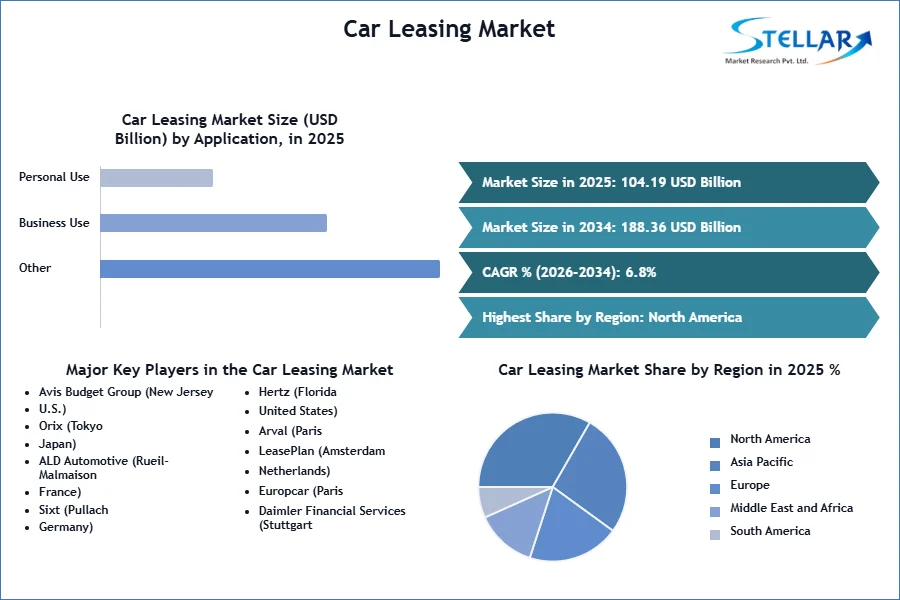
According to Stellar Market Research, the Car Leasing Market was valued at USD 104.19 billion in 2025 and is projected to reach USD 188.36 billion by 2034, growing at a CAGR of 6.8% during the forecast period 2026–2034. The market report analyzes industry trends, growth factors, segmentation, regional insights, and competitive developments.
Growing Preference for Mobility-as-a-Service Driving Market Growth
The increasing adoption of Mobility-as-a-Service (MaaS) is one of the major factors supporting the expansion of the car leasing industry. Consumers are gradually moving away from traditional vehicle ownership models and choosing flexible transportation solutions that provide convenience and cost efficiency.
Car leasing allows individuals and organizations to access new vehicles without dealing with depreciation risks, resale challenges, and long-term ownership expenses. This trend is especially strong among younger consumers and businesses seeking efficient fleet management solutions.
𝐃𝐨𝐰𝐧𝐥𝐨𝐚𝐝 𝐅𝐫𝐞𝐞 𝐏𝐃𝐅 𝐁𝐫𝐨𝐜𝐡𝐮𝐫𝐞: https://www.stellarmr.com/report/req_sample/Car-Leasing-Market/1145
Rising Corporate Fleet Leasing Demand
Businesses represent a major customer base for the car leasing market. Companies increasingly use leased vehicles for employee mobility, logistics operations, and corporate transportation needs.
Corporate leasing provides organizations with predictable monthly expenses, reduced fleet management responsibilities, and access to newer vehicle models. The growing focus on employee benefits and workplace mobility solutions is further increasing demand for corporate car leasing services.
Electric Vehicle Leasing Creating New Opportunities
The rapid adoption of electric vehicles (EVs) is creating new growth opportunities for car leasing providers. Many consumers hesitate to purchase EVs due to higher initial costs, battery replacement concerns, and evolving technology.
Leasing provides customers with an affordable way to experience electric mobility while reducing ownership risks. As governments promote EV adoption through incentives and emission reduction policies, EV leasing is expected to become an important growth segment in the automotive leasing industry.
Key Growth Drivers of the Car Leasing Market
Increasing Vehicle Ownership Costs
Rising expenses associated with vehicle ownership, including fuel prices, insurance, maintenance, and taxes, are encouraging consumers to consider leasing alternatives.
Car leasing offers fixed payment structures and bundled services, making transportation expenses more predictable for both individuals and businesses.
Digital Transformation in Leasing Services
Technology is transforming the car leasing experience through digital platforms, online booking systems, telematics, and automated fleet management solutions.
Digital leasing platforms allow customers to compare vehicles, customize contracts, manage payments, and access services more efficiently. These advancements are improving customer experience and increasing market adoption.
Expansion of Subscription-Based Mobility Models
Vehicle subscription services are gaining popularity as consumers demand greater flexibility. Subscription-based leasing models allow users to change vehicles based on their changing requirements without long-term commitments.
This trend is encouraging leasing companies to introduce innovative plans targeting individuals, businesses, and fleet operators.
Car Leasing Market Segmentation
The Car Leasing Market is segmented based on application type, lease type, and region.
By Application Type
Business Use
The business segment holds a significant share of the market due to increasing corporate fleet requirements. Companies prefer leasing solutions to manage transportation needs while reducing operational complexity.
Personal Use
Personal leasing is gaining popularity among consumers who prefer driving newer vehicles without long-term ownership commitments.
By Lease Type
Open-End Lease
Open-end leasing is commonly used for commercial fleets where businesses manage vehicle utilization and residual value risks.
Close-End Lease
Close-end leasing is widely preferred by individual consumers because it provides fixed payments and easier vehicle replacement options.
Regional Analysis
North America
North America is expected to maintain a leading position in the global car leasing market due to strong automotive infrastructure, high consumer acceptance of leasing models, and significant corporate fleet demand.
Europe
Europe represents a major market due to increasing demand for sustainable mobility solutions, strong fleet management services, and rapid EV adoption.
Countries across Europe are encouraging alternative ownership models as consumers seek flexible and environmentally friendly transportation options.
Asia Pacific
The Asia Pacific region is expected to witness strong growth due to rising urbanization, increasing disposable income, expanding automotive markets, and growing awareness of leasing services in countries such as China, India, and Japan.
Competitive Landscape
The Car Leasing Market is highly competitive, with companies focusing on digital innovation, fleet expansion, strategic partnerships, and electric vehicle leasing solutions.
Key players operating in the market include:
- Avis Budget Group
- Orix Corporation
- Ayvens
- Sixt
- Hertz
- Arval
- LeasePlan
Market participants are investing in technology-driven leasing platforms, fleet electrification, and customer-focused mobility solutions to strengthen their market presence.
𝐃𝐨𝐰𝐧𝐥𝐨𝐚𝐝 𝐅𝐫𝐞𝐞 𝐏𝐃𝐅 𝐁𝐫𝐨𝐜𝐡𝐮𝐫𝐞: https://www.stellarmr.com/report/req_sample/Car-Leasing-Market/1145
Emerging Trends in the Car Leasing Industry
Growth of Electric Vehicle Leasing
Increasing EV adoption is reshaping the leasing landscape as customers seek affordable access to advanced electric vehicles.
Connected Vehicle Technology
Telematics and connected vehicle systems are improving fleet monitoring, predictive maintenance, and operational efficiency.
Flexible Leasing Contracts
Short-term leases, vehicle subscriptions, and customized mobility plans are becoming increasingly popular among modern consumers.
Sustainable Mobility Solutions
Companies are adopting greener fleets to support carbon reduction goals and meet environmental regulations.
Future Outlook of the Car Leasing Market
The future of the global car leasing industry looks promising as mobility preferences continue to evolve. The transition from ownership-based transportation toward flexible usage models will remain a major growth factor.
Increasing EV adoption, digital platforms, corporate fleet expansion, and changing consumer behavior are expected to create new opportunities for leasing companies. By 2034, the market is expected to achieve substantial growth as businesses and individuals increasingly prioritize convenience, affordability, and sustainable mobility.
Conclusion
The Car Leasing Market is transforming the automotive industry by providing flexible and cost-effective alternatives to traditional vehicle ownership. Rising ownership costs, digital innovation, corporate fleet demand, and electric vehicle adoption are driving market expansion worldwide.
As mobility trends continue to evolve, car leasing will play a crucial role in shaping the future of transportation by offering consumers and businesses convenient access to modern vehicles without traditional ownership challenges.
