Key Highlights
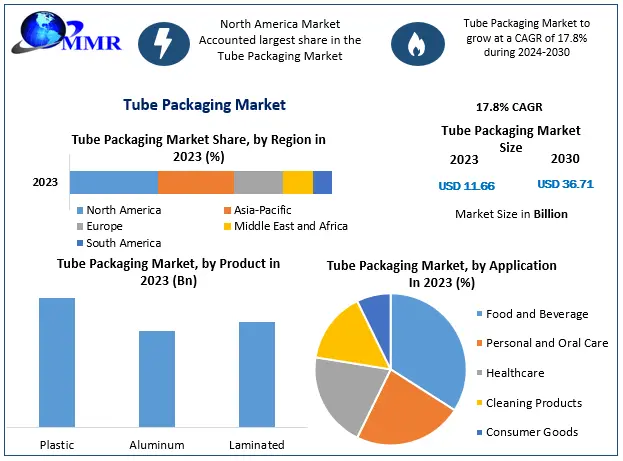
Market Valuation: Reached USD 11.66 Billion in 2023, with a trajectory to hit USD 36.71 Billion by 2030.
Growth Velocity: Projected CAGR of 17.8% (2024–2030).
Dominant Material: Plastic remains the market leader due to cost-efficiency and material versatility.
Primary Catalysts: Exponential rise in e-commerce, the demand for on-the-go portability, and advanced printing-enabled customization.
Strategic Friction: Sustainability initiatives are currently colliding with high production costs, creating a barrier to entry for eco-conscious product lines.
Why This Matters Now
The modern consumer prioritizes portability and precision—demands that rigid containers fail to meet. Tube packaging is the beneficiary of this behavioral shift. E-commerce logistics require durable, space-efficient, and lightweight solutions; tubes provide exactly that. For FMCG executives, this is not just about a container change; it is about reducing shipping costs and minimizing the carbon footprint of the last-mile delivery. The ability to integrate advanced, vibrant, and personalized branding directly onto these surfaces is effectively turning every tube into a high-conversion marketing vehicle.
Market Overview
The Tube Packaging Market is moving from commodity status to a value-added asset. The market serves critical sectors, including pharmaceuticals, cosmetics, and food and beverage. While material science is advancing, the real differentiator in this cycle is printing technology. Brands that utilize digital and flexographic printing to secure shelf-presence are capturing higher margins. The market is shifting from “containment” to “experience,” where the packaging is as important as the product inside.
Key Trends Driving Growth
Advanced Printing Integration: Digital printing is enabling rapid, high-quality customization, allowing brands to pivot marketing campaigns with minimal turnaround time. This removes the barrier of expensive tooling, facilitating lower-volume, higher-impact product launches.
The Sustainability Paradox: While consumer pressure for sustainable packaging—specifically biodegradable and plant-based alternatives—is reaching an inflection point, cost remains the primary hurdle. Manufacturers are under intense pressure to bridge the price gap between traditional plastic and eco-friendly materials.
E-Commerce Optimization: Compact form factors allow for efficient shipping, a critical requirement for companies looking to protect bottom-line margins during high-volume e-commerce transit.
Segment Insights
Dominant Segment (Product Type): The plastic segment currently dominates the market. Its inherent durability, moisture-barrier capabilities, and cost-effectiveness ensure it remains the benchmark for most consumer goods.
Growth Catalyst: Advancements in polymer technology are currently focused on maintaining the functional benefits of plastic while attempting to address environmental sustainability concerns.
Regional Growth Story
North America currently leads the global market, commanding a 48% share in 2023. This dominance is sustained by a mature infrastructure across the pharmaceutical and personal care sectors, where packaging-led product delivery is standard. The region serves as the primary testing ground for new, high-end tube packaging technologies before global rollout.
Competitive Landscape
The competitive environment is defined by a race to scale sustainable alternatives without eroding price competitiveness. Market leaders are prioritizing R&D in plant-based plastics and recycled polymers. The competitive signal is clear: the incumbents who solve the cost-to-sustainability equation first will dictate the pricing power of the next decade. Challengers failing to adopt flexible digital printing technologies are becoming effectively invisible on the digital shelf.
Strategic Implications
Supply Chain Rigidity: The reliance on specialized manufacturing for sustainable materials suggests that early movers who secure supply chain partnerships for bamboo or sugarcane-derived materials will mitigate the cost volatility seen during the pandemic.
Marketing Velocity: The use of digital printing turns the tube into a rapid-fire marketing channel. Brands should re-evaluate their design cycle times to match the speed at which their competitors can refresh packaging aesthetics.
Cost Mitigation: The premium associated with sustainability must be offset by the logistics savings inherent in the tube’s lightweight nature.
Future Outlook
The divide between winners and losers will be determined by a single factor: the ability to integrate sustainability without sacrificing unit economics. Manufacturers clinging to traditional high-cost, high-waste models will be sidelined by competitors who successfully leverage digital printing and eco-material efficiencies to win the price-conscious, eco-conscious consumer.
Analyst Perspective
“The tube packaging market is currently entering a high-velocity phase,” notes Siddhi Dole, Analyst at Maximize Market Research. “Brands that leverage the convergence of advanced digital printing and sustainable material innovation will see significantly higher engagement levels. The successful integration of these technologies is not just an operational decision—it is the primary driver for securing long-term shelf authority.”
About Maximize Market Research
Maximize Market Research Pvt. Ltd. (MMR) is a global market research and consulting company that provides reliable, data-focused, and practical business insights. The firm serves a wide range of industries, including healthcare, pharmaceuticals, technology, automotive, electronics, chemicals, personal care, and consumer goods. Through market forecasts, competitive analysis, strategic consulting, and industry impact assessments, MMR helps organizations understand changing market conditions, identify growth opportunities, and make informed business decisions for long-term success.
2nd Floor, Navale IT Park Phase 3
Pune Banglore Highway, Narhe
Pune, Maharashtra 411041, India
+91 9607365656
sales@maximizemarketresearch.com
