Key Highlights
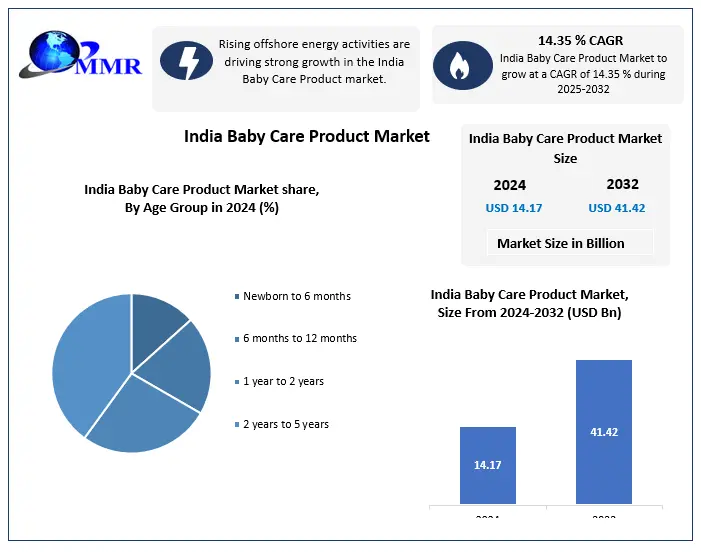
India Baby Care Product Market was valued at USD 14.17 Bn in 2024 and is expected to reach around USD 41.42 Bn by 2032, growing at a CAGR of 14.35% from 2024 to 2030, signaling a tripling of category value within a decade.
The report frames baby care as a multi-category play, spanning skin and hair care, toiletries, hygiene, and allied daily-use products, rather than a single product line.
Growth is powered by rising incomes, urbanization, and an expanding cohort of millennial and Gen Z parents who spend more per child and research every purchase.
The market structure includes product, price tier and channel segmentation, creating multiple routes to reach both metro and non‑metro families.
Why This Matters Now
If baby care hits about USD 41.42 Billion by 2032, this is no longer a soft “mom and baby” niche; it becomes one of the sharpest growth engines in India’s FMCG portfolio. Every point of that 14.35% CAGR is parents upgrading from generic multipurpose products to dedicated, specialized SKUs for skin, bath, hair, hygiene and feeding support.
For food & beverage and broader FMCG players, this is the category that shapes lifetime brand relationships. The brands parents trust in the first 1,000 days of life often influence which snacks, beverages and personal care products show up in the house a decade later. Ignoring baby care now means ceding that early loyalty to more agile competitors.
Market Overview
Maximize Market Research pegs the India Baby Care Product Market at USD 14.17 Bn in 2024, with total revenue expected to grow at 14.35% CAGR, reaching nearly USD 41.42 Bn by 2032. That trajectory points to sustained, structural demand rather than a one-off spike.
The report treats India’s baby care space as an integrated ecosystem of products that address hygiene, comfort, grooming and protection. Diaper‑adjacent hygiene, wipes, lotions, oils, bath products, powders, hair care and accessories together form a basket that recurs weekly or monthly in Indian households, across both urban and emerging segments.
Key Trends Driving Growth
The first driver is sharply rising concern about baby safety and skin health. Parents pore over ingredient lists and brand reputations, looking for products that are “gentle,” “hypoallergenic,” and aligned with pediatric advice. This behavior lifts specialized baby SKUs and weakens the hold of generic family products for infants.
Second, premiumization is accelerating. As incomes rise, many parents willingly pay a premium for better fragrances, textures, packaging, organic claims and international or specialist brands. The market’s double‑digit CAGR indicates that these upgrades are happening at scale, not just in a few metro enclaves.
Third, digital discovery has shortened the time it takes for new brands to gain traction. Young parents rely on reviews, parenting communities and influencers to choose baby oils, creams, shampoos and accessories. This shifts power from legacy shelf‑based marketing to content, ratings and D2C storytelling.
Request a Free Sample Copy or View Report Summary: https://www.maximizemarketresearch.com/request-sample/122978/
Segment Insights
Dominant Segment — Baby Skin and Toiletries: In the MMR segmentation, skin care and toiletries (soaps, washes, shampoos, oils, creams, lotions and powders) form the backbone of the category by frequency and volume. This segment dominates because it touches daily routines—bath, massage, diaper changes—and drives repeat use throughout the first few years of life.
Fastest-Growing Segment — Premium, Clean-Label and Specialized Products: The fastest growth sits in premium and specialized products: sensitive-skin ranges, fragrance‑free or low-allergen formulas, plant‑based and “free from” lines, and purpose‑built solutions (rashes, cradle cap, dry skin, sun protection). This growth matters because it raises average selling prices per child and invites new entrants with focused propositions.
Channel Dynamics: The report’s structure highlights offline modern trade, pharmacies and traditional stores, alongside online platforms. E‑commerce and quick commerce channels are gaining share in baby care, because they fit time‑constrained parents, enable easy replenishment, and allow smaller or niche brands to compete without full national distribution footprints.
Regional Growth Story
The India Baby Care Product Market draws demand from metros, Tier‑1 and Tier‑2 cities, but MMR’s India focus suggests diffusion into smaller towns as well. Rising incomes and aspirational parenting standards in these markets push families toward branded baby products instead of unbranded or homemade alternatives.
Urban centers remain hubs for premium and specialist offerings, where parents seek global‑standard baby care with dermatological endorsements and eco‑friendly packaging. The interplay between urban demand and rural/semirural catch-up creates a layered market: at the top, high‑margin premium brands; at the base, mass‑market yet branded options that still upgrade households away from loose or non‑standard products.
Competitive Landscape
Maximize Market Research’s analysis positions India’s baby care market as intensely competitive, with multinational FMCG majors, strong Indian incumbents, pharmacy and ayurvedic brands, and a wave of digital‑first players. Large players leverage distribution muscle and brand heritage, while challengers attack with sharp positioning around clean labels, dermat-tested formulas and eco-conscious packaging.
The growth profile—tripling in value—signals that the next 12–24 months will see aggressive moves: launches of premium and naturals sub‑brands by legacy players, strategic tie‑ups with pediatric and maternity ecosystems, and M&A targeting fast‑growing D2C labels. Companies that cannot credibly demonstrate safety, transparency and modern branding risk seeing share bleed to challenger brands that speak the language of millennial parents.
Recent Developments
Clear guidance from USD 14.17 Bn in 2024 to roughly USD 41.42 Bn by 2032 at 14.35% CAGR has elevated baby care to a board-level priority inside India‑focused FMCG portfolios.
Brand architectures are being reworked to carve out premium, naturals, ayurvedic and derma‑cosmetic sublines within baby portfolios, matching the way parents shop and research.
Cross‑category play is rising: baby care brands are expanding into adjacent categories such as kids’ toiletries and family-safe home care, leveraging trust earned with infants.
Packaging and format innovation—from travel packs and sachets to pumps and wipes—is being used to drive trial, convenience and higher price points across offline and online retail.
Strategic Implications
For FMCG and F&B companies, the India Baby Care Product Market is a strategic on‑ramp into the household, not just a niche for one life stage. The parent who trusts a brand for baby’s skin is more likely to trust the same logo for kids’ snacks, fortified beverages and family personal care later.
Companies should treat baby care as a data-rich category. Purchase frequency, age progression and feedback loops from e‑commerce reviews and loyalty programs can inform both product development and cross‑selling strategies. For example, a baby bath or lotion buyer can be quickly targeted with toddler-friendly breakfast or beverage products that align to the same safety and wellness narrative.
Future Outlook
By 2032, as India’s Baby Care Product Market nears USD 41.42 Bn, parents will expect global‑grade safety, clarity and convenience as standard—regardless of whether they live in a metro or a district town. The brands that own those daily routines will influence not only what goes on babies’ skin, but what goes into their bowls and bottles.
In that environment, winners will design portfolios, claims and channels specifically around empowered, digital‑first Indian parents, while losers will recycle old mass‑market playbooks and watch trust—and share—leak away with every new child born into a more demanding generation.
Related Reports
India Water Free/Waterless Urinals Market https://www.maximizemarketresearch.com/market-report/india-water-free-waterless-urinals-market/44959/
Tennis Overgrip Market https://www.maximizemarketresearch.com/market-report/global-tennis-overgrip-market/69705/
Global Cap Liner Market https://www.maximizemarketresearch.com/market-report/global-cap-liner-market/25536/
Analyst Perspective
“India’s Baby Care Product Market, at USD 14.17 Bn in 2024 and set to grow at 14.35% CAGR toward nearly USD 41.42 Bn by 2032, shows how quickly young parents are upgrading what they expect from brands,” “Companies that connect science, clean labels and emotional reassurance across both offline and online channels will capture the most valuable years of the Indian consumer lifecycle.”-Siddhi Dole
About Maximize Market Research
Maximize Market Research Pvt. Ltd. (MMR) is a global market research and consulting company that provides reliable, data-focused, and practical business insights. The firm serves a wide range of industries, including healthcare, pharmaceuticals, technology, automotive, electronics, chemicals, personal care, and consumer goods. Through market forecasts, competitive analysis, strategic consulting, and industry impact assessments, MMR helps organizations understand changing market conditions, identify growth opportunities, and make informed business decisions for long-term success.
2nd Floor, Navale IT Park Phase 3
Pune Banglore Highway, Narhe
Pune, Maharashtra 411041, India
+91 9607365656
sales@maximizemarketresearch.com
