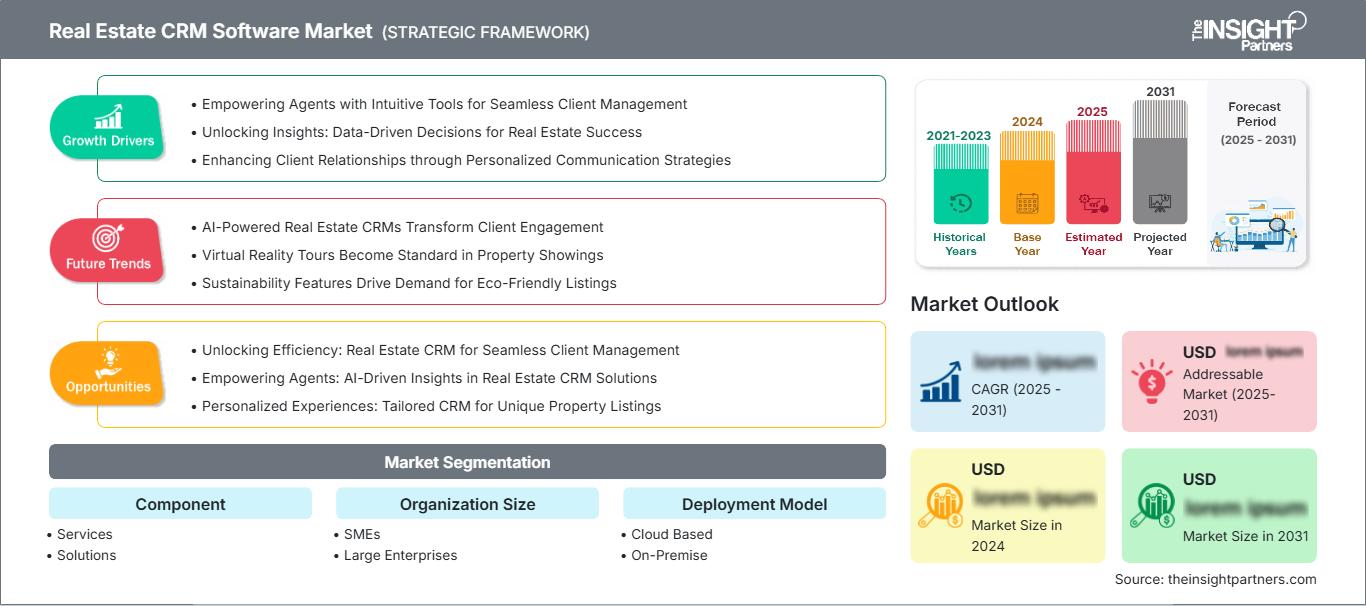
The global real estate sector is undergoing a massive digital transformation, with data management and client relationship cultivation becoming the cornerstones of success. As the industry shifts away from traditional manual processes, the Real Estate CRM (Customer Relationship Management) Software Market is experiencing an unprecedented surge. By 2031, this market is projected to reach new heights, driven by the integration of advanced technologies like artificial intelligence, cloud computing, and automated lead scoring.
Market Overview and Dynamics
The Real Estate CRM software market Trends serves as the backbone for modern property management, brokerage operations, and real estate development. These platforms are no longer just digital address books; they are comprehensive ecosystems that manage the entire lifecycle of a property transaction. From the initial inquiry and lead generation to contract management and post-sale follow-ups, CRM systems provide a centralized hub for data.
Several factors are propelling the market toward 2031. First, the increasing complexity of real estate transactions requires tools that can handle multifaceted documentation and legal compliance automatically. Second, the rise of the mobile workforce means that agents require real-time access to property listings and client data while on-site. This has led to a significant shift toward mobile-first and cloud-based CRM solutions.
Furthermore, the demand for personalized customer experiences is at an all-time high. Buyers and tenants expect instant responses and tailored recommendations. CRM software enables real estate professionals to use predictive analytics to understand client preferences, thereby increasing conversion rates and fostering long-term loyalty.
Download Sample PDF Report@ https://www.theinsightpartners.com/sample/TIPRE00012028
Strategic Market Segmentation
The market is generally segmented by deployment mode, application, and end-user. Cloud-based deployment currently dominates the market share due to its scalability, cost-effectiveness, and ease of integration with other digital tools like email marketing platforms and social media.
By application, lead management and reporting remain the primary drivers. However, by 2031, we expect to see a massive uptick in the property management segment. Large-scale developers and institutional investors are increasingly adopting CRM tools to manage vast portfolios of residential and commercial assets. The end-user segment includes real estate agents, brokers, and enterprise developers, with the enterprise sector showing the fastest growth rate as firms seek to standardize their operations across multiple geographic regions.
Competitive Landscape and Key Players
The Real Estate CRM software market is characterized by intense competition and rapid innovation. Established tech giants and specialized niche providers are constantly updating their features to stay ahead. The focus has shifted from basic functionality to providing “all-in-one” platforms that include marketing automation, virtual tour integrations, and financial tracking.
Key players leading the market toward 2031 include:
- Salesforce: Known for its highly customizable platforms that cater to large-scale real estate enterprises.
- Zillow Group: Utilizing its massive data ecosystem to provide integrated CRM solutions for agents.
- Propertybase (Lone Wolf Real Estate Technologies): A dedicated platform focusing on the specific needs of high-performing brokerages.
- HubSpot: Increasingly popular among smaller agencies for its user-friendly interface and inbound marketing capabilities.
- Zoho Corporation: Offering affordable, scalable solutions with strong automation features.
- Oracle: Providing robust enterprise-grade CRM tools for global real estate firms.
- Microsoft: Leveraging the Dynamics 365 ecosystem to offer seamless integration with office productivity tools.
These companies are investing heavily in machine learning to provide “smart” lead scoring, which helps agents prioritize prospects most likely to close a deal.
Regional Analysis
North America currently holds the largest market share, fueled by a high rate of technology adoption and a mature real estate market. However, the Asia-Pacific region is expected to witness the highest compound annual growth rate through 2031. Rapid urbanization in countries like India, China, and Vietnam is creating a massive demand for structured property management tools. In Europe, the focus remains on data privacy and GDPR compliance, driving the demand for secure, locally hosted CRM solutions.
Get Full Copy of This Report @ https://www.theinsightpartners.com/buy/TIPRE00012028
Technological Trends Shaping 2031
By 2031, the Real Estate CRM software market will be defined by the “Intelligence Era.” Artificial intelligence will move from a peripheral feature to a core component. We will see AI assistants that can handle initial client inquiries via natural language processing, setting up viewings without human intervention.
Blockchain technology is also expected to integrate with CRM systems to provide transparent and immutable records of property titles and transaction histories. This integration will reduce fraud and speed up the closing process, making the CRM a vital tool for legal and financial verification.
Additionally, the Internet of Things (IoT) will play a role in commercial real estate CRM. Smart buildings will feed data directly into CRM platforms, allowing property managers to track maintenance needs and energy consumption in real-time, providing a value-added service to clients.
Future Outlook
The trajectory for the Real Estate CRM software market is exceptionally positive. As the industry moves toward a more data-centric model, the reliance on these platforms will only intensify. The future will see a move toward “hyper-automation,” where administrative tasks are almost entirely handled by the software, allowing real estate professionals to focus on relationship building and high-level negotiation.
Integration will be the keyword for the coming decade. CRM systems will no longer operate in silos but will be part of a broader “PropTech” stack that includes virtual reality, fintech, and smart home technology. Firms that adopt these integrated solutions early will gain a significant competitive advantage in a crowded marketplace.
About The Insight Partners
The Insight Partners provides comprehensive syndicated and tailored market research services in the healthcare, technology, and industrial domains. Renowned for delivering strategic intelligence and practical insights, the firm empowers businesses to remain competitive in ever-evolving global markets.
Contact Information
- Email: sales@theinsightpartners.com
- Website: theinsightpartners.com
- Phone: +1-646-491-9876
Also Available in: Korean|German|Japanese|French|Chinese|Italian|Spanish

- Automotive Acoustic Engineering Services Market Size Worth USD 11.26 Billion by 2034, CAGR of 7.43% - 2026-07-17
- Ambulatory Infusion Therapy Services Market to Reach US$ 54.73 Billion by 2034 - 2026-07-17
- Global Body Contouring Devices Market Analysis: Growth Trends, Opportunities, and Forecast 2031 - 2026-07-17