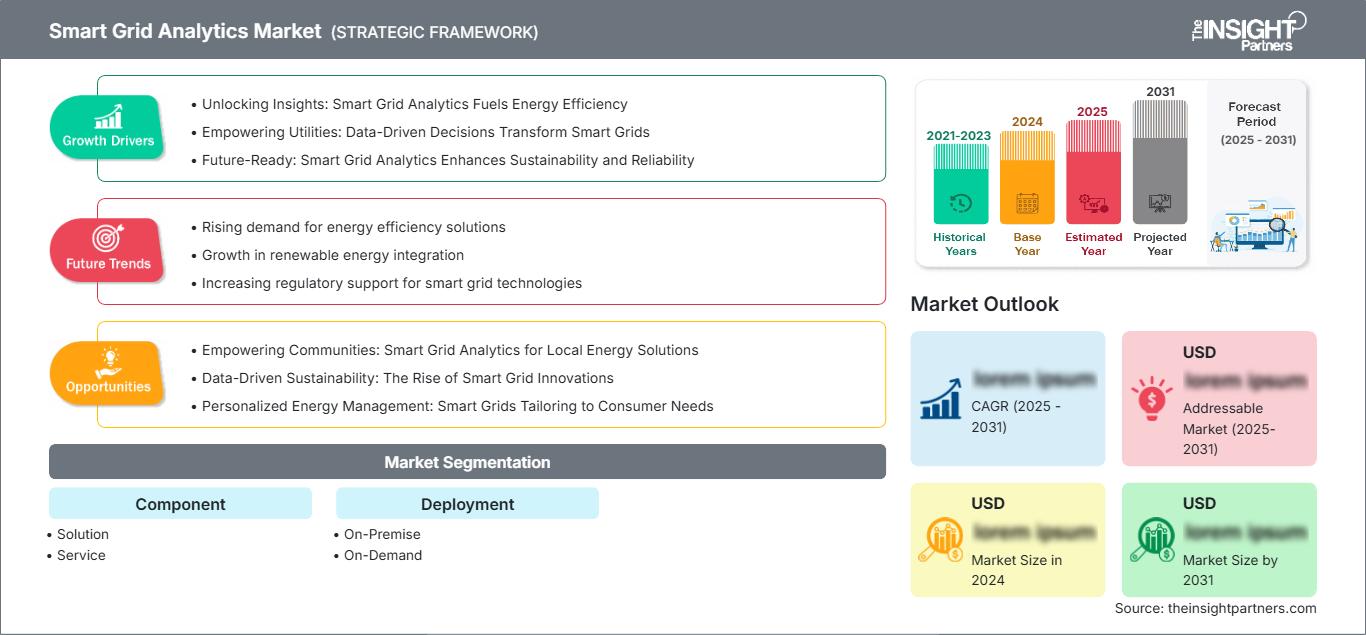
The global energy landscape is undergoing a monumental shift as traditional power grids evolve into intelligent, data driven networks. The Smart Grid Analytics Market is at the forefront of this transformation, providing the essential intelligence required to manage complex energy ecosystems. By 2031, the integration of advanced analytics into grid infrastructure will be the primary driver for operational efficiency, grid reliability, and the seamless incorporation of renewable energy sources.
Market Analysis and Strategic Overview
Smart grid analytics Industry refers to the application of sophisticated software and data processing tools to the massive volumes of data generated by smart meters, sensors, and automated grid hardware. As utilities face increasing pressure to modernize aging infrastructure and meet decarbonization goals, the demand for real time visibility into grid performance has skyrocketed.
The market is characterized by a transition from descriptive analytics, which explains what happened in the past, to predictive and prescriptive analytics. These advanced capabilities allow utility providers to anticipate equipment failures, manage peak load demands, and optimize the distribution of electricity. The primary objective is to create a self healing grid that minimizes downtime and reduces the operational costs associated with manual inspections and emergency repairs.
Several factors are propelling the growth of this market through 2031. First, the global push toward electrification, particularly in the automotive sector with Electric Vehicles (EVs), necessitates a grid that can handle fluctuating and high volume loads. Second, the decentralization of energy production, driven by residential solar panels and wind farms, requires analytics to balance two way power flows. Finally, regulatory mandates across North America, Europe, and Asia Pacific are incentivizing utilities to adopt digital solutions that enhance energy security and consumer transparency.
Download Sample PDF Report@ https://www.theinsightpartners.com/sample/TIPRE00011224
Technological Innovations Shaping the Future
The convergence of Artificial Intelligence (AI) and the Internet of Things (IoT) is redefining the capabilities of smart grid analytics. Machine learning algorithms are now capable of analyzing consumption patterns to provide highly accurate demand forecasting. This level of precision helps in reducing the need for “peaker plants,” which are often less efficient and more polluting.
Edge computing is another significant trend. By processing data closer to the source at the smart meter or substation level utilities can achieve near instantaneous response times. This is critical for maintaining grid stability during sudden surges or drops in renewable energy production. Furthermore, the integration of digital twin technology allows operators to simulate various scenarios and stress test the grid in a virtual environment before implementing changes in the physical world.
Key Market Segments
The Smart Grid Analytics Market is segmented based on solution, deployment model, and application.
By Solution: The market includes transmission and distribution (T&D) network analytics, demand response analytics, asset management, and customer analytics. Asset management is expected to see significant investment as utilities seek to extend the lifespan of expensive physical infrastructure.
By Deployment: Cloud based solutions are gaining traction over on premise installations. The scalability, cost effectiveness, and ease of updates provided by cloud platforms make them attractive for small and medium sized utility providers.
By Application: Grid optimization and AMI (Advanced Metering Infrastructure) analytics remain the dominant applications. However, consumer analytics is a rapidly growing segment, as utilities look to offer personalized energy saving recommendations to end users.
Competitive Landscape: Top Players
The competitive environment of the Smart Grid Analytics Market features a mix of established industrial giants and specialized software providers. These companies are focusing on strategic partnerships and acquisitions to enhance their analytical capabilities. Key players driving the market toward 2031 include:
- General Electric (GE) Vernova: A leader in providing comprehensive grid orchestration software and asset performance management tools.
- Siemens AG: Known for its Gridscale platform, Siemens offers advanced solutions for grid simulation and automated distribution.
- Schneider Electric: Focuses on EcoStruxure Grid, integrating IoT and analytics to improve energy efficiency and sustainability.
- Itron Inc.: A specialist in AMI and smart city solutions, Itron provides deep insights into consumer data and network health.
- IBM Corporation: Leverages its Watson AI capabilities to provide high level predictive maintenance and weather based load forecasting.
- Oracle Corporation: Provides robust utility analytics and customer experience platforms to help utilities manage data at scale.
- Landis+Gyr: Offers integrated energy management solutions that focus on smart metering and grid edge intelligence.
Regional Insights
North America currently holds a significant share of the market, driven by the early adoption of smart meters and a high concentration of technology providers. However, the Asia Pacific region is projected to experience the highest growth rate through 2031. Rapid urbanization in countries like China and India, coupled with massive government investments in smart city projects, is creating a fertile ground for smart grid analytics. Europe remains a key player, with a strong focus on integrating cross border renewable energy sources and achieving strict carbon neutrality targets.
Get Full Copy of This Report @ https://www.theinsightpartners.com/buy/TIPRE00011224
Future Outlook
The period leading up to 2031 will see smart grid analytics move from being a secondary support tool to the central nervous system of utility operations. We can expect the emergence of fully autonomous grid management systems where AI makes real time decisions to reroute power during outages without human intervention. Cyber security analytics will also become a paramount focus, as the increased connectivity of the grid makes it a potential target for digital threats.
The shift toward a circular energy economy will depend heavily on the insights provided by these platforms. By enabling a more flexible, transparent, and efficient power network, smart grid analytics will be the cornerstone of the global energy transition, ensuring that the world meets its rising power needs while adhering to vital environmental standards.
About The Insight Partners
The Insight Partners provides comprehensive syndicated and tailored market research services in the healthcare, technology, and industrial domains. Renowned for delivering strategic intelligence and practical insights, the firm empowers businesses to remain competitive in ever-evolving global markets.
Contact Information
- Email: sales@theinsightpartners.com
- Website: theinsightpartners.com
- Phone: +1-646-491-9876
