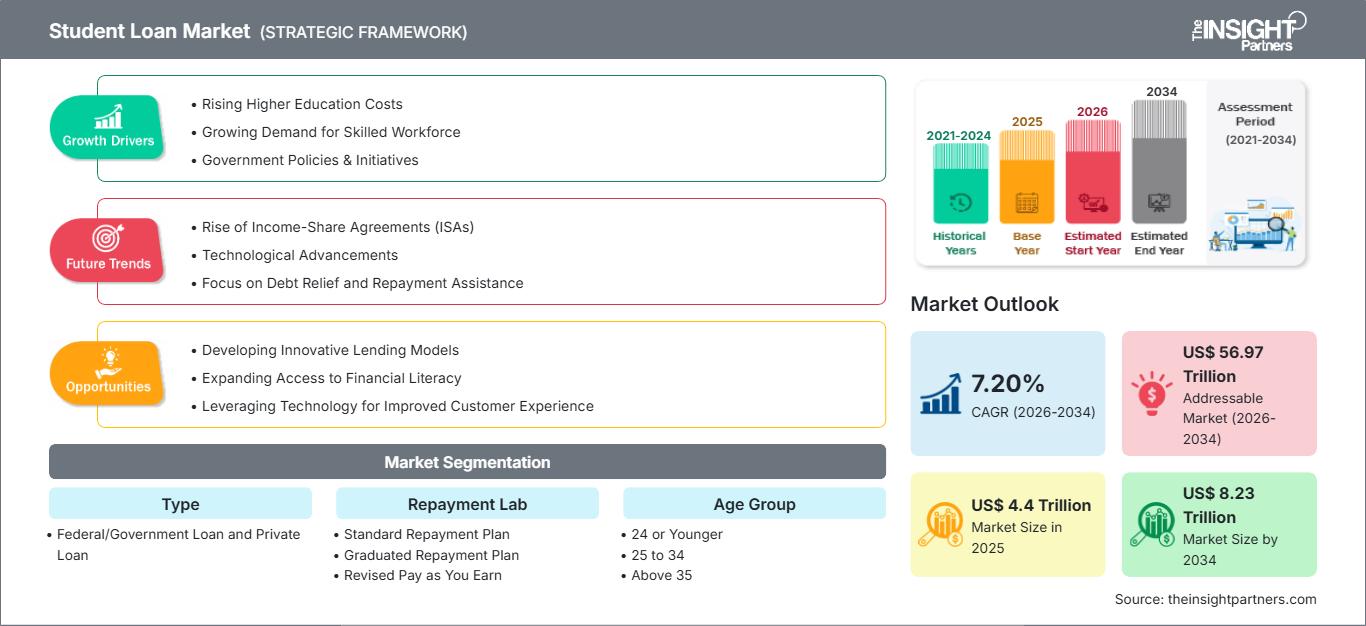
The global education landscape is undergoing a massive transformation, driven by the rising costs of higher education and an increasing emphasis on specialized skill acquisition. As we look toward 2034, the student loan market is positioned to become one of the most dynamic sectors within the financial services industry. This market serves as a critical bridge for millions of students worldwide, enabling access to academic institutions and vocational training centers that would otherwise be financially out of reach.
Market Overview and Economic Significance
The student loan market Trends comprises various financial products designed to help students cover the costs of tuition, books, supplies, and living expenses. By 2034, the market is expected to witness substantial growth, fueled by the globalization of education and a surge in students seeking degrees from international universities. The shift toward digital-first lending and the integration of advanced data analytics for credit scoring have expanded the reach of these financial products to underserved populations.
As traditional banking institutions and specialized fintech firms compete for market share, the focus has shifted toward more flexible repayment structures and personalized loan terms. The demand for higher education continues to outpace inflation in many regions, making external financing a necessity rather than an option for the majority of the global student population.
Download Sample PDF Report@ https://www.theinsightpartners.com/sample/TIPRE00039143
Market Analysis: Key Drivers and Dynamics
Several factors are steering the student loan market toward its 2034 valuation. A primary driver is the rising cost of technical and professional education. As industries like artificial intelligence, renewable energy, and biotechnology evolve, the cost of the specialized training required to enter these fields has risen. Consequently, the volume of loan applications for graduate and post-graduate studies is projected to climb steadily.
Furthermore, the rise of “EdTech” and online degree programs has created a new segment within the market. Lenders are now tailoring products for non-traditional students who may be working full-time while pursuing certifications. This diversification of the student demographic allows lenders to spread risk across different age groups and career stages.
Institutional support and government-backed lending programs remain the backbone of the market in many regions. However, the private lending sector is gaining significant ground by offering faster approval processes and digital interfaces that appeal to Gen Z and Alpha generations. By 2034, the integration of blockchain for secure document verification and smart contracts for automated disbursements will likely be standard practice.
Regional Insights and Emerging Opportunities
While North America has historically dominated the student loan landscape due to its high tuition costs and established credit systems, the Asia-Pacific region is expected to show the highest growth rate over the next decade. Increasing disposable income in countries like India, China, and Vietnam, combined with a cultural emphasis on prestige education, is creating a massive demand for both domestic and international student loans.
In Europe, the market is characterized by a mix of state-funded education and a growing private loan sector for specialized Master’s programs and MBA courses. Lenders in this region are increasingly focusing on “income-share agreements,” where students pay back a percentage of their future earnings instead of a fixed monthly installment, providing a safety net for new graduates.
Competitive Landscape and Top Players
The student loan market is highly competitive, featuring a mix of established global banks, government agencies, and innovative fintech startups. These organizations are focusing on strategic partnerships with universities to offer “embedded finance” solutions at the point of enrollment.
The top players shaping the industry include:
- Sallie Mae (SLM Corporation)
- SoFi Technologies, Inc.
- Discover Financial Services
- Ascensus, LLC
- Navient Corporation
- Wells Fargo and Company
- CommonBond, Inc.
- Citizens Financial Group, Inc.
- Earnest Operations LLC
- Nelnet, Inc.
These entities are investing heavily in machine learning algorithms to better predict future earning potential, allowing them to offer more competitive interest rates to students in high-demand fields of study.
Get Full Copy of This Report @ https://www.theinsightpartners.com/buy/TIPRE00039143
Future Outlook
The student loan market by 2034 will be defined by hyper-personalization and technological integration. We can expect to see a move toward “Life-Long Learning” credit lines, where a single loan facility can be used and repaid multiple times throughout a professional’s career as they return to education to upskill.
Sustainability and social governance will also play a role, with “Green Student Loans” offering lower interest rates for students pursuing degrees in environmental sciences or social work. The market will transition from a purely transactional lending model to a holistic financial partnership between the lender and the student, often including career counseling and job placement assistance to ensure the borrower’s ability to repay.
About The Insight Partners
The Insight Partners provides comprehensive syndicated and tailored market research services in the healthcare, technology, and industrial domains. Renowned for delivering strategic intelligence and practical insights, the firm empowers businesses to remain competitive in ever-evolving global markets.
Contact Information
- Email: sales@theinsightpartners.com
- Website: theinsightpartners.com
- Phone: +1-646-491-9876
