Acromegaly and gigantism are rare endocrine disorders that require long term disease management, specialized clinical expertise, and continuous patient monitoring. Rising awareness of these conditions, coupled with improved diagnostic capabilities, is strengthening treatment adoption across healthcare systems worldwide.
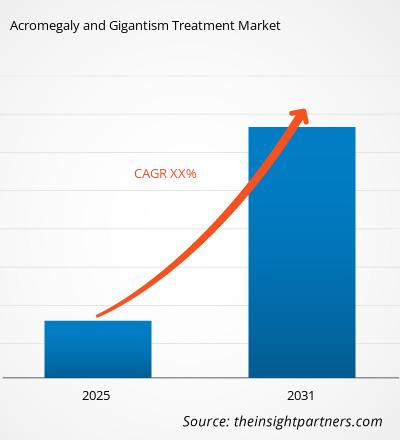
The Acromegaly and Gigantism Treatment Market Size continues to expand as pharmaceutical innovation, advanced imaging technologies, and multidisciplinary care models improve patient outcomes. According to The Insight Partners, the market was valued at US$ 1.33 billion in 2025 and is projected to reach US$ 2.75 billion by 2034, registering a CAGR of 8.34% during 2026 to 2034. Growth is supported by increasing use of surgery, medication, and radiation therapy for controlling excess growth hormone and insulin-like growth factor 1 levels.
Download Sample PDF @ https://www.theinsightpartners.com/sample/TIPRE00015264
Rising Prevalence and Early Diagnosis Fuel Industry Expansion
Growing awareness among healthcare professionals has significantly improved the diagnosis of acromegaly and gigantism. Historically, patients often remained undiagnosed for years due to gradual symptom progression. Today, increased adoption of IGF-1 screening, magnetic resonance imaging (MRI), and endocrine evaluations enables earlier detection and timely intervention.
The expanding availability of pituitary specialty centers further supports treatment accessibility. Early diagnosis allows physicians to reduce disease complications while increasing long term treatment adherence. Healthcare providers are also focusing on integrated disease management that combines endocrinology, neurosurgery, radiology, and rehabilitation services to improve clinical outcomes.
Medication Segment Maintains Leadership
Among treatment categories, medication accounted for the largest revenue share in 2025, contributing approximately 54% to 58% of total revenue. Long term pharmacological therapy remains essential for patients who are not fully cured through surgery or require ongoing hormonal control.
Common therapeutic approaches include:
- Somatostatin analogs
- Growth hormone receptor antagonists
- Dopamine agonists
- Oral hormone therapies
- Long acting injectable formulations
At the same time, transsphenoidal surgery remains the preferred first line treatment whenever tumor removal is feasible. Radiation therapy continues to serve patients with persistent or recurrent disease following surgery.
Regional Landscape Highlights Strong Global Growth
North America held the largest revenue share of approximately 39% to 41% in 2025. The region benefits from extensive endocrinology networks, advanced MRI infrastructure, strong reimbursement policies, and high adoption of innovative biologics and oral therapies. The United States remains the largest contributor due to widespread access to specialized pituitary centers and rapid uptake of advanced endocrine treatments.
Europe represents the second largest regional contributor, supported by structured healthcare systems across Germany, the United Kingdom, France, Italy, and Spain. Public reimbursement programs and multidisciplinary treatment pathways continue to strengthen regional demand.
Asia Pacific is projected to record the fastest growth during the forecast period with a CAGR ranging between 9.0% and 9.4%. China, India, Japan, South Korea, and Australia are investing heavily in tertiary hospitals, diagnostic infrastructure, and specialist care. Rising awareness of rare diseases and expanding healthcare expenditure are expected to accelerate regional adoption.
Emerging economies across the Middle East, Africa, and South and Central America also present significant opportunities as governments expand healthcare infrastructure and improve access to endocrine specialists.
Innovation and Competitive Landscape
The competitive environment is characterized by continuous innovation in hormone therapies, oral formulations, long acting injectables, and patient centered treatment approaches. Companies are increasingly investing in therapies that improve convenience, enhance patient adherence, and reduce treatment burden.
Major companies operating in the industry include:
- Pfizer Inc.
- Novartis AG
- Chiasma, Inc.
- Midatech Pharma plc
- Ipsen Pharma SAS
- Johnson & Johnson Services, Inc.
- F. Hoffmann-La Roche Ltd
- Takeda Pharmaceutical Company Limited
- Crinetics Pharmaceuticals, Inc.
- Peptron, Inc.
Competitive strategies increasingly focus on expanding specialty clinic partnerships, strengthening cold chain distribution, advancing peptide manufacturing technologies, and developing innovative oral therapies that reduce dependence on frequent hospital administered injections.
Key Growth Drivers and Emerging Opportunities
Several structural factors continue to support long term expansion across the industry. Increasing investments in rare disease research, orphan drug development, and personalized endocrine therapies are accelerating innovation. Governments and healthcare providers are promoting earlier diagnosis through improved screening protocols and broader access to imaging technologies.
Digital health solutions are also transforming disease management. Remote monitoring of IGF-1 levels, growth hormone measurements, electronic patient reporting, and telemedicine follow up services improve treatment compliance while reducing the burden on healthcare facilities.
Specialty clinics are emerging as a rapidly growing end user segment due to their ability to provide continuous monitoring, individualized dose optimization, injection support, and long term management of associated cardiovascular and metabolic complications.
Interested in Purchasing this Report? Click here @ https://www.theinsightpartners.com/buy/TIPRE00015264
Future Outlook
The outlook for the Acromegaly and Gigantism Treatment Market Size remains highly positive through 2034. Continued innovation in oral therapies, biomarker guided treatment selection, and patient friendly drug delivery systems will reshape the competitive landscape. Expanding multidisciplinary pituitary centers, increasing investment in rare disease care, and improved access to advanced diagnostics across emerging economies will further strengthen global demand.
Related Report:
1) Lyophilized Injectable Market Key Companies and SWOT Analysis by 2028
2) Pharmaceutical Intermediates Market Key Players and Forecast by 2028
3) Generic Injectables Market Growth and Forecast by 2028
About Us –
The Insight Partners provides comprehensive syndicated and tailored market research services in the healthcare, technology, and industrial domains. Renowned for delivering strategic intelligence and practical insights, the firm empowers businesses to remain competitive in ever-evolving global markets.
Contact Us:
Ankit Mathur | The Insight Partners
E-mail: ankit.mathur@theinsightpartners.com
Phone: +1-646-491-9876
Also Available in : Korean German Japanese French Chinese Italian Spanish

- Fifth Wheel Coupling Market Size - 2026-07-20
- Penetration Testing as a Service Market - 2026-07-20
- Aerospace PCB Market Growth - 2026-07-20