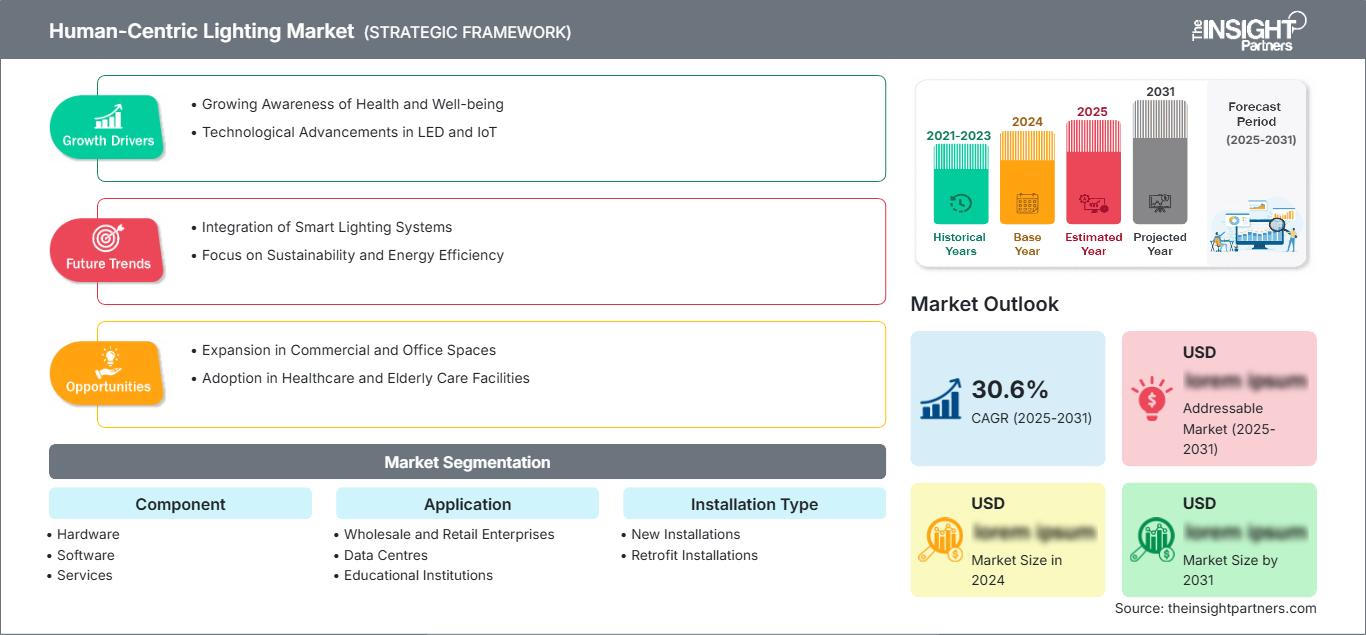
The growing focus on human wellness, energy efficiency, and intelligent building environments is accelerating the adoption of advanced lighting technologies worldwide. The Human-Centric Lighting Market is witnessing significant transformation as organizations, healthcare providers, commercial spaces, and residential users increasingly recognize the importance of lighting systems designed around human needs rather than traditional illumination requirements.
Get a sample PDF of the Report: https://www.theinsightpartners.com/sample/TIPRE00004804
Human-centric lighting combines advanced LED technology, automation, sensors, and smart control systems to replicate natural daylight patterns and support human biological rhythms. These solutions are designed to improve comfort, productivity, mood, and overall well-being by adjusting brightness, color temperature, and lighting intensity according to time, environment, and user preferences.
The rising integration of smart buildings, connected devices, and Internet of Things (IoT)-based solutions has created new opportunities for intelligent lighting providers. Modern workplaces, educational institutions, hospitals, hotels, and residential projects are adopting adaptive lighting systems to create healthier and more engaging environments. The shift toward sustainable infrastructure and energy-efficient technologies is further supporting the expansion of the Human-Centric Lighting Market globally.
Unlike conventional lighting systems that primarily focus on visibility, human-centric lighting considers the relationship between light exposure and human health. Research highlighting the impact of lighting on sleep cycles, concentration levels, and emotional well-being has encouraged industries to invest in advanced lighting solutions that support a better quality of life.
Human-Centric Lighting Market Key Highlights, Trends, Analysis & Forecast by 2031
- Increasing adoption of smart lighting solutions across commercial, healthcare, and residential sectors is expected to drive future growth.
- Growing awareness about wellness-oriented workplace environments is encouraging businesses to implement adaptive lighting technologies.
- Integration of artificial intelligence, sensors, and automation is improving personalized lighting experiences.
- Rising demand for energy-efficient LED-based solutions is supporting sustainable building development.
- Healthcare facilities are increasingly adopting human-centric lighting to create comfortable environments for patients and medical professionals.
- Smart home adoption and connected lighting ecosystems are creating new growth opportunities for residential applications.
- Government initiatives promoting green buildings and energy conservation are positively influencing market expansion.
- Advancements in wireless communication technologies are making intelligent lighting systems easier to install and manage.
- Increasing investment in smart cities and digital infrastructure is expected to accelerate adoption through 2031.
Industry Trends Driving Human-Centric Lighting Adoption
One of the major trends influencing the Human-Centric Lighting Market is the rapid development of smart building ecosystems. Modern buildings are becoming more connected, allowing lighting systems to communicate with environmental sensors, occupancy monitoring platforms, and building management systems.
Another important trend is the growing demand for personalized user experiences. Businesses are moving beyond traditional lighting schedules and adopting systems that automatically adjust according to individual preferences, daylight availability, and workplace activities.
The healthcare sector is emerging as a key application area for human-centric lighting solutions. Hospitals and healthcare facilities are implementing advanced lighting environments to improve patient comfort, support recovery processes, and enhance working conditions for healthcare professionals.
The increasing popularity of green buildings is also shaping industry growth. Architects and developers are incorporating intelligent lighting solutions into sustainable building designs to reduce energy consumption while improving occupant satisfaction.
Global Human-Centric Lighting Market Analysis
The global landscape of the Human-Centric Lighting Market is evolving as industries across different regions prioritize smart infrastructure, employee wellness, and energy efficiency. Developed economies are leading adoption due to higher awareness of smart building technologies and strong investments in connected infrastructure.
North America is expected to remain a significant region due to increasing demand for smart workplaces, healthcare modernization, and energy-efficient commercial buildings. The presence of leading lighting technology providers and strong adoption of IoT-based solutions continue to support regional development.
Europe is witnessing strong growth due to sustainability regulations, green building initiatives, and rising emphasis on reducing carbon emissions. Countries across the region are integrating intelligent lighting systems into commercial and public infrastructure projects.
Asia Pacific is projected to experience substantial opportunities due to rapid urbanization, smart city developments, expanding construction activities, and increasing adoption of advanced technologies in countries such as China, Japan, South Korea, and India.
Latin America and the Middle East & Africa are gradually adopting human-centric lighting solutions as businesses and governments invest in modern infrastructure, energy management systems, and sustainable development projects.
Human-Centric Lighting Market Application Analysis
The demand for human-centric lighting is expanding across multiple industries:
- Healthcare: Lighting solutions designed to improve patient comfort, recovery environments, and medical facility operations.
- Commercial Buildings: Adoption in offices to improve employee productivity, focus, and workplace satisfaction.
- Residential Spaces: Increasing preference for smart home lighting systems that provide personalized experiences.
- Hospitality Industry: Hotels and resorts implementing wellness-focused lighting to enhance guest experiences.
- Education Sector: Schools and universities using adaptive lighting to create improved learning environments.
- Industrial Facilities: Integration of intelligent lighting for better workplace safety and operational efficiency.
Key Players Operating in the Human-Centric Lighting Market
Leading companies are focusing on innovation, smart technology integration, partnerships, and product development to strengthen their market position.
- ✓ Signify
- ✓ Acuity Brands
- ✓ Zumtobel Group
- ✓ OSRAM
- ✓ GE Lighting
- ✓ Hubbell Incorporated
- ✓ Lutron Electronics
- ✓ Cree Lighting
These companies are investing in advanced LED systems, connected lighting platforms, cloud-based controls, and automation technologies to address growing demand for intelligent lighting environments.
Recent Developments and Industry Updates
The lighting industry is experiencing rapid innovation with manufacturers introducing advanced solutions that combine connectivity, automation, and wellness-focused features. Companies are increasingly developing wireless lighting controls, AI-enabled systems, and integrated platforms that allow users to manage lighting environments through mobile applications and smart building networks.
Partnerships between lighting providers, technology companies, and construction firms are also increasing as industries seek complete smart infrastructure solutions. These collaborations are helping accelerate the adoption of intelligent lighting systems across commercial and residential applications.
Get the Premium Research Report @ https://www.theinsightpartners.com/buy/TIPRE00004804
Future Outlook
The future of the Human-Centric Lighting Market looks promising as businesses, governments, and consumers continue prioritizing health, sustainability, and smart living environments. The growing acceptance of connected technologies, increasing investment in smart buildings, and rising awareness about the relationship between lighting and human wellness are expected to create new opportunities through 2031.
As lighting technology continues to evolve, future solutions are likely to become more personalized, automated, and integrated with broader digital ecosystems. Human-centric lighting is expected to move beyond being a premium feature and become an essential component of modern infrastructure, supporting healthier lifestyles, improved productivity, and sustainable development worldwide.
Related Reports –
Home Energy Management System Market Regional Share, Trend, and Growth Opportunity
Vision Transformers Market Regional Share, Trend, and Growth Opportunity
Differential-Pressure Mass Flow Controller Market Regional Share, Trend, and Growth Opportunity
About The Insight Partners
The Insight Partners is a leading market research and consulting firm delivering actionable insights through in-depth industry analysis and strategic intelligence. The firm supports clients across various industries in making informed business decisions by providing comprehensive market forecasts, competitive assessments, and growth opportunities.
Contact Us:
If you have any queries about this report or if you would like further information, please contact us:
Contact Person: Ankit Mathur
E-mail: sales@theinsightpartners.com
Phone: +1-646-491-9876
Also Available in :
Korean | German | Japanese | French | Chinese | Italian | Spanish

- Fifth Wheel Coupling Market Size - 2026-07-20
- Penetration Testing as a Service Market - 2026-07-20
- Aerospace PCB Market Growth - 2026-07-20