Targeted alpha therapies are transforming cancer treatment by delivering highly localized radiation with minimal impact on healthy tissues. Continuous progress in radionuclide production, radiochemistry, and nuclear medicine infrastructure is creating new opportunities for advanced oncology care. Growing investments from biotechnology companies, healthcare providers, and government organizations are accelerating clinical development and commercialization.
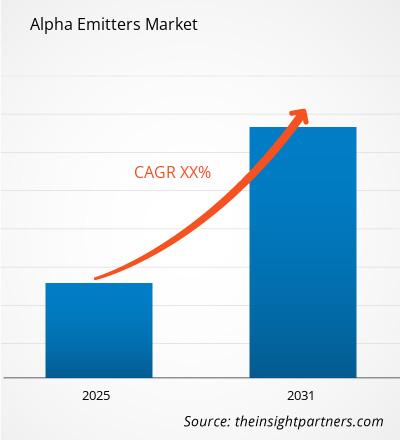
The Alpha Emitters Market Size was valued at US$ 1.45 billion in 2025 and is projected to reach US$ 4.87 billion by 2034, registering a CAGR of 14.44% during 2026 to 2034. The expansion is fueled by increasing adoption of targeted alpha therapies for difficult to treat cancers, rising investments in isotope production, and growing clinical evidence supporting improved patient outcomes. Enhanced manufacturing capabilities and expanding nuclear medicine infrastructure are also contributing to wider commercialization across global healthcare systems.
Get Sample PDF @ https://www.theinsightpartners.com/sample/TIPRE00020507
Rising Demand for Targeted Alpha Therapies
The growing global burden of cancer has intensified the need for highly effective treatment options with fewer side effects. Alpha emitting radionuclides have emerged as an attractive solution because they deliver high energy over extremely short distances, allowing physicians to destroy cancer cells while minimizing damage to surrounding healthy tissue.
Advancements in radiopharmaceutical research have accelerated the transition of targeted alpha therapies from experimental treatments to commercially viable oncology solutions. Clinical studies continue to demonstrate promising outcomes in metastatic and treatment resistant cancers, particularly in prostate cancer and bone metastases. Increased physician confidence and favorable regulatory developments are further strengthening adoption.
Technological Advancements Strengthen Commercialization
Continuous improvements in radionuclide production technologies are supporting greater availability of high purity isotopes required for targeted therapies. Investments in manufacturing infrastructure, logistics, and regulatory compliant production facilities are helping address historical supply limitations.
Actinium (Ac-225) has emerged as the fastest growing radionuclide segment due to its high therapeutic efficacy and expanding clinical pipeline. Radium (Ra-223) maintains strong clinical adoption because of its proven effectiveness in treating bone metastases, while Astatine (At-211), Lead (Pb-212), and Bismuth (Bi-212) continue attracting research investments for future therapeutic applications.
Collaboration among biotechnology companies, academic institutions, contract manufacturing organizations, and nuclear medicine centers is also accelerating innovation and expanding commercial opportunities.
Regional Landscape Shows Strong Growth Potential
North America continues to lead the global industry, accounting for approximately 42% to 46% of total revenue in 2025. The region benefits from advanced nuclear medicine infrastructure, significant isotope production capacity, favorable regulatory frameworks, and strong investment in oncology research. The United States remains the primary contributor, supported by expanding precision medicine programs and robust clinical trial activity.
Europe represents the second largest regional segment, driven by Germany, France, the United Kingdom, and Switzerland. Investments in radiopharmaceutical manufacturing, multicenter clinical trials, and cancer research continue supporting regional expansion.
Asia Pacific is expected to record the fastest growth during the forecast period. China, Japan, South Korea, Australia, and India are increasing investments in isotope production facilities, healthcare modernization, and oncology research. Government initiatives promoting nuclear medicine capabilities are expected to create substantial long term growth opportunities.
Meanwhile, countries across the Middle East are strengthening specialized oncology services and expanding precision medicine capabilities through healthcare transformation programs.
Competitive Landscape and Key Participants
Competition continues to intensify as pharmaceutical companies and biotechnology firms expand targeted alpha therapy pipelines through strategic collaborations, acquisitions, and licensing agreements. Companies are also investing heavily in isotope manufacturing capacity and radiochemistry innovation to improve supply chain reliability and support future commercialization.
Key players include:
- Actinium Pharmaceuticals, Inc.
- Alpha Tau Medical Ltd.
- Bayer AG
- Fusion Pharmaceuticals Inc.
- IBA Radiopharma Solutions
- RadioMedix Inc.
- Telix Pharmaceuticals Limited
- Global Medical Solutions
- SHINE Technologies, LLC
- Isotopia Molecular Imaging Ltd.
These organizations are focusing on expanding clinical programs, improving manufacturing technologies, and strengthening global distribution networks to meet increasing demand for targeted radiopharmaceutical therapies.
Segment Analysis Highlights Emerging Opportunities
By radionuclide type, Actinium (Ac-225) is expected to register the fastest growth due to expanding research activities and increasing production initiatives. Radium continues to maintain a significant position owing to its established clinical use in bone metastasis treatment.
Among applications, prostate cancer remains the largest segment, accounting for the highest share because of strong clinical evidence supporting targeted alpha therapies in metastatic castration resistant disease. Other promising application areas include bone metastasis, ovarian cancer, pancreatic cancer, endocrine tumors, and several emerging oncology indications where precision medicine continues to gain importance.
Interested in Purchasing this Report? Click here @ https://www.theinsightpartners.com/buy/TIPRE00020507
Future Outlook
The outlook for the Alpha Emitters Market Size remains highly positive through 2034 as precision oncology continues to reshape cancer treatment worldwide. Increasing investments in isotope production, expanding clinical research, favorable regulatory support, and growing adoption of personalized medicine are expected to sustain long term growth. As manufacturing capacity expands and new targeted alpha therapies receive regulatory approvals, the industry is well positioned to deliver significant clinical and commercial value across the global oncology landscape.
Related Report:
1) Oral Anticoagulants Market Growth, Trends & Forecast by 2034
2) Thrombosis Drugs Market Dynamics, Analysis, Trends, and Opportunities 2031
3) Cancer Monoclonal Antibodies Market Growth, Size, Share, Trends, and Forecast by 2031
About Us –
The Insight Partners provides comprehensive syndicated and tailored market research services in the healthcare, technology, and industrial domains. Renowned for delivering strategic intelligence and practical insights, the firm empowers businesses to remain competitive in ever-evolving global markets.
Contact Us:
Ankit Mathur | The Insight Partners
E-mail: ankit.mathur@theinsightpartners.com
Phone: +1-646-491-9876
Also Available in : Korean German Japanese French Chinese Italian Spanish

- Fifth Wheel Coupling Market Size - 2026-07-20
- Penetration Testing as a Service Market - 2026-07-20
- Aerospace PCB Market Growth - 2026-07-20