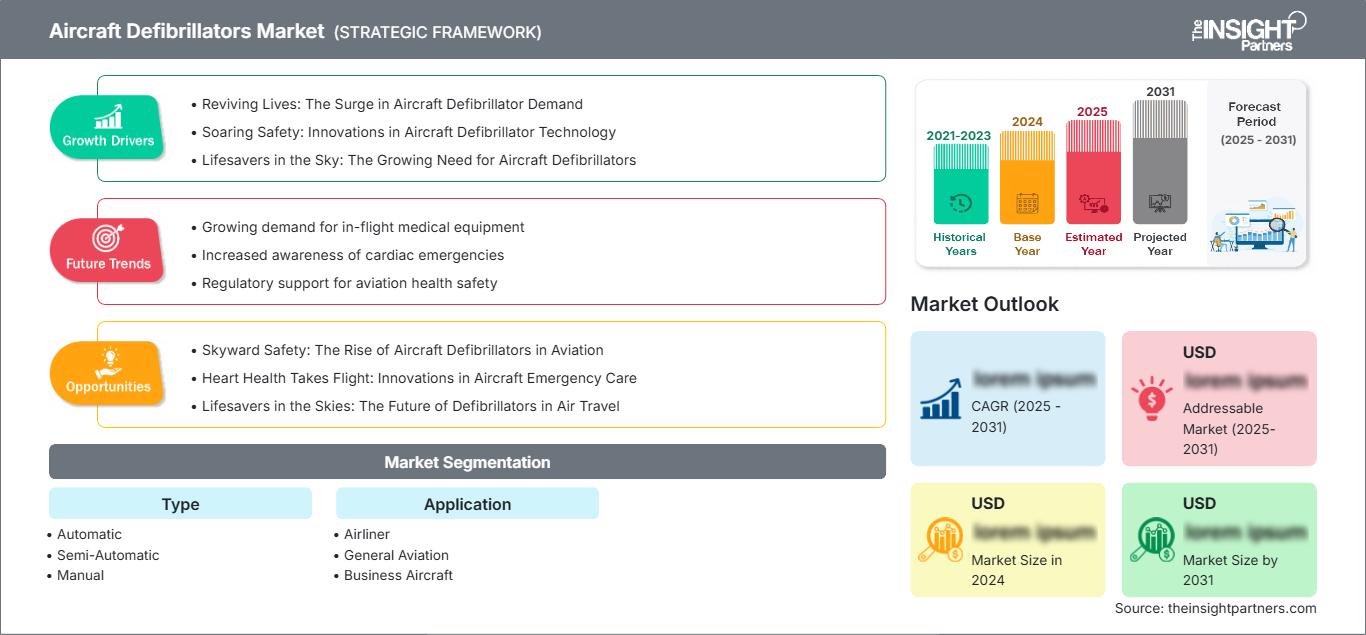
The Aircraft Defibrillators Market focuses on the development, integration, and adoption of emergency cardiac care devices designed for aviation environments. The market is gaining momentum as airlines, airports, and aviation authorities increasingly prioritize passenger and crew safety through improved emergency medical preparedness. The rising incidence of sudden cardiac arrest (SCA), particularly among aging travelers and individuals with cardiovascular risk factors, is encouraging the deployment of automated external defibrillators (AEDs) and other advanced cardiac response equipment across commercial and private aircraft. Technological advancements, regulatory support, and growing awareness regarding early defibrillation are further contributing to market expansion.
Market Trends and Technological Advancements
The Aircraft Defibrillators Market is witnessing significant transformation driven by the integration of compact, lightweight, and technologically advanced defibrillation systems into aircraft emergency medical kits. In 2025, the market had a value of US$ 903.13 Million and is forecasted to grow up to US$ 1,636.00 Million by 2034 at a CAGR of 6.82% between 2026 and 2034. Modern aircraft defibrillators increasingly feature automated operation, voice and visual guidance, real-time monitoring, long-lasting batteries, and data recording capabilities. These features enable cabin crew and other non-medical personnel to respond quickly to cardiac emergencies, reducing dependence on specialized medical expertise during flights. Manufacturers are also focusing on developing portable devices that can withstand the operational conditions of aviation environments while maintaining reliability and ease of use. The growing adoption of connected healthcare technologies is expected to create additional opportunities, with next-generation devices potentially supporting remote data transmission and post-event analysis.
Download Sample PDF Copy: https://www.theinsightpartners.com/sample/TIPRE00014220
Rising Focus on In-Flight Emergency Preparedness
The increasing focus on passenger safety and emergency preparedness is a major factor supporting market growth. Although in-flight cardiac emergencies are relatively uncommon, sudden cardiac arrest can become life-threatening within minutes without immediate intervention. As a result, airlines are strengthening their onboard medical capabilities by equipping aircraft with AEDs and other emergency response devices. The availability of defibrillators enables rapid intervention before an aircraft can reach the nearest airport or emergency medical facility. In addition, airlines are investing in enhanced crew training programs to ensure flight attendants can efficiently operate AEDs and respond to medical emergencies. This emphasis on preparedness is expected to drive demand for reliable, user-friendly, and aviation-certified defibrillation systems.
Growth in Commercial Aviation and Air Passenger Traffic
The expansion of the global aviation industry is another important growth driver for the aircraft defibrillators market. Increasing international tourism, business travel, urbanization, and disposable incomes are contributing to higher passenger traffic across domestic and international routes. As airlines expand their fleets and introduce new aircraft, the demand for onboard medical and safety equipment is also increasing. The modernization of existing fleets is creating opportunities for the replacement and upgrading of older emergency medical equipment with advanced AED technologies. Furthermore, the expansion of low-cost carriers and long-haul flight networks is encouraging airlines to strengthen their onboard emergency response capabilities. These developments are expected to positively influence the adoption of aircraft defibrillators over the forecast period.
Regulatory Standards and Safety Requirements
Regulatory frameworks and aviation safety standards play a critical role in shaping the aircraft defibrillators industry. Aviation authorities and healthcare organizations continue to emphasize the importance of timely medical intervention during in-flight emergencies. Requirements related to onboard medical kits, emergency equipment, device certification, maintenance, and crew training encourage airlines to maintain appropriate levels of medical preparedness. The increasing alignment between aviation safety practices and emergency healthcare protocols is creating a favorable environment for market development. In addition, airlines are increasingly collaborating with medical professionals and equipment providers to evaluate onboard emergency response procedures. As regulatory expectations evolve, manufacturers are likely to focus on developing devices that meet stringent safety, reliability, portability, and performance requirements.
Regional Market Growth and Opportunities
Regionally, market growth is influenced by differences in aviation infrastructure, passenger volumes, healthcare preparedness, and regulatory policies. North America is expected to remain an important market due to its well-established aviation industry, high air passenger traffic, strong healthcare infrastructure, and emphasis on emergency medical preparedness. The presence of major airlines and aircraft manufacturers also supports demand for advanced onboard medical technologies. Europe is anticipated to experience steady growth due to stringent aviation safety standards and increasing investments in passenger health and safety. Meanwhile, Asia Pacific is emerging as a promising growth region, supported by rapid expansion in air travel, increasing fleet sizes, rising disposable incomes, and the development of new airports. Growing aviation activity in countries such as China, India, Japan, and Southeast Asian nations is expected to create significant opportunities for aircraft defibrillator manufacturers.
Get Full Report: https://www.theinsightpartners.com/buy/TIPRE00014220
Competitive Landscape and Key Players
- Metrax GmbH
- ZOLL Medical Corporation
- Legend Aerospace
- Koninklijke Philips N.V.
- Stryker Corporation
- Mindray Medical International Limited
- Nihon Kohden Corporation
- Shenzhen Mindray Bio-Medical Electronics Co., Ltd.
- Schiller AG
- Defibtech, LLC
Future Market Trends and Growth Analysis
The future outlook for the aircraft defibrillators market remains positive as the aviation sector continues to prioritize passenger safety and onboard healthcare preparedness. Increasing awareness of sudden cardiac arrest, improvements in AED technology, rising air passenger traffic, and greater emphasis on emergency response training are expected to sustain market growth through 2034. The development of smart and connected defibrillators represents another emerging trend, potentially enabling improved device monitoring, maintenance management, and clinical data analysis. Manufacturers are also likely to focus on reducing device size and weight while improving battery performance and operational simplicity. As airlines increasingly recognize the importance of rapid medical intervention, investments in advanced emergency equipment are expected to rise, creating new opportunities for market participants.
Related Reports
Diphtheria Toxoid Market Growth, Demand & Size by 2034
Drug Eluting Balloon for Peripheral Artery Disease Market Trends, Size & Growth by 2034
About US
The Insight Partners provides comprehensive syndicated and tailored market research services in the healthcare, technology, and industrial domains. Renowned for delivering strategic intelligence and practical insights, the firm empowers businesses to remain competitive in ever-evolving global markets.
Contact Us
Contact Person: Ankit Mathur
E-mail: ankit.mathur@theinsightpartners.com
Phone: +1-646-491-9876
Also Available in : Korean German Japanese French Chinese Italian Spanish
