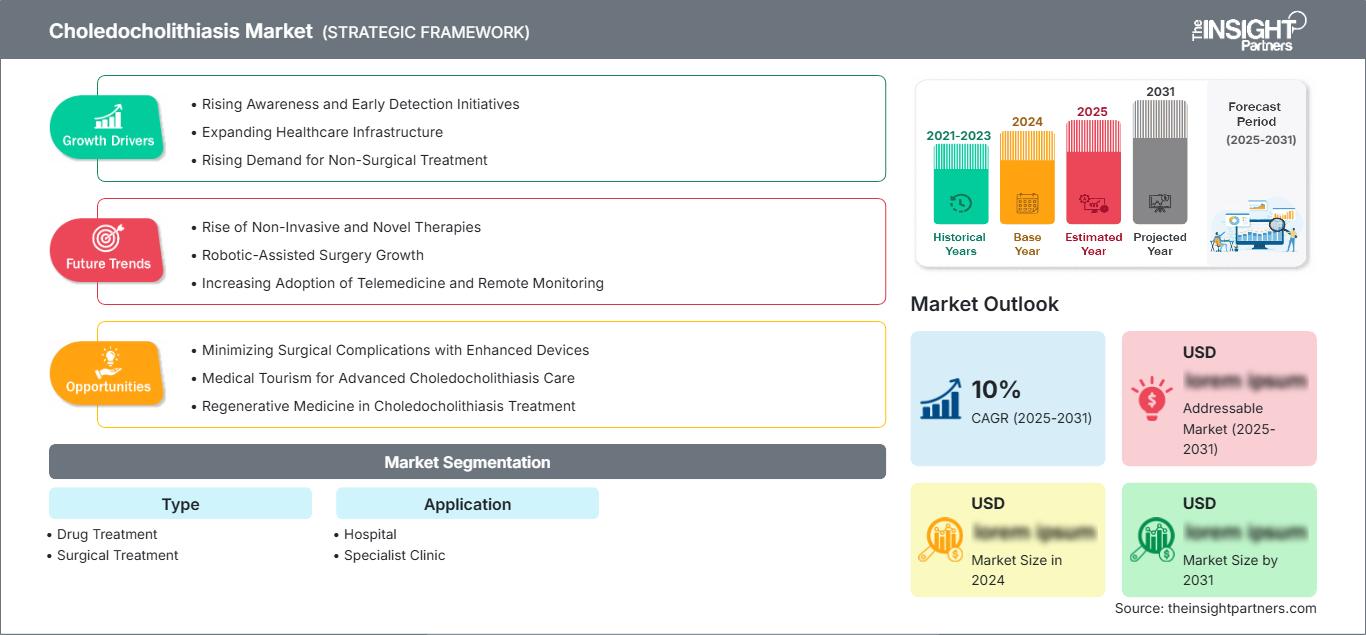
The Choledocholithiasis Market size is expected to reach US$ 2.93 Billion by 2034 from US$ 1.84 Billion in 2025. The market is estimated to record a CAGR of 5.31% from 2026 to 2034.
The rising incidence of gallstone disease and associated biliary disorders is a primary factor driving market growth. Increasing healthcare awareness has encouraged patients to seek timely diagnosis, reducing the risk of severe complications through early intervention. Advancements in diagnostic imaging technologies, including ultrasound, magnetic resonance cholangiopancreatography (MRCP), and endoscopic techniques, are enabling healthcare professionals to identify bile duct stones with greater accuracy. Improved treatment accessibility and expanding hospital infrastructure are also contributing to the growing demand for effective choledocholithiasis management.
Get Sample PDF – https://www.theinsightpartners.com/sample/TIPRE00008639
Rising Burden of Gallstone Disease
Gallstone disease continues to affect a significant portion of the global population, particularly among older adults and individuals with obesity, diabetes, or metabolic disorders. Lifestyle changes, dietary habits, sedentary behavior, and increasing life expectancy have contributed to a growing number of patients requiring diagnosis and treatment for choledocholithiasis.
Early detection plays an essential role in preventing serious complications associated with bile duct obstruction. Physicians increasingly recommend comprehensive diagnostic evaluations for patients presenting with abdominal pain, jaundice, or abnormal liver function tests. As awareness regarding gastrointestinal disorders continues to improve, demand for advanced diagnostic services and minimally invasive treatment procedures is expected to increase steadily.
Technological Advancements Supporting Clinical Care
Continuous innovation in medical technology has significantly improved the diagnosis and treatment of choledocholithiasis. High-resolution imaging systems provide detailed visualization of the biliary tract, allowing physicians to accurately detect stones and evaluate disease severity.
Endoscopic retrograde cholangiopancreatography (ERCP) remains one of the most widely used minimally invasive procedures for diagnosing and removing bile duct stones. Advancements in endoscopic accessories, guidewires, balloon catheters, stone retrieval baskets, and lithotripsy technologies have enhanced procedural safety and treatment success rates.
Hospitals are also integrating digital imaging platforms and artificial intelligence-assisted diagnostic tools to improve workflow efficiency and clinical decision-making. These innovations continue to enhance patient outcomes while reducing hospital stays and procedural complications.
Expanding Healthcare Infrastructure and Patient Awareness
Governments and healthcare organizations are investing in modern healthcare infrastructure to improve access to specialized gastrointestinal care. Increasing availability of advanced diagnostic centers and endoscopy units is allowing more patients to receive timely treatment.
Growing public awareness regarding digestive health, preventive medical checkups, and minimally invasive surgical procedures is encouraging earlier diagnosis and intervention. Healthcare professionals are also emphasizing patient education to reduce the risks associated with untreated gallstone disease through lifestyle modification and appropriate medical management.
Medical training programs and ongoing clinical research are further strengthening the adoption of advanced treatment protocols for choledocholithiasis across healthcare institutions worldwide.
Regional Market Insights
North America continues to hold a significant position in the choledocholithiasis market due to advanced healthcare infrastructure, widespread availability of minimally invasive procedures, and high adoption of modern diagnostic technologies. Strong healthcare spending, increasing gastrointestinal disease awareness, and continuous technological innovation continue to support market growth across the region.
Europe remains an important regional market with well-established healthcare systems, increasing use of advanced endoscopic procedures, and growing emphasis on early diagnosis of biliary disorders. Favorable healthcare policies and ongoing research initiatives continue to contribute to market development.
The Asia Pacific region is expected to experience notable growth throughout the forecast period due to rising healthcare investments, expanding hospital networks, increasing prevalence of gallstone disease, and improving access to specialized gastrointestinal care. Growing awareness regarding minimally invasive treatments and improving healthcare infrastructure are creating attractive opportunities across emerging economies.
Latin America and the Middle East & Africa are gradually strengthening healthcare capabilities through investments in diagnostic technologies, hospital modernization, and improved access to advanced gastrointestinal treatment services.
Competitive Landscape
The choledocholithiasis market features several global healthcare companies focused on developing advanced diagnostic technologies, innovative therapeutic solutions, and minimally invasive treatment devices. Companies continue investing in research and development, strategic collaborations, and product innovation to improve patient care and strengthen their competitive position.
Expansion into emerging healthcare markets, technological advancements in diagnostic imaging, and increasing collaboration with hospitals and specialty clinics remain important growth strategies for leading industry participants.
Get Full Copy of This Report @ https://www.theinsightpartners.com/buy/TIPRE00008639
Key Players
- Abbott
- AstraZeneca
- Eli Lilly and Company
- General Electric Company
- GlaxoSmithKline plc
- McKesson Corporation
- Medtronic
- Novartis AG
- Pfizer Inc.
- Thermo Fisher Scientific
Future Outlook
The choledocholithiasis market is expected to experience steady growth through 2034, supported by increasing prevalence of gallstone-related disorders, rising adoption of minimally invasive treatment procedures, and continuous advancements in diagnostic imaging technologies. Growing investments in healthcare infrastructure, expanding access to specialized gastrointestinal care, and increasing awareness regarding early disease diagnosis will continue to create favorable market opportunities. Ongoing innovation in endoscopic technologies, digital imaging systems, and precision diagnostics is expected to improve clinical outcomes and procedural efficiency. As healthcare providers continue prioritizing patient-centered care and early intervention, the market is well positioned for sustainable long-term growth.
Related Reports @
Bile Duct Cancer Therapeutics Market Size, Demand & Growth by 2034
Gastrointestinal Drugs Market Growth Opportunities and Forecast by 2031
About Us –
The Insight Partners provides comprehensive syndicated and tailored market research services in the healthcare, technology, and industrial domains. Renowned for delivering strategic intelligence and practical insights, the firm empowers businesses to remain competitive in ever-evolving global markets.
Contact Us:
Contact Person: Ankit Mathur
E-mail: ankit.mathur@theinsightpartners.com
Phone: +1-646-491-9876
Also Available in : Korean German Japanese French Chinese Italian Spanish

- Mechanical Mine Clearance System Market Analysis: Key Players, and Industry Outlook (2026–2034) - 2026-07-21
- Pediatric Hip Orthoses Market 2034: Size, Share, Trends, Analysis, and Forecast - 2026-07-21
- Industrial Balers Market Size to Reach US$ 16.03 Billion by 2034, Growing at a 9.35% CAGR - 2026-07-21