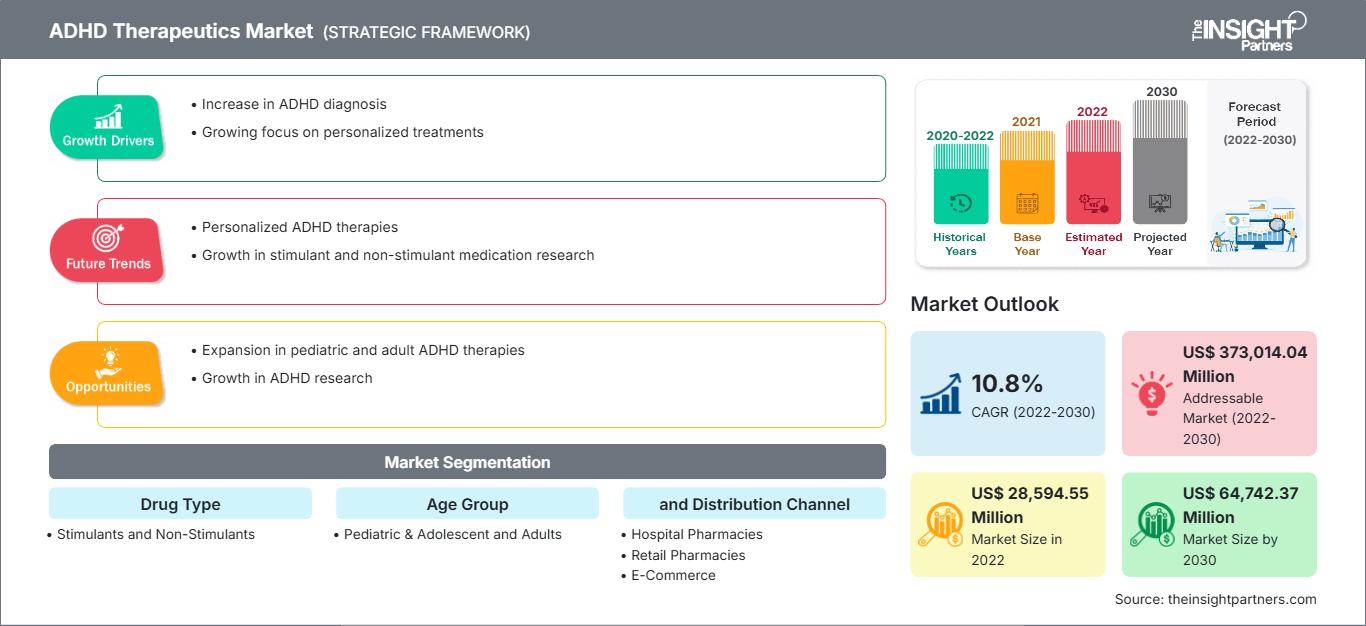
The global ADHD therapeutics market is witnessing steady expansion, driven by increasing awareness of attention-deficit/hyperactivity disorder (ADHD), improvements in diagnosis, and growing access to pharmacological and non-pharmacological treatment options. ADHD is one of the most commonly diagnosed neurodevelopmental disorders, affecting children, adolescents, and adults worldwide. The growing recognition of ADHD symptoms across different age groups has encouraged healthcare providers to adopt timely diagnostic and treatment approaches. In addition, increasing investments in neuroscience research and the development of innovative therapies are contributing to the evolution of the ADHD treatment landscape.
ADHD Therapeutics Market Size and Growth Outlook
The ADHD Therapeutics Market size was valued at US$ 16.34 Billion in 2025 and is projected to reach US$ 24.50 Billion by 2034, registering a CAGR of 4.6% during 2026–2034. This growth is supported by the increasing prevalence of ADHD, rising diagnosis rates, and continued innovation in therapeutic approaches. The market is also experiencing growing demand for medications that provide improved symptom control, convenient dosing schedules, and enhanced patient adherence. The expansion of healthcare infrastructure in emerging economies and increasing awareness among parents, caregivers, educators, and healthcare professionals are further strengthening market opportunities. Pharmaceutical companies are focusing on developing therapies with improved efficacy and safety profiles, while healthcare providers are increasingly adopting individualized treatment strategies based on patient age, symptom severity, and treatment response.
Increasing ADHD Diagnosis Rates Driving Market Growth
One of the major trends influencing the ADHD therapeutics market is the rise in diagnosis rates globally. Greater awareness of ADHD symptoms and improved access to mental health professionals have contributed to the identification of previously undiagnosed cases. In children, schools and pediatric healthcare settings are playing an important role in recognizing behavioral and learning difficulties associated with ADHD. At the same time, growing awareness of adult ADHD is encouraging more adults to seek professional evaluation and treatment. The expansion of screening initiatives and the availability of standardized diagnostic guidelines are expected to support continued growth in the number of diagnosed patients. As diagnosis improves, the demand for prescription medications and comprehensive behavioral interventions is also increasing.
Download Sample PDF Copy: https://www.theinsightpartners.com/sample/TIPRE00003833
Growing Adoption of Stimulant and Non-Stimulant Therapies
The treatment landscape for ADHD includes stimulant and non-stimulant medications, with treatment selection depending on individual patient needs and clinical considerations. Stimulants remain widely used because of their established efficacy in managing core ADHD symptoms, including inattention, hyperactivity, and impulsivity. However, increasing interest in non-stimulant therapies is emerging as healthcare providers seek additional treatment options for patients who do not respond adequately to stimulants or experience undesirable side effects. The availability of different formulations, including extended-release and long-acting products, is also improving treatment convenience. Pharmaceutical companies are increasingly investing in novel drug delivery systems and formulations designed to improve adherence and provide consistent symptom management throughout the day.
Rising Focus on Personalized ADHD Treatment
Personalized treatment is becoming an important trend in ADHD management. Patients can respond differently to the same medication, making individualized treatment selection increasingly important. Healthcare professionals are evaluating factors such as age, symptom severity, comorbidities, lifestyle, treatment history, and patient preferences when developing treatment plans. This approach is encouraging pharmaceutical companies and researchers to explore therapies that can address diverse patient needs. The growing integration of digital health technologies and data-driven clinical decision-making may further support personalized treatment strategies. As precision medicine approaches continue to develop, the ADHD therapeutics market could benefit from more targeted and patient-centric treatment models.
Technological Advancements Transforming ADHD Management
Technology is increasingly influencing the diagnosis, monitoring, and management of ADHD. Digital health platforms, telehealth services, mobile applications, and remote patient monitoring tools are helping improve access to specialized care. Telemedicine has become particularly valuable for patients in regions where access to mental health professionals is limited. Digital tools can also support medication reminders, symptom tracking, behavioral interventions, and communication between patients, caregivers, and healthcare providers. In parallel, researchers are exploring digital therapeutics and technology-enabled interventions as complementary approaches to conventional treatment. The increasing adoption of digital healthcare solutions is expected to create new opportunities for companies operating across the ADHD therapeutics ecosystem.
Increasing Awareness and Mental Health Initiatives
Growing awareness of ADHD and broader efforts to address mental health are supporting market development. Governments, healthcare organizations, educational institutions, and patient advocacy groups are increasingly conducting awareness campaigns to improve understanding of ADHD and reduce misconceptions surrounding the disorder. Greater public awareness encourages individuals and families to seek timely medical support, which can contribute to earlier diagnosis and intervention. In addition, increasing recognition of ADHD as a condition that can affect academic performance, workplace productivity, social relationships, and overall quality of life is strengthening demand for effective treatment. These initiatives are expected to remain important growth factors for the global ADHD therapeutics market.
Regional Growth Opportunities in the ADHD Therapeutics Market
North America is expected to remain a significant market for ADHD therapeutics due to high awareness levels, established healthcare infrastructure, increasing diagnosis rates, and the presence of major pharmaceutical companies. The region benefits from extensive research activities and the availability of advanced treatment options. Europe is also experiencing steady growth supported by improvements in diagnosis, healthcare access, and increasing recognition of ADHD across pediatric and adult populations. Meanwhile, Asia Pacific is anticipated to present attractive growth opportunities as awareness of ADHD increases and healthcare infrastructure continues to improve. Rising healthcare expenditure, expanding access to specialists, and growing investments in pharmaceutical research are expected to contribute to market expansion across emerging economies.
Get Full Report: https://www.theinsightpartners.com/buy/TIPRE00003833
Competitive Landscape and Key Market Players
- Amneal Pharmaceuticals, Inc.
- Novartis AG
- Pfizer, Inc.
- Eli Lilly and Company
- Noven Pharmaceuticals, Inc.
- Janssen Pharmaceuticals, Inc.
- Johnson & Johnson Services, Inc.
- Corium, Inc.
- Adlon Therapeutics L.P.
- Teva Pharmaceutical Industries Ltd.
Future Growth Trends and Market Opportunities
The future of the ADHD therapeutics market is expected to be shaped by increasing diagnosis, expanding treatment access, and continued pharmaceutical innovation. The development of therapies with improved tolerability, longer duration of action, and convenient administration is likely to remain a key area of focus. At the same time, growing interest in non-stimulant treatments and digital therapeutic solutions may diversify the available treatment landscape. Emerging markets are also expected to provide significant opportunities as healthcare systems improve and awareness increases. However, challenges such as concerns regarding medication side effects, regulatory requirements, treatment adherence, and limited access to specialized mental healthcare may affect market growth. Overall, continued innovation and greater emphasis on personalized, accessible, and comprehensive ADHD management are expected to support the market’s long-term expansion.
Related Reports
Yersinia Diagnostics Market Growth, Trends & Demand by 2034
Human Alpha-1 Proteinase Inhibitor Market Size, Share & Demand by 2034
About US
The Insight Partners provides comprehensive syndicated and tailored market research services in the healthcare, technology, and industrial domains. Renowned for delivering strategic intelligence and practical insights, the firm empowers businesses to remain competitive in ever-evolving global markets.
Contact Us
Contact Person: Ankit Mathur
E-mail: ankit.mathur@theinsightpartners.com
Phone: +1-646-491-9876
Also Available in : Korean German Japanese French Chinese Italian Spanish
