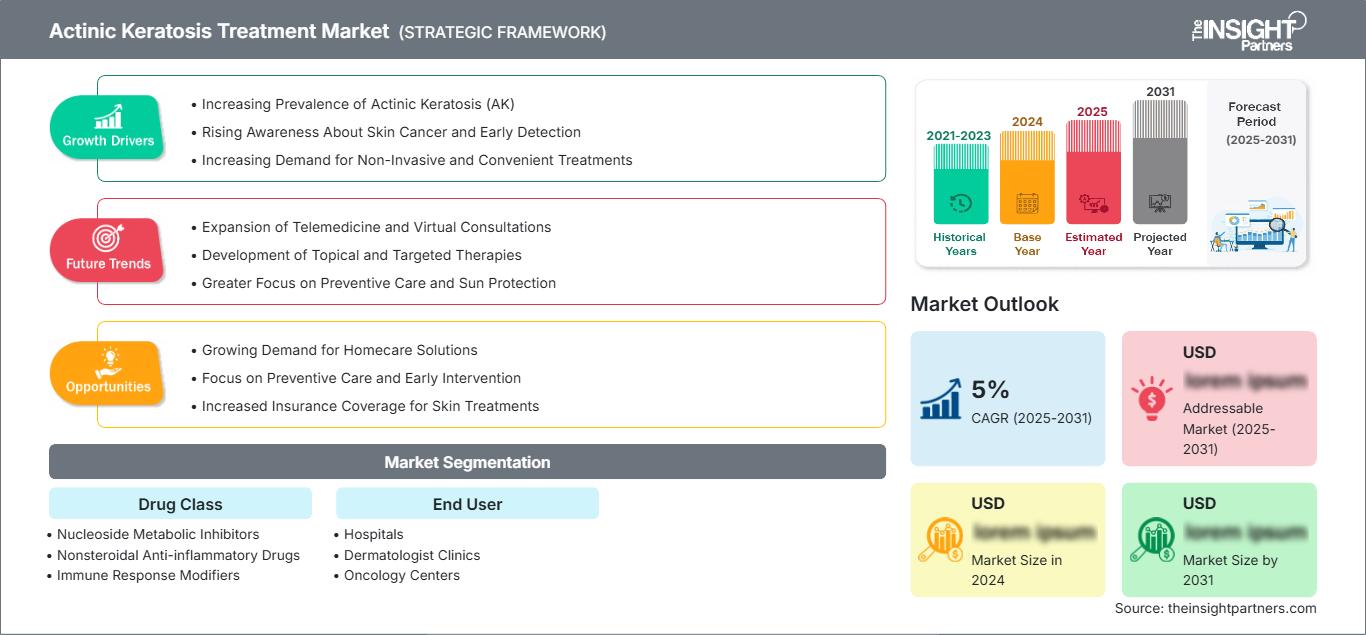
The global Actinic Keratosis Treatment Market is witnessing steady growth, driven by the rising prevalence of actinic keratosis (AK), increasing awareness of skin cancer risks, and the growing aging population worldwide. Actinic keratosis is a common precancerous skin condition caused primarily by prolonged exposure to ultraviolet (UV) radiation. The condition is particularly prevalent among older adults and individuals with significant cumulative sun exposure. The Actinic Keratosis Treatment Market is expected to benefit from continuous improvements in dermatological care, growing adoption of minimally invasive therapies, and increasing demand for effective treatment options that can reduce the risk of progression from actinic keratosis to squamous cell carcinoma.
Rising Incidence of Actinic Keratosis Driving Market Growth
The Actinic Keratosis Treatment Market size was valued at US$ 7.54 billion in 2025 and is projected to reach US$ 10.45 billion by 2034, expanding at a CAGR of 3.70% during 2026–2034. Healthcare professionals are also emphasizing regular dermatological examinations, particularly for high-risk populations. This growing focus on early intervention is increasing demand for topical medications, cryotherapy, photodynamic therapy, laser-based procedures, and other advanced treatment approaches.
Aging Population Creates Significant Market Opportunities
The global increase in the geriatric population is another important trend influencing the actinic keratosis treatment market. Older individuals generally have greater cumulative exposure to UV radiation and are therefore more susceptible to developing AK lesions. According to demographic trends, the number of elderly people is increasing across developed and developing economies, creating a larger patient pool requiring dermatological care. In addition, improved access to healthcare and greater awareness of skin health among older adults are encouraging more patients to seek professional diagnosis and treatment. This demographic shift is expected to create sustained opportunities for pharmaceutical companies and dermatology-focused healthcare providers.
Download Sample PDF Copy: https://www.theinsightpartners.com/sample/TIPRE00004410
Growing Adoption of Topical Treatment Options
Topical therapies remain an important component of actinic keratosis management because they can be administered conveniently and are suitable for treating multiple lesions over larger areas of sun-damaged skin. Common treatment options include 5-fluorouracil, imiquimod, diclofenac, and tirbanibulin. The growing preference for convenient outpatient treatment and non-surgical approaches is supporting demand for topical formulations. Pharmaceutical companies are also investing in the development of therapies that offer improved tolerability, shorter treatment durations, and better patient adherence. The introduction of newer topical products is expected to strengthen competition and encourage innovation in the market.
Increasing Preference for Minimally Invasive Procedures
Patients and healthcare providers are increasingly adopting minimally invasive treatment procedures due to their effectiveness and relatively short recovery periods. Cryotherapy is widely used for the treatment of individual or limited AK lesions, while photodynamic therapy is gaining attention for treating larger areas of damaged skin. Laser therapy and curettage are also used in selected cases based on lesion characteristics and patient requirements. The rising preference for outpatient procedures, combined with advancements in dermatological technologies, is expected to support market growth. Clinics and dermatology centers are increasingly incorporating advanced equipment and treatment protocols to improve patient outcomes and treatment convenience.
Photodynamic Therapy and Advanced Technologies Gain Traction
Photodynamic therapy is emerging as an important treatment option in the management of actinic keratosis, particularly for patients with multiple lesions or extensive areas of sun damage. The treatment uses a photosensitizing agent followed by exposure to a specific wavelength of light to destroy abnormal cells. Advances in light-based technologies and treatment protocols are improving the effectiveness and patient experience associated with photodynamic therapy. In parallel, technological developments in laser and imaging systems are helping dermatologists identify and manage suspicious lesions more effectively. These developments are expected to contribute to the growing adoption of advanced treatment modalities.
Rising Skin Cancer Awareness Supports Early Diagnosis
Growing public awareness of skin cancer and the importance of early detection is positively influencing the market. Actinic keratosis is widely recognized as a potential precursor to squamous cell carcinoma, making timely diagnosis and treatment essential. Public health campaigns, dermatology awareness initiatives, and educational programs are encouraging individuals to adopt sun-protection measures and undergo regular skin examinations. Increased awareness of sunscreen use, protective clothing, and UV avoidance is also helping consumers become more proactive about skin health. As awareness increases, more patients are likely to seek medical advice for suspicious skin changes, contributing to demand for diagnostic and treatment services.
Pharmaceutical Innovation and Product Development
Innovation in dermatological pharmaceuticals is expected to remain a key market trend. Manufacturers are focusing on developing therapies with improved efficacy, simplified dosing schedules, and enhanced patient tolerability. The development of new topical agents and combination therapies is creating opportunities to address the diverse needs of patients with actinic keratosis. Companies are also exploring innovative drug delivery systems that can improve the penetration and effectiveness of active ingredients. Increasing investment in research and development is likely to strengthen the competitive landscape and contribute to the availability of advanced treatment solutions.
Regional Market Trends and Growth Analysis
North America is expected to remain a significant region in the global actinic keratosis treatment market due to the high prevalence of sun-related skin conditions, strong healthcare infrastructure, and widespread awareness of skin cancer prevention. The United States represents a major market, supported by high healthcare expenditure and the availability of advanced dermatological treatments. Europe is also witnessing steady growth, driven by an aging population, increasing awareness of skin cancer, and growing access to dermatology services. Meanwhile, the Asia Pacific region is expected to present promising growth opportunities as healthcare infrastructure improves, disposable incomes increase, and awareness of dermatological diseases expands. Emerging markets in Latin America and the Middle East and Africa are also expected to experience gradual growth as access to diagnosis and treatment improves.
Get Full Report: https://www.theinsightpartners.com/buy/TIPRE00004410
Competitive Landscape and Key Players
The competitive landscape of the Actinic Keratosis Treatment Market is characterized by product development, strategic collaborations, regulatory approvals, and efforts to expand dermatology portfolios. Key players operating in the market include Almirall, S.A.; Bausch Health Companies Inc.; Galderma S.A.; LEO Pharma A/S; Sun Pharmaceutical Industries Ltd.; 3M Company; Biofrontera AG; Mayne Pharma Group Limited; Hill Dermaceuticals, Inc.; and Perrigo Company plc. These companies are focusing on strengthening their market presence through innovative product launches, research and development initiatives, strategic partnerships, and geographic expansion. The increasing competition among established pharmaceutical companies and emerging players is expected to encourage innovation and improve access to effective actinic keratosis treatment options.
Future Outlook for the Actinic Keratosis Treatment Market
The future outlook for the global market remains positive, supported by increasing disease awareness, an expanding geriatric population, rising UV exposure concerns, and advancements in dermatological treatment technologies. The shift toward minimally invasive procedures and convenient topical therapies is expected to influence treatment preferences over the coming years. In addition, growing investments in research and development may lead to the introduction of more effective and patient-friendly therapies. As healthcare systems increasingly emphasize early diagnosis and prevention of skin cancer, demand for actinic keratosis treatment is expected to remain resilient. Overall, the market is positioned for steady expansion as pharmaceutical innovation, technological advancements, and improved access to dermatological care continue to shape the competitive and treatment landscape.
About US
The Insight Partners provides comprehensive syndicated and tailored market research services in the healthcare, technology, and industrial domains. Renowned for delivering strategic intelligence and practical insights, the firm empowers businesses to remain competitive in ever-evolving global markets.
Contact Us
Contact Person: Ankit Mathur
E-mail: ankit.mathur@theinsightpartners.com
Phone: +1-646-491-9876
Also Available in : Korean German Japanese French Chinese Italian Spanish
