The aviation industry is undergoing a profound digital transformation driven by the need for enhanced operational efficiency, heightened safety standards, and optimized fleet performance. At the center of this evolution is the Flight Engine Monitoring System (FEMS), a critical technology that provides real-time diagnostics, prognostic capabilities, and predictive maintenance insights for commercial and military aircraft engines.
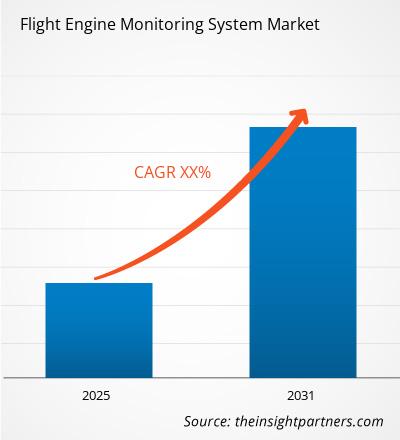
The Flight Engine Monitoring System Market size is expected to reach US$ 6.47 Billion by 2034 from US$ 2.82 Billion in 2025. The market is estimated to record a CAGR of 9.65% from 2026 to 2034.
Market Dynamics and Growth Drivers
Modern aircraft reliance on complex, high-performance turbofan and turboprop engines requires continuously operating telemetry and monitoring solutions. A flight engine monitoring system continuously tracks engine health variables such as vibration levels, exhaust gas temperatures, oil pressure, fuel flow rate, and rotational speeds. By collecting and analyzing this telemetry data during flight, airlines and aircraft operators can identify subtle operational anomalies long before they escalate into costly failures or severe safety hazards.
Several primary factors drive the expansion of the flight engine monitoring system industry:
Rising Demand for Predictive Maintenance: Aircraft maintenance, repair, and overhaul (MRO) expenses account for a major share of an airline’s operational expenditures. Traditional time-based maintenance schedules are rapidly giving way to condition-based and predictive maintenance frameworks enabled by real-time monitoring. This transition minimizes unscheduled maintenance, reduces overall downtime, and extends overall engine component lifespans.
Growth in Commercial Air Fleet and Passenger Traffic: Expanding global passenger traffic, particularly across emerging economies in the Asia-Pacific and Latin American regions, has prompted commercial airlines to scale up fleet acquisitions. With expanding fleets, modern commercial airliners come equipped with factory-integrated engine monitoring architectures to optimize fuel consumption and minimize environmental impact.
Stringent Regulatory and Safety Standards: Global aviation regulatory authorities, including the Federal Aviation Administration (FAA) and the European Union Aviation Safety Agency (EASA), continuously enforce strict airworthiness directives. Adherence to safety regulations mandates detailed diagnostic data logging, which drives widespread adoption of monitoring architectures across civil and military aviation segments.
Get a PDF Sample– https://www.theinsightpartners.com/sample/TIPRE00019898
Key Technological Developments
The integration of advanced data processing technologies is reshaping engine health management across the global market. Key innovations driving the industry forward include:
Artificial Intelligence and Machine Learning: Modern FEMS solutions leverage machine learning algorithms to process high-frequency flight data. These algorithms recognize pattern deviations and accurately predict remaining useful life (RUL) for critical components, allowing maintenance teams to schedule service proactively.
IoT and Wireless Telemetry: The deployment of high-throughput satellite communications and advanced wireless ground data transfer systems allows engine monitoring data to be streamed directly to ground stations mid-flight or immediately upon touchdown.
Edge Computing in Aviation: Onboard edge processors analyze telemetry data in real time directly within the aircraft’s avionic suite, flagging urgent anomalies immediately to the flight crew while archiving routine performance metrics for post-flight analysis.
Key Market Players
The global flight engine monitoring system market features a competitive landscape comprising established aerospace technology developers, component manufacturers, and MRO service specialists. Leading companies operating in this market include:
AFI KLM EandM
AMETEK Inc.
CAMP Systems Inc.
Condition Monitoring Group Ltd.
IHI Corp.
Latitude Technologies Corp.
Meggitt Plc
MTU Aero Engines AG
Raytheon Technologies Corp.
Safran SA
These key market participants focus on strategic collaborations, mergers, acquisitions, and ongoing research and development investments to introduce lightweight, high-precision sensors and cloud-integrated engine diagnostic platforms.
Get Full Copy of This Report- https://www.theinsightpartners.com/buy/TIPRE00019898
Future Outlook
The future of the Flight Engine Monitoring System Market remains highly promising as commercial airlines, defense operators, and MRO providers increasingly shift toward fully autonomous, cloud-based fleet analytics. Over the coming decade, integration with digital twin technology—where a virtual model of an aircraft engine runs alongside the physical asset—will redefine diagnostic capabilities, enabling real-time performance simulation and ultra-precise fault prediction. Furthermore, as the global aviation sector actively pursues decarbonization targets, real-time monitoring of fuel burn dynamics and emissions metrics will prove essential. Backed by sustained investments in next-generation aerospace electronics and expanding global fleet sizes, the flight engine monitoring system market is positioned for robust long-term growth through 2034.
Related Reports–
About Us
The Insight Partners is a one-stop industry research provider of actionable intelligence. We help our clients in getting solutions to their research requirements through our syndicated and consulting research services. We specialize in industries such as Semiconductor and Electronics, Aerospace and Defense, Automotive and Transportation, Biotechnology, Healthcare IT, Manufacturing and Construction, Medical Devices, Technology, Media, and Telecommunications, as well as chemicals and Materials.
Contact Us
If you have any queries about this report or if you would like further information, don’t hesitate to get in touch with us:
Contact Person: Ankit Mathur
E-mail: ankit.mathur@theinsightpartners.com

- Aerospace PCB Market Growth, Size & Forecast - 2026-07-22
- Airport Passenger Stairs Market Demand - 2026-07-22
- Fifth Wheel Coupling Market Expands with Growing - 2026-07-22