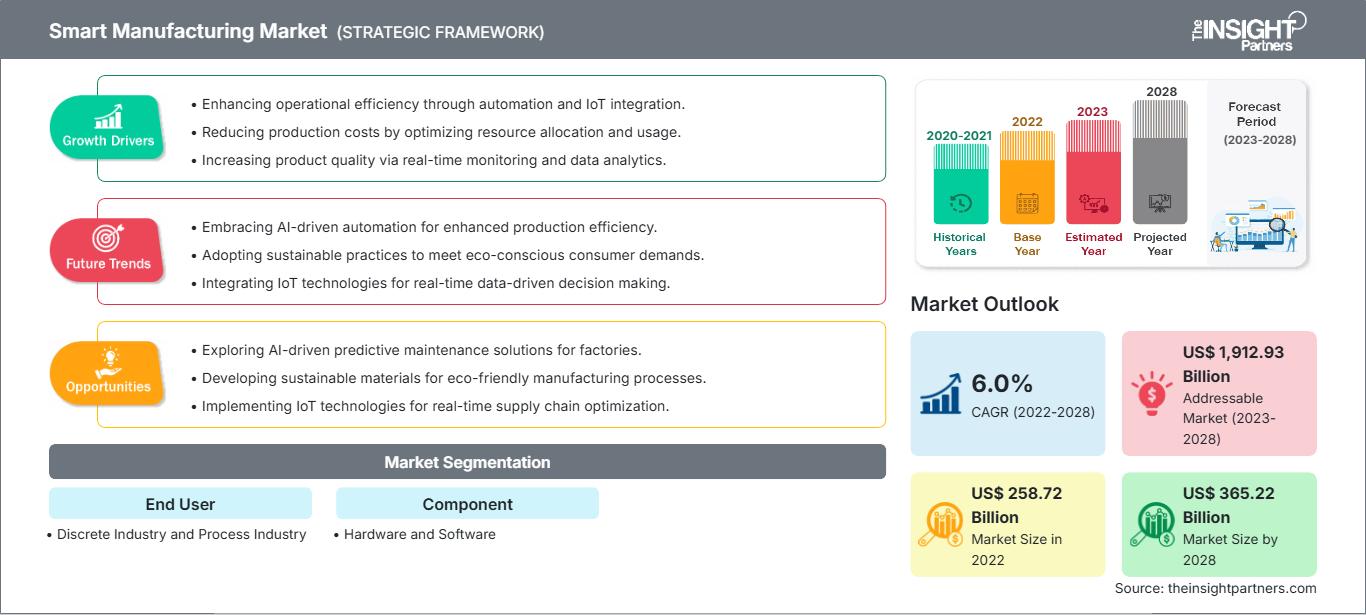
The global Smart Manufacturing is experiencing significant growth as industries worldwide accelerate digital transformation and adopt advanced technologies to improve production efficiency, reduce operational costs, and enhance product quality.
According to market analysis, The global smart manufacturing market size is projected to reach US$ 1096.35 billion by 2034 from US$ 341.39 billion in 2025. The market is anticipated to register a CAGR of 13.84% during the forecast period 2026–2034.
Smart Manufacturing Market Overview
The Smart manufacturing represents the integration of advanced digital technologies into manufacturing operations to create flexible, automated, and intelligent production systems. Unlike conventional manufacturing approaches, smart manufacturing enables machines, devices, and systems to communicate with each other, analyze operational data, and optimize processes with minimal human intervention.
The adoption of smart manufacturing solutions allows enterprises to achieve higher productivity, improved resource utilization, reduced downtime, and enhanced supply chain visibility. Technologies such as sensors, robotics, machine learning algorithms, and cloud-based platforms enable manufacturers to monitor production processes in real time and make faster operational decisions.
Key Market Drivers Fueling Smart Manufacturing Growth
- Growing Adoption of Industry 4.0 Technologies:-Industry 4.0 is one of the primary factors accelerating the growth of the smart manufacturing market. Manufacturers are increasingly implementing connected systems, industrial automation, and data analytics platforms to transform traditional factories into intelligent production environments.
- Increasing Demand for Automation and Operational Efficiency:-Rising labor costs, increasing production complexity, and the need for faster manufacturing cycles are encouraging businesses to invest in automation technologies. Smart manufacturing solutions help organizations reduce manual errors, optimize workflows, and improve production accuracy.
- Growing Importance of Predictive Maintenance:-Predictive maintenance is becoming a major application area within smart manufacturing. By using AI-powered analytics and IoT-enabled monitoring systems, manufacturers can identify potential equipment failures before they occur.
Get Sample PDF of the report @ https://www.theinsightpartners.com/sample/TIPTE100000174
Smart Manufacturing Market Opportunities
- Expansion of Artificial Intelligence and Machine Learning:-Artificial intelligence and machine learning are creating new opportunities in the smart manufacturing ecosystem. AI-based systems can analyze large volumes of industrial data, identify patterns, optimize production processes, and support autonomous decision-making.
- Increasing Adoption of Digital Twins:-Digital twin technology is emerging as a valuable solution for manufacturers seeking improved operational visibility. Digital twins create virtual representations of physical assets, production lines, or entire facilities, allowing companies to simulate processes and optimize performance before implementing changes.
- Growth of Sustainable Manufacturing Practices:-Sustainability has become a major focus for industries worldwide. Smart manufacturing technologies enable companies to reduce energy consumption, minimize waste, and improve resource management.
Get the Premium Research Report @ https://www.theinsightpartners.com/buy/TIPTE100000174
Smart Manufacturing Market Segmentation Analysis
The smart manufacturing market is segmented based on component, end user, and geography.
By Component
Hardware: The hardware segment includes sensors, industrial robots, control systems, and automation equipment. Hardware solutions form the foundation of smart manufacturing by enabling machine connectivity and real-time monitoring.
Software: The software segment includes manufacturing execution systems (MES), analytics platforms, cloud solutions, and AI-based applications. Software plays a critical role in managing data, improving decision-making, and optimizing production operations.
By End User
Discrete Industries: Automotive, aerospace, electronics, and machinery manufacturers are major adopters of smart manufacturing solutions. These industries require high precision, automation, and flexible production capabilities.
Process Industries: Chemical, pharmaceutical, oil and gas, and food processing industries are increasingly adopting smart manufacturing technologies to improve safety, quality control, and operational efficiency.
By Geography
The smart manufacturing market is analyzed across:
- North America
- Europe
- Asia Pacific
- South and Central America
- Middle East and Africa
Asia Pacific is expected to witness strong growth due to rapid industrialization, increasing automation investments, and government initiatives supporting digital manufacturing.
Challenges Affecting Market Growth
Despite significant growth opportunities, the smart manufacturing market faces several challenges. High initial investment costs, cybersecurity concerns, lack of skilled workforce, and integration complexities can limit adoption, especially among small and medium-sized enterprises.
Manufacturers must also address data security risks as connected factories generate large amounts of sensitive operational information. Implementing advanced cybersecurity solutions is becoming essential to protect industrial networks from potential cyber threats.
Impact of Smart Manufacturing on Business Operations
Smart manufacturing is transforming business operations by improving productivity, reducing costs, and enabling faster innovation. Companies adopting smart factory technologies can achieve better resource utilization, improved product quality, and enhanced customer satisfaction.
Real-time analytics and connected systems allow manufacturers to respond quickly to market changes and customize products according to customer requirements. This flexibility provides businesses with a competitive advantage in increasingly dynamic markets.
Key Companies Operating in the Smart Manufacturing Market
Some of the prominent companies operating in the smart manufacturing market include:
- Yokogawa Electric Corporation
- Cisco Systems, Inc
- Honeywell International Inc.
- 3D Systems, Inc
- Daifuku Co., Ltd
- GENERAL ELECTRIC
- IBM Corporation
- Oracle Corporation
- Siemens AG
- Schneider Electric SE
These companies are focusing on product innovation, strategic partnerships, automation solutions, and advanced digital platforms to strengthen their market positions.
Future Outlook of Smart Manufacturing Market
The future of smart manufacturing will be shaped by advancements in AI, robotics, industrial connectivity, and cloud-based manufacturing platforms. As businesses continue to prioritize automation, sustainability, and operational resilience, smart manufacturing adoption is expected to accelerate across industries.
About The Insight Partners
The Insight Partners is a global leader in market research, delivering comprehensive analysis and actionable insights across diverse industries. The company empowers decision-makers with data-driven intelligence to navigate evolving markets and accelerate growth.
Contact Us:
- Contact Person: Ankit Mathur
- E-mail: ankit.mathur@theinsightpartners.com
- Phone: +1-646-491-9876
