Growing environmental concerns and stricter pollution control measures are accelerating the adoption of advanced remediation solutions across industries worldwide. Organizations are increasingly investing in sustainable technologies to restore contaminated land, water, and ecosystems while complying with evolving environmental regulations.
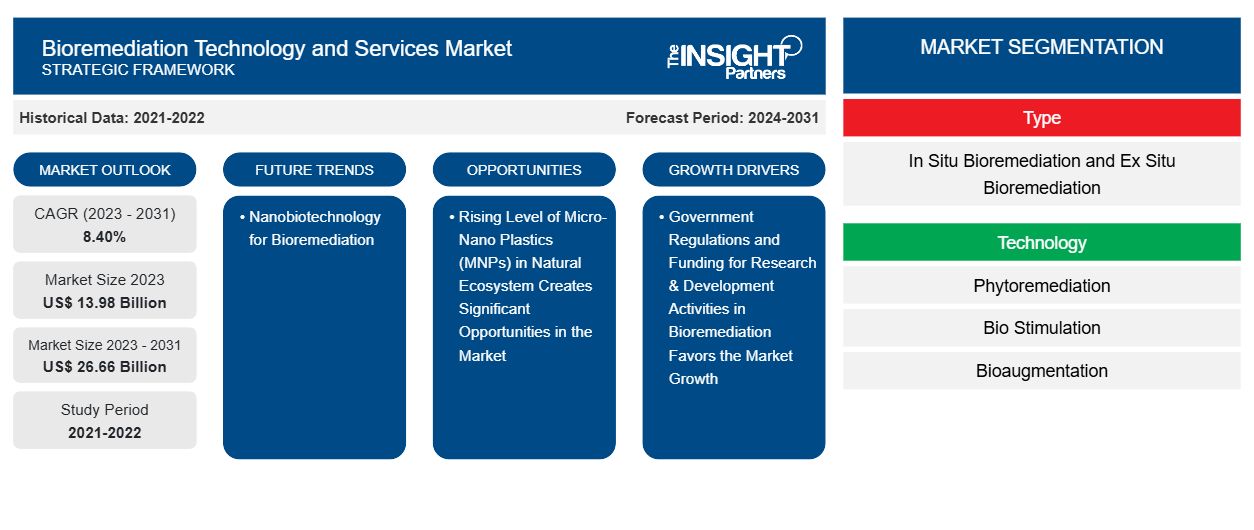
The Bioremediation Technology and Services Market Trends indicate strong momentum as governments, industries, and environmental agencies prioritize eco-friendly cleanup methods. According to The Insight Partners, the market was valued at US$ 13.98 billion in 2023 and is projected to reach US$ 26.66 billion by 2031, expanding at a CAGR of 8.40% during the forecast period. Increasing adoption of nanobiotechnology, rising environmental awareness, and growing investments in research and development continue to reshape the competitive landscape.
Get Sample PDF @ https://www.theinsightpartners.com/sample/TIPRE00020046
Rising Environmental Regulations and Government Support Fuel Growth
Government initiatives remain one of the strongest growth drivers for the industry. Regulatory agencies across North America, Europe, and Asia Pacific are enforcing stricter environmental standards for industrial waste management, contaminated land restoration, and wastewater treatment.
Several governments are also supporting research programs focused on improving biological remediation technologies. Collaborative initiatives between universities, environmental organizations, and public agencies are accelerating innovation in microbial remediation, phytoremediation, and in situ treatment techniques. Funding for research projects aimed at addressing hazardous pollutants, pesticides, heavy metals, and chlorinated solvents continues to strengthen long term industry development.
Increasing awareness regarding water scarcity and natural resource conservation is further encouraging industries to adopt environmentally responsible remediation strategies. Sustainable cleanup technologies are becoming an essential part of industrial operations across oil and gas, manufacturing, mining, and municipal wastewater management.
Nanobiotechnology and Advanced Biological Solutions Shape Industry Trends
Technological innovation continues to redefine remediation efficiency and environmental sustainability. One of the most significant Bioremediation Technology and Services Market Trends is the growing integration of nanobiotechnology with conventional biological treatment methods.
Nanomaterials improve microbial activity, increase contaminant degradation rates, and enhance the effectiveness of remediation projects in complex environments. Researchers are exploring advanced microbial communities, engineered bacteria, fungi, and plant based systems to remove both organic and inorganic pollutants more efficiently.
Phytoremediation remains one of the most widely adopted technologies because of its environmental compatibility and cost effectiveness. At the same time, bioaugmentation and biostimulation techniques are gaining popularity for accelerating natural biological degradation processes in contaminated soil and groundwater.
Bioreactor based remediation systems are also expanding across industrial applications due to their ability to treat hazardous waste under controlled conditions while improving operational efficiency.
Growing Microplastic Pollution Creates New Opportunities
The increasing concentration of microplastics and nanoplastics in natural ecosystems has emerged as a major environmental challenge worldwide. These pollutants threaten aquatic ecosystems, agricultural land, wildlife, and human health, creating urgent demand for effective cleanup technologies.
Microbial remediation has become one of the most promising approaches for degrading plastic particles naturally. Ongoing research is focused on identifying microorganisms capable of utilizing plastic fragments as carbon sources while improving degradation efficiency through enzyme optimization.
As industries and governments seek sustainable alternatives to conventional waste treatment methods, demand for innovative biological remediation technologies is expected to rise significantly. This trend presents substantial opportunities for technology providers, environmental service companies, and biotechnology firms throughout the forecast period.
Segment Analysis Highlights
The industry continues to evolve across multiple technology and service categories, with several segments demonstrating strong commercial potential.
By Type
- In Situ Bioremediation
- Ex Situ Bioremediation
The in situ bioremediation segment accounted for the largest share in 2023 due to its cost effectiveness and minimal environmental disruption.
By Technology
- Phytoremediation
- Bio Stimulation
- Bioaugmentation
- Bioreactors
- Fungal Remediation
- Land Based Treatments
Among these, phytoremediation maintained a leading position because of its environmentally friendly approach and growing public acceptance.
By Service
- Soil Remediation
- Wastewater Remediation
- Oilfield Remediation
- Others
Soil remediation represented a significant portion of industry demand, supported by increasing land restoration projects worldwide.
Regional Landscape and Competitive Environment
North America continues to lead global adoption due to stringent environmental regulations, government funded remediation programs, and well established cleanup initiatives. The United States remains a major contributor through programs focused on hazardous site restoration and pollution management.
Europe follows closely with strong regulatory frameworks supporting sustainable environmental practices. Meanwhile, Asia Pacific is expected to experience robust expansion owing to rapid industrialization, increasing environmental awareness, and growing investments in wastewater management infrastructure across countries such as China and India.
Leading companies are strengthening their competitive positions through technological innovation, strategic collaborations, and expansion of environmental remediation capabilities.
Key Players
- Xylem Inc.
- REGENESIS
- Aquatech International LLC.
- Drylet, Inc.
- Altogen Labs
- InSitu Remediation Services Limited
- Probiosphere
- Ivey International Inc.
- Sumas Remediation Services, Inc.
Interested in Purchasing this Report? Click here @ https://www.theinsightpartners.com/buy/TIPRE00020046
Future Outlook
The outlook for the Bioremediation Technology and Services industry remains highly positive through 2031. Increasing regulatory compliance requirements, rising investments in environmental restoration, growing concern over microplastic pollution, and continued advances in nanobiotechnology are expected to sustain long term growth.
Related Report:
1) Oral Anticoagulants Market Growth, Trends & Forecast by 2034
2) Thrombosis Drugs Market Dynamics, Analysis, Trends, and Opportunities 2031
3) Cancer Monoclonal Antibodies Market Growth, Size, Share, Trends, and Forecast by 2031
About Us –
The Insight Partners provides comprehensive syndicated and tailored market research services in the healthcare, technology, and industrial domains. Renowned for delivering strategic intelligence and practical insights, the firm empowers businesses to remain competitive in ever-evolving global markets.
Contact Us:
Ankit Mathur | The Insight Partners
E-mail: ankit.mathur@theinsightpartners.com
Phone: +1-646-491-9876
Also Available in : Korean German Japanese French Chinese Italian Spanish

- Enhanced Flight Vision System Market Size, Share, $234.60 to $411.60 Million, 6.45%, 2026-2034 - 2026-07-22
- Eastern Europe Ultrasound Skin Rejuvenation Devices Market Is Growing at a 9.9% CAGR - 2026-07-22
- North America Angiogenesis Inhibitors And Stimulators Market Leads Growth in Targeted Therapeutics - 2026-07-22