The global aviation industry is experiencing a phase of transformation driven by technological innovation, expanding air traffic, and stringent safety standards set by civil aviation authorities. As airspaces become increasingly congested, the role of real-time monitoring and threat identification systems has become paramount. Central to these safety enhancements is the Airborne Collision Avoidance System (ACAS). Designed to operate independently of ground-based air traffic control, ACAS detects surrounding aircraft equipped with transponders and provides pilots with automated resolution instructions to maintain safe separation.
Market Valuation and Growth Trajectory
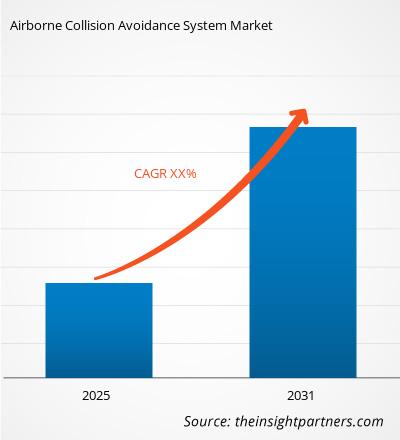
The Airborne Collision Avoidance System Market size is expected to reach US$ 1.71 Billion by 2034 from US$ 1.27 Billion in 2025. The market is estimated to record a CAGR of 3.36% from 2026 to 2034.
This steady expansion is underpinned by ongoing fleet modernization programs across commercial, regional, and defense fleets worldwide. Mandatory regulatory compliance requiring ACAS II and Traffic Alert and Collision Avoidance Systems (TCAS) on passenger and cargo aircraft continues to serve as a foundational growth catalyst. Furthermore, the rapid adoption of Unmanned Aerial Vehicles (UAVs) in both military and commercial applications is creating fresh demand for lightweight, low-power collision avoidance hardware.
Industry Drivers and Key Trends
- Surge in Global Air Traffic and Fleet Expansion
With global air traffic surpassing historic levels, airlines are expanding their active fleets to meet commercial demand. High traffic density in key flight corridors increases the likelihood of potential mid-air incidents, prompting aviation operators to invest heavily in upgraded avionics. Commercial jets, regional commuters, and general aviation sectors are integrating next-generation ACAS platforms to ensure passenger safety and maintain continuous regulatory compliance.
- Integration with Next-Gen Avionics and AI
Modern collision avoidance architecture is moving beyond basic transponder communication. The integration of artificial intelligence (AI), machine learning algorithms, and high-performance signal processors allows ACAS platforms to provide predictive threat analysis. Next-generation protocols like ACAS X utilize probabilistic models to reduce false alerts and generate clearer, more precise resolution advisories. These software-defined architectures also enable seamless over-the-air updates, significantly lowering long-term maintenance costs for aircraft operators.
- Proliferation of UAVs and Advanced Air Mobility
Unmanned aerial systems (UAS) and urban air mobility (UAM) concepts represent major growth vectors. As drones enter shared civil airspace for logistics, surveillance, and transport, autonomous sense-and-avoid technologies become imperative. Manufacturers are responding by engineering compact, energy-efficient ACAS, PCAS (Portable Collision Avoidance Systems), and FLARM-compatible modules specifically suited for drone airframes.
Get a PDF Sample– https://www.theinsightpartners.com/sample/TIPRE00016099
Key Market Players
The global market features a mix of established defense primes, specialized avionics manufacturers, and technology innovators. Leading participants driving product development, hardware integration, and software refinement include:
Collins Aerospace
FLARM Technology Ltd
Garmin Ltd
Garrecht Avionik GmbH (Air-Avionics)
Honeywell International Inc.
L3Harris Technologies, Inc.
Lockheed Martin Corporation
QinetiQ
Thales Group
Universal Avionics
These market leaders focus on strategic partnerships, product customization for OEM integration, and aftermarket retrofitting to secure a dominant market share.
Get Full Copy of This Report- https://www.theinsightpartners.com/buy/TIPRE00016099
Future Outlook
Looking ahead, the Airborne Collision Avoidance System market is poised for structural evolution as autonomous flight technologies and next-generation air traffic management systems mature. The ongoing transition to ACAS X software frameworks will allow for tailored collision logic across fixed-wing, rotary-wing, and unmanned assets. Furthermore, as emerging markets expand their regional aviation networks and government bodies implement stricter airspace integration mandates, the demand for dual-use (civil and military) collision avoidance solutions will intensify. With continuous advancements in multi-sensor fusion, cybersecurity-hardened communications, and miniaturized avionics, the industry will remain a core pillar of global aviation safety well into the next decade.
Related Reports-
About Us
The Insight Partners is a one-stop industry research provider of actionable intelligence. We help our clients in getting solutions to their research requirements through our syndicated and consulting research services. We specialize in industries such as Semiconductor and Electronics, Aerospace and Defense, Automotive and Transportation, Biotechnology, Healthcare IT, Manufacturing and Construction, Medical Devices, Technology, Media, and Telecommunications, as well as chemicals and Materials.
Contact Us
If you have any queries about this report or if you would like further information, don’t hesitate to get in touch with us:
Contact Person: Ankit Mathur
E-mail: ankit.mathur@theinsightpartners.com

- North America Implantable Medical Devices Market Analysis: Trends, Growth, and Future Opportunities - 2026-07-22
- United States Thoracic Drainage Device Market Expands Amid Rising Thoracic Surgical Procedures - 2026-07-22
- North America Nucleic Acid Isolation and Purification Market Analysis: Trends, and Growth - 2026-07-22