Rare genetic disorders are receiving greater attention as healthcare systems prioritize early diagnosis and innovative therapeutic interventions. Continuous research efforts and expanding treatment accessibility are creating new opportunities for patients with lysosomal storage disorders. Growing collaboration among pharmaceutical companies, research organizations, and healthcare providers is strengthening the treatment landscape.
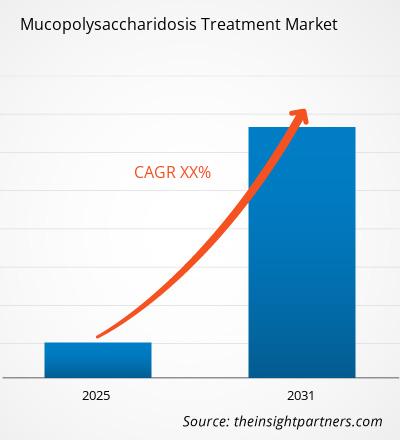
The Mucopolysaccharidosis Treatment Market Share is expected to witness significant expansion as the adoption of enzyme replacement therapies, stem cell transplantation, and emerging gene therapy approaches continues to increase. According to The Insight Partners, the global market is projected to grow from US$ 4.05 billion in 2025 to US$ 9.59 billion by 2034, registering a CAGR of 10.05% during the forecast period from 2026 to 2034. Rising awareness, improved diagnostic capabilities, and sustained investment in rare disease research are contributing to long term growth.
Get Sample PDF @ https://www.theinsightpartners.com/sample/TIPRE00017418
Expanding Therapeutic Landscape Drives Industry Growth
The treatment landscape for mucopolysaccharidosis (MPS) has evolved considerably over the past decade. Enzyme replacement therapy remains the primary treatment option for several MPS subtypes, helping improve quality of life by reducing disease progression and managing symptoms. At the same time, stem cell therapy continues to provide benefits for selected patient populations, particularly when administered at an early stage.
Growing clinical research into gene therapy, genome editing, and precision medicine is expected to reshape future treatment strategies. Pharmaceutical companies are investing heavily in novel therapeutic platforms that aim to provide long lasting disease modification rather than symptom management alone. These developments are strengthening confidence among healthcare providers and investors alike.
Increasing Disease Awareness and Early Diagnosis Support Demand
One of the major growth drivers is the increasing awareness of rare genetic disorders among physicians, patients, and healthcare organizations. National screening programs and advancements in molecular diagnostics are enabling earlier detection of MPS disorders, allowing patients to begin treatment before irreversible organ damage occurs.
Improved healthcare infrastructure across developed countries has also increased patient access to specialized treatment centers. Educational campaigns by patient advocacy organizations continue to encourage timely diagnosis, helping expand the addressable patient population.
Governments in several countries are introducing favorable reimbursement frameworks and orphan drug incentives, encouraging pharmaceutical manufacturers to develop innovative therapies for rare diseases.
Segment Analysis Highlights Treatment Opportunities
Based on treatment, enzyme replacement therapy continues to account for the largest share due to its established clinical effectiveness across multiple MPS types. Stem cell therapy remains an important option for carefully selected patients, particularly in pediatric cases.
By MPS type, the report covers:
- MPS-I
- MPS-II
- MPS-IV
- MPS-VI
- MPS-VII
- Others
Hospitals remain the leading end users because of the specialized infrastructure required for diagnosis, infusion therapies, and multidisciplinary patient care. Specialty clinics are also expanding their role as more dedicated rare disease treatment centers become available worldwide.
The report evaluates historical data from 2021 to 2024, uses 2025 as the base year, and provides forecasts through 2034 across North America, Europe, Asia Pacific, South and Central America, and the Middle East and Africa.
Regional Developments Strengthen Competitive Position
North America continues to lead global revenue generation due to advanced healthcare infrastructure, high healthcare expenditure, favorable regulatory policies, and widespread availability of orphan drugs. The United States remains the largest contributor owing to continuous innovation in rare disease therapeutics and strong investment in biotechnology research.
Europe also represents a significant regional contributor because of supportive reimbursement systems and active clinical research programs. Countries including Germany, France, and the United Kingdom continue to expand rare disease treatment initiatives.
Asia Pacific is expected to register notable growth throughout the forecast period. Improving healthcare access, expanding diagnostic capabilities, and increasing awareness of inherited metabolic disorders are creating new opportunities for pharmaceutical companies across China, Japan, India, and Australia.
Emerging economies in South and Central America and the Middle East and Africa are also expected to experience gradual growth as healthcare infrastructure continues to improve.
Competitive Landscape and Innovation Trends
Competition within the industry is increasingly focused on innovation, strategic collaborations, and pipeline development. Companies are investing in advanced gene therapies, personalized medicine, and AI supported diagnostic technologies to improve treatment outcomes.
Key players operating in the industry include:
- Takeda Pharmaceutical Company Limited
- BioMarin Pharmaceuticals, Inc.
- Ultragenyx Pharmaceutical Inc.
- Sarepta Therapeutics
- Abeona Therapeutics Inc.
- Eloxx Pharmaceuticals
- Immusoft Corporation
- GC Pharma
- JCR Pharmaceuticals Co. Ltd.
- RegenxBio Inc.
Strategic partnerships between biotechnology firms, research institutions, and regulatory agencies continue to accelerate product development while supporting faster commercialization of innovative therapies.
Interested in Purchasing this Report? Click here @ https://www.theinsightpartners.com/buy/TIPRE00017418
Future Outlook
The outlook for the Mucopolysaccharidosis Treatment Market Share remains highly positive through 2034. Continued advancements in gene therapy, personalized treatment strategies, AI enabled diagnostics, and expanded orphan drug development are expected to reshape patient care. As awareness increases and healthcare systems improve access to specialized therapies across emerging economies, the industry is well positioned for sustained growth, stronger innovation, and broader treatment availability for patients living with mucopolysaccharidosis.
Related Report:
1) Antibody Drug Conjugates Market Analysis, Size, and Share by 2031
2) Pharmaceutical Excipients Market Growth, Trends & Demand by 2034
3) Enteral Nutrition Market Strategies, Top Players, Growth Opportunities
About Us –
The Insight Partners provides comprehensive syndicated and tailored market research services in the healthcare, technology, and industrial domains. Renowned for delivering strategic intelligence and practical insights, the firm empowers businesses to remain competitive in ever-evolving global markets.
Contact Us:
Ankit Mathur | The Insight Partners
E-mail: ankit.mathur@theinsightpartners.com
Phone: +1-646-491-9876
Also Available in : Korean German Japanese French Chinese Italian Spanish
