Synthetic biology is transforming modern biotechnology by enabling the design and engineering of biological systems for diverse industrial and medical applications. Continuous advances in genetic engineering, computational biology, and automation are accelerating innovation across multiple sectors. As organizations seek sustainable production methods and precision healthcare solutions, demand for advanced synthetic biology technologies continues to expand.
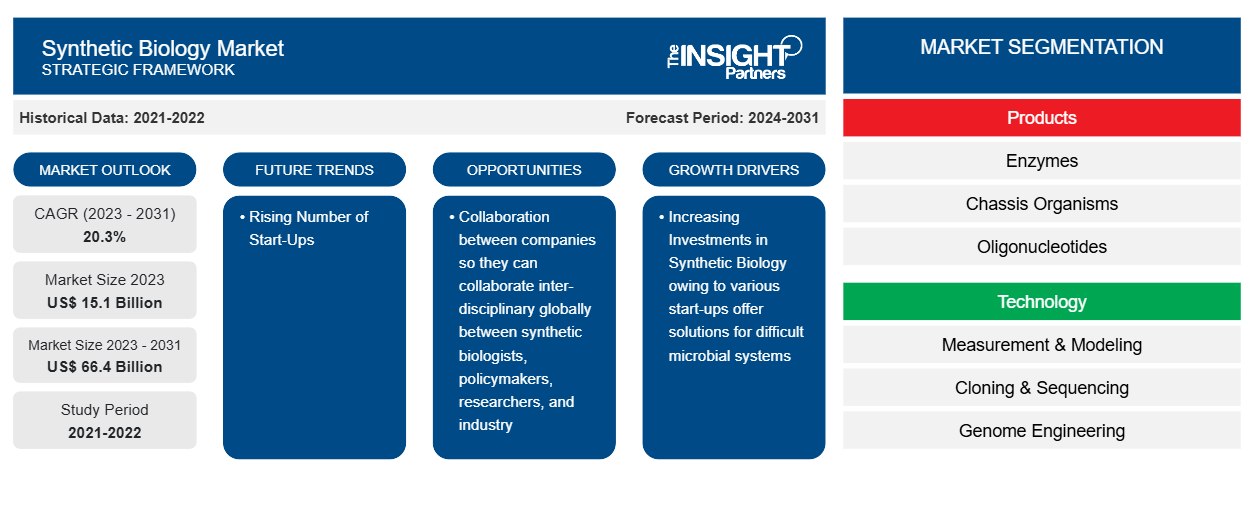
The Synthetic Biology Market Trends are gaining momentum as investments in biotechnology increase and research collaborations become more widespread. According to The Insight Partners, the market was valued at US$ 15.1 billion in 2023 and is projected to reach US$ 66.4 billion by 2031, registering a CAGR of 20.3% during the forecast period. Growing applications in pharmaceuticals, agriculture, environmental science, and industrial biotechnology continue to strengthen long-term growth prospects.
Get Sample PDF @ https://www.theinsightpartners.com/sample/TIPHE100000960
Rising Investments and Start-up Activity Fuel Industry Expansion
One of the most significant drivers supporting industry expansion is the increasing flow of public and private investments into synthetic biology research. Governments across developed and emerging economies are funding biotechnology innovation through grants, incubators, and research partnerships. These initiatives encourage entrepreneurs to develop novel biological platforms and commercial applications.
The growing number of biotechnology start-ups is also contributing to technological advancement. Companies are introducing innovative solutions in microbial engineering, gene synthesis, computational biology, and laboratory automation. Collaborative efforts among research institutions, biotechnology firms, policymakers, and pharmaceutical companies are accelerating product development while reducing research timelines.
Strategic partnerships continue to play an important role. Collaborations between academic institutions and biotechnology companies are supporting breakthroughs in drug discovery, agricultural biotechnology, and sustainable manufacturing processes.
Advanced Technologies Continue to Transform Product Development
Technological innovation remains one of the strongest Synthetic Biology Market Trends. Continuous improvements in genome engineering, gene synthesis, cloning and sequencing, nanotechnology, and computational modeling are enabling researchers to design increasingly sophisticated biological systems.
Gene synthesis represented the leading technology segment in 2023 due to its expanding role in vaccine development, therapeutic research, and industrial biotechnology. Advances in automation, artificial intelligence, and machine learning are further improving experimental accuracy while reducing development costs.
Modern synthetic biology platforms also integrate multi-omics analysis and cloud-based laboratory infrastructure, allowing researchers to optimize biological pathways and accelerate commercialization. These technological improvements are expected to enhance efficiency across pharmaceutical manufacturing, specialty chemicals, renewable materials, and agricultural innovation.
Expanding Applications Across Multiple Industries
Synthetic biology has evolved beyond traditional life sciences and now serves numerous commercial industries. Medical applications remain the largest application segment, supported by increasing demand for precision medicine, cell and gene therapies, and innovative biologics.
Beyond healthcare, synthetic biology is creating new opportunities across:
- Industrial biomanufacturing
- Food and agriculture
- Environmental applications
- Renewable chemicals
- Sustainable biofuels
Agricultural companies are leveraging engineered organisms to improve crop productivity, disease resistance, and nutrient utilization. Environmental applications include waste management, carbon reduction technologies, and bioremediation solutions. Industrial manufacturers are increasingly adopting engineered biological systems to produce sustainable chemicals and specialty materials with reduced environmental impact.
Product Segmentation and Regional Growth Patterns
Based on products, the industry includes enzymes, chassis organisms, oligonucleotides, and xeno-nucleic acids. Among these, the oligonucleotides segment accounted for the largest share in 2023 due to its extensive use in diagnostics, therapeutic development, and genetic research.
From an application perspective, medical applications dominated overall demand, while industrial and agricultural uses continue to expand rapidly as organizations pursue environmentally sustainable production methods.
Geographically, North America maintains a leading position owing to strong research infrastructure, substantial government funding, and the presence of major biotechnology companies. The United States continues to invest heavily in synthetic biology research through agencies such as the NIH, NSF, DARPA, DOE, and USDA.
Asia Pacific is expected to witness significant growth during the forecast period as countries including China and India continue expanding biotechnology infrastructure, research funding, and start-up ecosystems. Europe also remains an important innovation hub supported by academic excellence and favorable regulatory initiatives.
Competitive Landscape
Leading companies continue investing in research, acquisitions, product innovation, and strategic collaborations to strengthen their global presence. Major industry participants include:
- Thermo Fisher Scientific Inc.
- Agilent Technologies, Inc.
- Merck KGaA
- New England Biolabs
- Integrated DNA Technologies
- Twist Bioscience
- GenScript Biotech Corporation
- Novozymes A/S
- Codexis
These organizations are focused on expanding technology portfolios while addressing growing demand for advanced gene synthesis, genome engineering, laboratory automation, and industrial biotechnology solutions.
Interested in Purchasing this Report? Click here @ https://www.theinsightpartners.com/buy/TIPHE100000960
Future Outlook
The future of synthetic biology remains highly promising as technological innovation, supportive government funding, and increasing commercial adoption continue to reshape biotechnology. Growing demand for personalized medicine, sustainable manufacturing, engineered biological products, and precision agriculture will create substantial growth opportunities through 2031.
Related Report:
1) Pulp and Root Repair Market Size, Share, and Analysis by 2027
2) Medical Audiometer Devices Market Dynamics and Trends by 2028
3) Radiation Protection Apron Market Analysis, Size, and Share by 2030
About Us –
The Insight Partners provides comprehensive syndicated and tailored market research services in the healthcare, technology, and industrial domains. Renowned for delivering strategic intelligence and practical insights, the firm empowers businesses to remain competitive in ever-evolving global markets.
Contact Us:
Ankit Mathur | The Insight Partners
E-mail: ankit.mathur@theinsightpartners.com
Phone: +1-646-491-9876
Also Available in : Korean German Japanese French Chinese Italian Spanish
