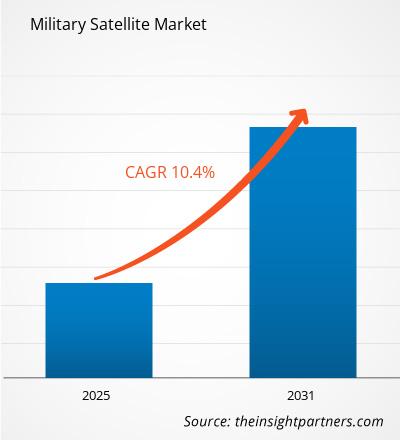
In an era defined by intensifying geopolitical conflicts, rapid technological innovation, and an escalating need for real-time intelligence, the global military satellite market is experiencing significant transformation. According to comprehensive industry analysis by The Insight Partners, the global Military Satellite Market size is projected to reach US$ 55.62 billion by 2034 from US$ 41.28 billion in 2025. The market is anticipated to register a CAGR of 3.80% during the forecast period 2026-2034.
Military satellites have evolved into the strategic backbone of modern defense forces, enabling seamless communication, situational awareness, missile defense warning systems, precise navigation, and surveillance capabilities across land, sea, and air domains.
Key Drivers and Market Dynamics
The ongoing modernization of armed forces worldwide serves as a primary catalyst for the military satellite sector. Major defense powers and emerging economies alike are increasing their national security budgets to overhaul legacy strategic networks. Space has officially been recognized as a warfighting domain, compelling military commands to secure advanced spatial infrastructure against growing anti-satellite (ASAT) capabilities and cyber threats.
Furthermore, the integration of commercial off-the-shelf (COTS) technologies into defense satellite architectures has fundamentally shifted procurement strategies. Defense departments are increasingly relying on hybrid satellite constellations combining traditional Geostationary Orbit (GEO) satellites with resilient, low-latency Low Earth Orbit (LEO) networks. This tactical pivot provides tactical redundancy, ensuring uninterrupted comms and imagery even during electronic warfare or jamming scenarios.
Surveillance and Reconnaissance (ISR) capabilities remain the highest funded segment within military satellites. High-resolution optical sensors, Synthetic Aperture Radar (SAR), and signals intelligence (SIGINT) payloads allow defense forces to monitor contentious borders, track troop movements, and guide precision munitions with unprecedented accuracy regardless of weather conditions or time of day.
Get a PDF Sample– https://www.theinsightpartners.com/sample/TIPRE00019091
Regional Trends Shaping the Industry
North America: Holds the largest market share, driven primarily by substantial defense spending by the U.S. Department of Defense, continuous investments in the Space Force, and active developments in missile-tracking LEO constellations like those deployed by the Space Development Agency (SDA).
Europe: Expanding investments in sovereign satellite capabilities are being driven by NATO directives, geopolitical tensions, and collaborative European defense projects aimed at improving cross-border intelligence sharing and satellite communications (SATCOM).
Asia-Pacific: Anticipated to register the highest growth rate during the forecast period due to territorial disputes, rapid military modernization programs in nations such as China, India, and Japan, and a growing emphasis on maritime domain awareness across critical sea lines of communication.
Middle East & Latin America: Increasing procurement of defense satellites to monitor border security, combat illicit trafficking, and upgrade critical national communications infrastructure.
Prominent Industry Players
The competitive landscape of the military satellite market is characterized by a high degree of technological innovation and strategic partnerships between government agencies and commercial prime contractors. Leading global aerospace and defense firms actively operating in this sector include:
Airbus S.A.S.
Elbit Systems Ltd.
Lockheed Martin Corporation
Mitsubishi Electric Corporation
Northrop Grumman Corporation
OHB System AG
Raytheon Technologies Corporation
Thales Group
The Boeing Company
Viasat, Inc.
These key industry players are focusing on strategic collaborations, payload miniaturization, radiation-hardened electronics, and long-term supply agreements with national military organizations to consolidate their market presence and drive technical advancement.
Get Full Copy of This Report- https://www.theinsightpartners.com/buy/TIPRE00019091
Emerging Technological Trends
The shift toward micro, nano, and small satellites (CubeSats) is democratizing access to military space assets. By deploying large constellations of smaller satellites, defense forces reduce launch costs, shorten development timelines, and create distributed networks that are far more resilient to targeting than single, high-cost exquisite satellites.
Additionally, onboard processing powered by artificial intelligence (AI) and machine learning (ML) is rapidly becoming standard. Instead of downlinking raw satellite data for ground processing which creates bandwidth bottlenecks and delays action next-generation military satellites process imagery and signals directly on board, sending immediate alerts to tactical commanders on the ground. Optical inter-satellite links (laser communications) are also being widely implemented to transfer massive volumes of secure data across orbital nodes at light speed.
Future Outlook
The future of the global military satellite market will be defined by satellite resiliency, multi-orbit integration, and autonomous operations. As space becomes increasingly crowded and contested, defense agencies will prioritize software-defined payloads capable of being reconfigured remotely to counter emerging jamming techniques or shift missions dynamically. The integration of commercial space capabilities alongside dedicated military networks will accelerate, establishing a flexible operational framework that ensures continuous tactical superiority. Over the coming decade, rising investments in quantum encryption for satellite communication and anti-jamming navigation systems will further reinforce military satellites as the indispensible nerve center of global defense operations.
Related Reports-
About Us
The Insight Partners is a one-stop industry research provider of actionable intelligence. We help our clients in getting solutions to their research requirements through our syndicated and consulting research services. We specialize in industries such as Semiconductor and Electronics, Aerospace and Defense, Automotive and Transportation, Biotechnology, Healthcare IT, Manufacturing and Construction, Medical Devices, Technology, Media, and Telecommunications, as well as chemicals and Materials.
Contact Us
If you have any queries about this report or if you would like further information, don’t hesitate to get in touch with us:
Contact Person: Ankit Mathur
E-mail: ankit.mathur@theinsightpartners.com
