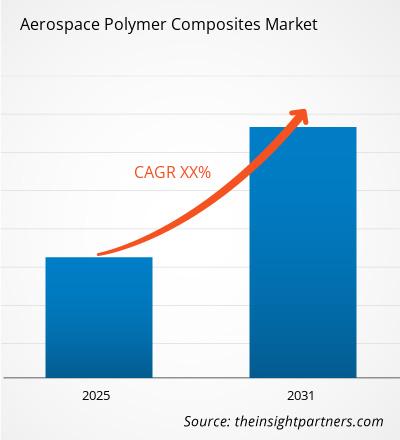
The global Aerospace Polymer Composites Market is undergoing significant expansion, driven by the relentless pursuit of lightweight, fuel-efficient, and durable structural materials across commercial, military, and space aviation sectors. According to recent research by The Insight Partners, the Aerospace Polymer Composites Market size is expected to reach US$ 10.19 Billion by 2034 from US$ 5.15 Billion in 2025. The market is estimated to record a CAGR of 7.87% from 2026 to 2034.
As aerospace original equipment manufacturers (OEMs) face mounting pressures to reduce carbon emissions, enhance fuel economy, and improve structural integrity, polymer composites have emerged as an indispensable material class. These advanced materials comprising thermoset and thermoplastic resins reinforced with high-strength fibers offer an exceptional strength-to-weight ratio, high fatigue resistance, and superior corrosion resistance compared to traditional aerospace metals like aluminum and titanium.
Key Drivers Accelerating Market Growth
Demand for Fuel-Efficient and Eco-Friendly Aircraft – Fuel consumption accounts for a significant portion of an airline’s operating costs. By replacing heavy metallic components with lightweight polymer composites, aircraft manufacturers can substantially reduce overall airframe weight. This reduction translates directly into lower fuel burn, extended flight ranges, and lower carbon emissions aligning with global sustainability targets established by international aviation regulatory bodies.
Surge in Commercial Aircraft Deliveries – Post-pandemic fleet modernization and rapid growth in global air passenger traffic have driven commercial aircraft manufacturers to scale up production. Modern aircraft architectures, such as the Boeing 787 Dreamliner and Airbus A350 XWB, feature composite materials in over 50% of their primary structural weight. The increasing order backlog for narrow-body and wide-body aircraft continues to propel the demand for advanced polymer matrix composites.
Technological Innovations in Thermoplastic Composites – While thermoset resins (such as epoxies) have historically dominated the market, high-performance thermoplastics including PEEK (Polyether ether ketone), PEKK, and PPS are gaining rapid traction. Thermoplastics offer faster manufacturing cycle times, improved recyclability, higher impact resistance, and room-temperature storage capabilities, making them increasingly attractive for high-rate aerospace manufacturing.
Get a PDF Sample– https://www.theinsightpartners.com/sample/TIPRE00016468
Application and Regional Overview
The aerospace polymer composites market spans a wide array of critical applications:
Primary Structures: Fuselage sections, wing panels, empennage assemblies, and control surfaces benefit from carbon-fiber-reinforced polymer composites to bear structural loads while minimizing weight.
Secondary Structures: Fairings, nacelles, doors, and landing gear doors utilize composite materials for aerodynamic efficiency and weight savings.
Aircraft Interiors: Floor panels, overhead bins, seating structures, and galley components leverage fire-retardant polymer composites to comply with stringent cabin safety regulations.
Space and Defense Systems: Launch vehicles, satellite structures, missile systems, and military jets rely heavily on specialized polymer composites engineered to withstand extreme thermal and mechanical stresses.
Geographically, North America and Europe maintain a commanding share of the market due to the high concentration of leading aerospace OEMs, advanced defense manufacturing, and robust research and development infrastructure. Meanwhile, the Asia-Pacific region is projected to register the fastest growth rate during the forecast period, bolstered by expanding commercial fleets, rising defense budgets, and localized aircraft manufacturing initiatives in countries such as China and India.
Key Market Players
The global aerospace polymer composites market is highly competitive, characterized by strategic partnerships, technological innovation, and vertical integration among raw material suppliers, intermediate producers, and tier-1 component manufacturers.
Prominent players operating in the global market include:
Axiom Materials, Inc.
Hexcel Corporation
JPS Composite Materials
Lee Aerospace
LMI AEROSPACE
Mitsubishi Chemical Corporation
SGL Carbon SE
Solvay
Spirit AeroSystems, Inc.
TORAY INDUSTRIES, INC.
These industry leaders are actively focusing on expanding their manufacturing capabilities, investing in automated fiber placement (AFP) and out-of-autoclave (OOA) processing technologies, and forming strategic alliances with aerospace OEMs to secure long-term supply agreements.
Get Full Copy of This Report- https://www.theinsightpartners.com/buy/TIPRE00016468
Future Outlook
The future of the Aerospace Polymer Composites Market is anchored in automation, sustainable manufacturing, and next-generation air mobility platforms. As the industry moves toward Urban Air Mobility (UAM), eVTOL (electric vertical takeoff and landing) aircraft, and hydrogen-powered aviation concepts, lightweight composite materials will play a foundational role in enabling these new paradigms. Furthermore, advancements in out-of-autoclave curing, automated tape laying, bio-based resins, and closed-loop recycling processes are expected to drive down production costs and environmental impact. Over the decade leading to 2034, ongoing material innovations and scalable manufacturing techniques will reinforce polymer composites as a cornerstone of modern aerospace engineering.
Related Reports-
Aerospace and Defense Actuators Market
Aerospace Energy Storage Market
About Us
The Insight Partners is a one-stop industry research provider of actionable intelligence. We help our clients in getting solutions to their research requirements through our syndicated and consulting research services. We specialize in industries such as Semiconductor and Electronics, Aerospace and Defense, Automotive and Transportation, Biotechnology, Healthcare IT, Manufacturing and Construction, Medical Devices, Technology, Media, and Telecommunications, as well as chemicals and Materials.
Contact Us
If you have any queries about this report or if you would like further information, don’t hesitate to get in touch with us:
Contact Person: Ankit Mathur
E-mail: ankit.mathur@theinsightpartners.com
