The global aerospace carbon fiber market is poised for significant expansion over the next decade. Driven by relentless demand for fuel-efficient aircraft, rising air passenger traffic, and growing defense budgets worldwide, advanced composite materials are becoming indispensable in modern aviation engineering.
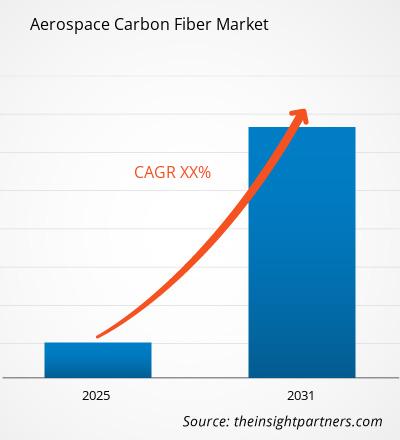
According to the latest research report by The Insight Partners, the Aerospace Carbon Fiber Market is expected to register a CAGR of 9.16% from 2026 to 2034, with the market size expanding from US$ 5.39 Billion in 2025 to US$ 11.86 Billion by 2034.
Carbon fiber materials offer an unmatched strength-to-weight ratio, exceptional corrosion resistance, superior thermal stability, and high fatigue resistance compared to traditional aerospace metals like aluminum and titanium. As commercial airlines and defense agencies prioritize carbon footprint reduction and operational cost efficiency, the integration of carbon fiber-reinforced polymers (CFRP) in structural components has shifted from a premium option to an industry standard.
Key Market Growth Drivers
Lightweighting and Fuel Efficiency Mandates: Fuel consumption accounts for a massive portion of an airline’s operational cost. Reducing structural weight directly correlates with lower fuel burn, extended flight range, and increased payload capacities. Carbon fiber composites allow aircraft manufacturers to reduce structural weight by up to 20–30% compared to conventional metal alloys.
Surge in Commercial Aircraft Deliveries: Leading aircraft manufacturers are managing historic order backlogs for next-generation narrow-body and wide-body aircraft. Modern platforms—such as the Boeing 787 Dreamliner and Airbus A350 XWB—utilize composite materials for more than 50% of their primary airframe structures, including wings, fuselage panels, and tail cones.
Defense Modernization and Unmanned Systems: Global military modernization programs are heavily investing in stealth fighter jets, tactical transport aircraft, and Unmanned Aerial Vehicles (UAVs). Carbon fiber is vital for stealth technology due to its radar-absorbing properties and structural integrity under extreme operational conditions.
Expansion in Space Exploration and Urban Air Mobility (UAM): The commercial space sector, satellite manufacturing, and the emerging Electric Vertical Takeoff and Landing (eVTOL) aircraft industry heavily rely on lightweight carbon fiber structures to meet strict weight constraints and safety standards.
Get a PDF Sample– https://www.theinsightpartners.com/sample/TIPRE00021209
Market Segmentation Insights
The global aerospace carbon fiber market is analyzed across several distinct segments:
By Fiber Type: Polyacrylonitrile (PAN)-based carbon fibers dominate the market owing to their high tensile strength, elasticity, and processing reliability. Pitch-based carbon fibers hold a specialized segment requiring high thermal conductivity and ultra-high modulus properties.
By Application: Commercial Aviation represents the largest revenue share due to high production volumes of commercial jetliners. Defense & Space is the fastest-growing segment, fueled by space launch vehicle production and next-generation defense procurement. General & Business Aviation also accounts for steady usage in executive jets and turboprops.
By Aircraft Component: Structural applications encompass fuselage structures, wing assemblies, empennage components, cabin interiors, engine nacelles, and landing gear doors.
Key Market Players
The aerospace carbon fiber industry is characterized by high capital intensity, technical expertise, and rigorous qualification processes by aerospace OEMs. Key market players driving innovation and supply capacity include:
- BASF
- Bally Ribbon Mills
- BGF Industries, Inc.
- Hexcel Corporation
- Mitsubishi Chemical Carbon Fiber and Composites, Inc.
- Renegade Materials Corporation
- SGL Carbon
- Solvay
- TEIJIN LIMITED.
- TORAY INDUSTRIES, INC.
These industry leaders are actively focusing on strategic mergers, capacity expansions, long-term supply agreements with major OEMs like Airbus and Boeing, and investments in next-generation thermoplastic composites to maintain market competitiveness.
Get Full Copy of This Report- https://www.theinsightpartners.com/buy/TIPRE00021209
Future Outlook
The future of the aerospace carbon fiber market is anchored in manufacturing automation, sustainability, and breakthrough material science. Over the coming decade, the industry will transition rapidly toward high-rate production capabilities, relying heavily on Automated Fiber Placement (AFP) and Automated Tape Laying (ATL) technologies to reduce cycle times and material waste. Furthermore, environmental regulations are pushing manufacturers toward circular economy initiatives, accelerating research into recyclable carbon fiber composites and bio-based precursor materials. As the aviation sector accelerates its commitment toward net-zero carbon emissions by 2050, carbon fiber will remain a crucial pillar in enabling next-generation hydrogen-powered airframes, ultra-efficient wing architectures, and sustainable urban air mobility platforms.
Related Reports-
About Us
The Insight Partners is a one-stop industry research provider of actionable intelligence. We help our clients in getting solutions to their research requirements through our syndicated and consulting research services. We specialize in industries such as Semiconductor and Electronics, Aerospace and Defense, Automotive and Transportation, Biotechnology, Healthcare IT, Manufacturing and Construction, Medical Devices, Technology, Media, and Telecommunications, as well as chemicals and Materials.
Contact Us
If you have any queries about this report or if you would like further information, don’t hesitate to get in touch with us:
Contact Person: Ankit Mathur
E-mail: ankit.mathur@theinsightpartners.com

- Breathable Films Market Size, Demand & Growth Prospects by 2031 - 2026-07-23
- Freight and Logistics Market Trends - 2026-07-23
- Extrusion Coating Market Size, Growth & Opportunities by 2034 - 2026-07-23