Airports worldwide are transforming from traditional transit hubs into multifaceted modern commerce centers. Historically dependent on aeronautical fees such as landing charges, aircraft parking, and passenger processing fees airport operators are increasingly diversifying their business models. Non-aeronautical revenue, which encompasses retail shops, duty-free outlets, food and beverage (F&B) venues, car parking, advertising, real estate, and digital services, has become a vital pillar for financial sustainability and operational profitability.
Driven by rising global passenger traffic, evolving consumer expectations, and strategic investments in terminal infrastructure, non-aeronautical streams provide high-margin revenue that cushions airports against economic volatility in the airline sector.
Market Size and Growth Dynamics
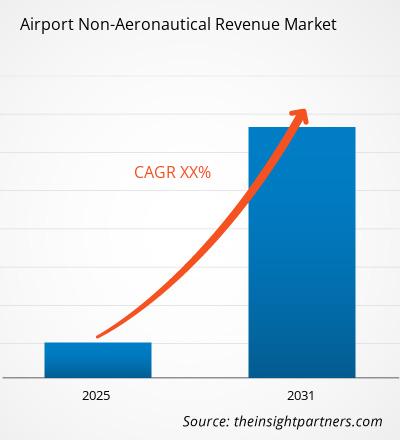
According to a comprehensive market analysis by The Insight Partners, the Airport Non-Aeronautical Revenue market is poised for robust expansion over the next decade. The Airport Non-Aeronautical Revenue Market is expected to register a CAGR of 5.41% from 2026 to 2034, with the market size expanding from US$ 99.05 Billion in 2025 to US$ 159.15 Billion by 2034.
This sustained growth reflects a fundamental shift in how airport management views the passenger journey. Travelers are increasingly treated as consumers, with operators leveraging dwell time the period passengers spend between security checkpoints and boarding to offer premium retail, dining, and lifestyle experiences.
Key Drivers and Market Trends
Expansion of Retail and Duty-Free Outlets: Luxury brands and duty-free operators are partnering with major international airports to deliver experiential shopping. Pop-up stores, localized artisanal shops, and exclusive product launches are enhancing retail space yields.
Diversified Food and Beverage (F&B) Options: Modern airports are moving away from basic fast-food courts toward gourmet dining, celebrity chef venues, regional culinary showcases, and health-focused eateries, significantly driving per-passenger spend.
Digital Transformation and Smart Terminals: The integration of digital technologies such as mobile pre-ordering for dining, e-commerce platforms for duty-free goods, digital advertising, and smart parking reservation systems is streamlining passenger convenience and creating new revenue touchpoints.
Commercial Real Estate and Airport Cities (Aerotropolis): Beyond terminal buildings, operators are developing surrounding land for logistics parks, business centers, hotels, and entertainment complexes, generating long-term lease and commercial revenue.
Get a PDF Sample– https://www.theinsightpartners.com/sample/TIPRE00021216
Strategic Landscape & Key Industry Players
The market is characterized by prominent global airport operators and management entities that continuously invest in terminal upgrades, strategic partnerships, and passenger-centric services to maximize non-aeronautical yields. Leading players shaping the market include:
Aena
Aéroports de Paris (ADP Group)
Airport Authority Hong Kong
Airports of Thailand Public Co., Ltd.
Fraport AG Frankfurt Airport Services Worldwide
Heathrow SP Ltd.
Japan Airport Terminal Co., Ltd.
Københavns Lufthavne A/S
Korea Airports Corporation
VINCI Airports
These industry leaders are executing strategic initiatives such as master terminal redevelopments, sustainable green spaces, personalized loyalty programs, and automated concession management to elevate passenger engagement and maximize revenue per available space.
Regional Insights
Asia-Pacific: Expected to lead market growth due to rapid infrastructure development, new airport construction across emerging economies, and a booming middle-class population eager for international and domestic travel.
Europe: Continues to hold a significant market share, supported by mature passenger markets, highly developed duty-free corridors, and pioneering aerotropolis concepts.
North America: Focuses heavily on upgrading aging infrastructure, expanding upscale dining options, and leveraging automated retail solutions.
Middle East & Africa: Driven by mega-hub expansions that integrate ultra-luxury retail destinations and state-of-the-art transit amenities.
Get Full Copy of This Report- https://www.theinsightpartners.com/buy/TIPRE00021216
Future Outlook
Looking ahead, the airport non-aeronautical revenue sector is poised to undergo a profound transformation centered on sustainability, personalization, and hyper-connectivity. As passenger volumes climb toward historic highs, airport operators will increasingly rely on artificial intelligence and advanced analytics to deliver tailored retail and dining promotions directly to travelers’ personal devices based on flight schedules and dwell times. Furthermore, the push for eco-friendly airport design, frictionless biometric passenger flows, and multipurpose lifestyle complexes within airport grounds will redefine terminal space utilization. Operators that successfully integrate digital convenience with high-end, immersive commercial experiences are best positioned to capture the growing market opportunities through 2034 and beyond.
Related Reports-
About Us
The Insight Partners is a one-stop industry research provider of actionable intelligence. We help our clients in getting solutions to their research requirements through our syndicated and consulting research services. We specialize in industries such as Semiconductor and Electronics, Aerospace and Defense, Automotive and Transportation, Biotechnology, Healthcare IT, Manufacturing and Construction, Medical Devices, Technology, Media, and Telecommunications, as well as chemicals and Materials.
Contact Us
If you have any queries about this report or if you would like further information, don’t hesitate to get in touch with us:
Contact Person: Ankit Mathur
E-mail: ankit.mathur@theinsightpartners.com

- Breathable Films Market Size, Demand & Growth Prospects by 2031 - 2026-07-23
- Freight and Logistics Market Trends - 2026-07-23
- Extrusion Coating Market Size, Growth & Opportunities by 2034 - 2026-07-23