Air quality monitoring systems are essential environmental technologies used to measure and analyze airborne pollutants, particulate matter, hazardous gases, and indoor environmental conditions. These systems provide real-time data that supports regulatory compliance, industrial emissions management, public health protection, workplace safety, and smart city initiatives. Modern air quality monitoring solutions integrate advanced sensors, cloud connectivity, artificial intelligence, and data analytics to deliver continuous monitoring across industrial facilities, commercial buildings, transportation infrastructure, residential environments, and government monitoring networks. Growing concerns over air pollution, climate change, and human health continue to accelerate global adoption of intelligent air quality monitoring technologies.
Market Overview
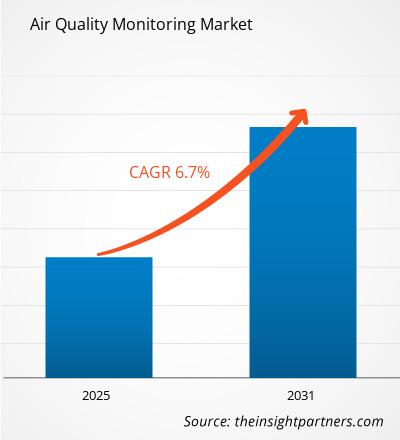
The Air Quality Monitoring Market was valued at US$ 6.55 Billion in 2025 and is projected to reach US$ 12.06 Billion by 2034, registering a CAGR of 7.02% during the forecast period 2026–2034. Market growth is driven by increasing environmental regulations, rising awareness of indoor and outdoor air pollution, expanding industrial emissions monitoring, and growing deployment of smart environmental monitoring infrastructure. Increasing investments in connected sensing technologies and digital environmental management platforms continue to strengthen market growth worldwide.
Key Market Insights
- Market Size (2025): US$ 6.55 Billion
- Forecast Market Size (2034): US$ 12.06 Billion
- CAGR (2026–2034): 7.02%
- Key Growth Driver: Increasing demand for real-time monitoring of particulate matter, hazardous gases, and industrial emissions
- Major Trend: Integration of cloud-connected sensors, artificial intelligence, and smart environmental analytics
- Forecast Period: 2026–2034
Get a Sample PDF of the Report: https://www.theinsightpartners.com/sample/TIPTE100000492
Market Drivers
Stringent Environmental Regulations
Governments across the world are strengthening air quality standards and emissions regulations, encouraging industries and municipalities to deploy advanced environmental monitoring systems.
Growing Public Health Awareness
Increasing awareness of the health impacts associated with particulate matter, volatile organic compounds, and toxic gases is driving demand for continuous air quality monitoring across residential, commercial, and public spaces.
Expansion of Smart City Infrastructure
Cities are deploying intelligent sensor networks to monitor urban air pollution, improve environmental planning, and provide real-time environmental data to citizens and policymakers.
Industrial Emissions Monitoring
Manufacturing facilities, power plants, refineries, and process industries continue investing in advanced monitoring technologies to ensure regulatory compliance and improve operational sustainability.
Market Trends
Growth of Cloud-Based Environmental Monitoring
Manufacturers are integrating cloud platforms, remote monitoring capabilities, and centralized analytics to improve environmental data management and operational efficiency.
Increasing Adoption of Wearable Air Quality Devices
Portable and wearable monitoring solutions are enabling individuals to track personal exposure to air pollutants in real time, supporting workplace safety and public health initiatives.
Artificial Intelligence and Predictive Analytics
Advanced analytics and artificial intelligence are improving pollution forecasting, anomaly detection, maintenance planning, and environmental risk assessment.
Expansion of Low-Cost Sensor Networks
Governments and municipalities are deploying large-scale sensor networks that complement traditional monitoring stations and provide wider geographic air quality coverage.
Get the Premium Research Report @ https://www.theinsightpartners.com/buy/TIPTE100000492
Regional Analysis
North America
North America accounted for approximately 30%–34% of the global market in 2025 and is projected to grow at a CAGR of 6.3%–6.8% during 2026–2034. Market growth is supported by stringent PM2.5 standards, wildfire monitoring initiatives, industrial emissions compliance, and smart building air quality programs. The US represented approximately 82%–86% of North America’s market in 2025 and is expected to register a CAGR of 6.4%–6.9%, driven by federal environmental monitoring networks, commercial building management systems, industrial compliance requirements, and expanding environmental awareness.
Europe
Europe held approximately 24%–28% of the market in 2025 and is anticipated to grow at a CAGR of 5.9%–6.4%. Germany, the UK, France, Italy, and Spain continue strengthening regional demand through environmental regulations, industrial sustainability initiatives, smart city development, and public health monitoring programs.
Asia-Pacific
Asia-Pacific captured approximately 28%–32% of the global market in 2025 and is projected to register the fastest regional growth with a CAGR of 8.1%–8.6% during 2026–2034. China, India, Japan, South Korea, and Australia continue investing in pollution control programs, urban environmental monitoring, industrial emissions management, and smart infrastructure, supporting robust market expansion.
Middle East and Africa
The Middle East and Africa are experiencing increasing investments in environmental monitoring infrastructure, industrial emissions management, smart cities, and public health initiatives, creating emerging opportunities for air quality monitoring solution providers.
Segment Analysis
By Product Type
The Outdoor Monitors segment accounted for approximately 46%–50% of the market in 2025 and is projected to grow at a CAGR of 6.5%–7.0% through 2034. Strong regulatory monitoring requirements, industrial compliance programs, and urban environmental monitoring initiatives continue supporting the segment’s market leadership.
By Device Type
The Wearable Monitors segment represented approximately 8%–12% of the market in 2025 and is expected to register the fastest growth with a CAGR of 10.2%–10.8%. Rising adoption of personal exposure monitoring devices across healthcare, occupational safety, and consumer wellness applications continues driving rapid market expansion.
Competitive Landscape
The Air Quality Monitoring Market remains highly competitive as environmental technology providers, industrial automation companies, and scientific instrumentation manufacturers continue investing in advanced sensing technologies, cloud-based analytics, artificial intelligence, and digital environmental management platforms. Companies are strengthening their competitive positions through innovations in sensor fusion, edge computing, wireless connectivity, predictive analytics, automated calibration, and integrated environmental intelligence solutions. Strategic partnerships with government agencies, industrial organizations, research institutions, and smart city developers continue accelerating technology adoption and market growth.
Key Players
- 3M Company
- Atlas Scientific LLC
- Emerson Electric Co.
- General Electric Company
- Honeywell International Inc.
- HORIBA, Ltd.
- IQAir AG
- Siemens AG
- Teledyne Technologies Incorporated
- Thermo Fisher Scientific Inc.
Emerging Trends
The air quality monitoring industry is evolving through artificial intelligence-powered environmental analytics, cloud-connected sensor platforms, wearable monitoring devices, low-cost distributed sensor networks, edge computing, predictive pollution forecasting, industrial Internet of Things integration, smart building automation, real-time emissions monitoring, and environmental digital twins. Manufacturers are developing next-generation monitoring systems that deliver higher measurement accuracy, improved data reliability, automated calibration, enhanced connectivity, and faster environmental insights. These technological advancements are expected to create significant growth opportunities across industrial compliance, public health, environmental protection, smart cities, and commercial building management throughout the forecast period.
Future Outlook
The future outlook for the Air Quality Monitoring Market remains highly promising as governments, industries, and commercial organizations continue prioritizing environmental sustainability, regulatory compliance, and public health protection. Increasing investments in smart monitoring infrastructure, connected environmental sensing, and intelligent data analytics are expected to support sustained market growth through 2034.
Related Market Research Reports
Smart Shoe Market Share, Growth & Demand by 2034
Intelligent Assistant Embedded Consumer Devices Market Demand, Trends & Forecast by 2034
Electric Mop Market Trends, Share & Demand by 2034
Railway Air Conditioning System Market Size, Share & Demand by 2034
About The Partners
The Insight Partners is a Insight global leader in market research, delivering comprehensive analysis and actionable insights across diverse industries. The company empowers decision-makers with data-driven intelligence to navigate evolving markets and accelerate growth.
Contact Us:
- Contact Person: Ankit Mathur
- E-mail: ankit.mathur@theinsightpartners.com
- Phone: +1-646-491-9876
Also Available in :
