Automotive electronics have become the foundation of modern vehicle innovation, enabling intelligent powertrain control, advanced driver assistance systems (ADAS), infotainment, connectivity, body electronics, battery management, safety systems, and autonomous driving capabilities. As vehicles become increasingly software-defined and electrified, the demand for high-performance electronic components, sensors, semiconductor devices, electronic control units (ECUs), and domain controllers continues to rise. Advancements in electric mobility, connected vehicles, artificial intelligence, and automotive cybersecurity are accelerating the adoption of sophisticated electronic architectures across passenger and commercial vehicles worldwide.
Market Overview
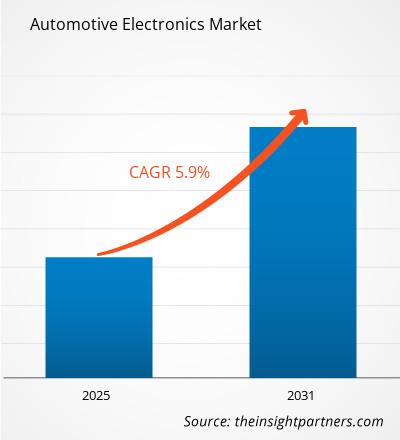
The Automotive Electronics Market was valued at US$ 325.97 Billion in 2025 and is projected to reach US$ 664.14 Billion by 2034, registering a CAGR of 8.23% during the forecast period 2026–2034. Market growth is driven by increasing vehicle electrification, growing integration of ADAS technologies, expanding adoption of connected vehicle platforms, and rising electronic content per vehicle. Continuous investments in semiconductor technologies, automotive software, and intelligent mobility solutions continue supporting long-term market expansion.
Key Market Insights
- Market Size (2025): US$ 325.97 Billion
- Forecast Market Size (2034): US$ 664.14 Billion
- CAGR (2026–2034): 8.23%
- Key Growth Driver: Rising adoption of vehicle electrification, intelligent safety systems, and software-defined vehicle architectures
- Major Trend: Integration of centralized computing platforms, advanced semiconductors, and autonomous driving technologies
- Forecast Period: 2026–2034
Get a Sample PDF of the Report: https://www.theinsightpartners.com/sample/TIPAT00002369
Market Drivers
Expansion of Electric Vehicles
Rapid growth in electric vehicle production is increasing demand for battery management systems, power electronics, motor controllers, charging technologies, and high-performance semiconductor components.
Growing Adoption of ADAS
Automakers continue integrating advanced driver assistance systems including adaptive cruise control, lane-keeping assistance, collision avoidance, and automated parking to improve vehicle safety and driving experience.
Increasing Vehicle Connectivity
Connected vehicle technologies are driving demand for advanced infotainment systems, telematics, wireless communication modules, cybersecurity solutions, and over-the-air software update capabilities.
Advancements in Automotive Semiconductor Technologies
Continuous innovation in automotive-grade microcontrollers, sensors, silicon carbide power devices, imaging technologies, and domain controllers is supporting next-generation vehicle architectures.
Market Trends
Transition to Software-Defined Vehicles
Automotive manufacturers are replacing distributed electronic architectures with centralized computing platforms that improve software flexibility, system integration, and future upgrade capabilities.
Growth of Domain and Zonal Architectures
Vehicle manufacturers are consolidating electronic control functions into domain and zonal controllers to reduce system complexity, improve performance, and simplify wiring.
Expansion of Automotive Ethernet
High-speed automotive networking technologies are becoming increasingly important for supporting autonomous driving, advanced infotainment, sensor fusion, and vehicle connectivity.
Artificial Intelligence in Automotive Systems
Artificial intelligence is improving driver assistance, predictive maintenance, autonomous navigation, intelligent cockpit experiences, and vehicle data analytics across modern mobility platforms.
Get the Premium Research Report @ https://www.theinsightpartners.com/buy/TIPAT00002369
Regional Analysis
North America
North America accounted for approximately 25%–29% of the global market in 2025 and is projected to grow at a CAGR of 7.4%–8.4% during 2026–2034. Market growth is supported by electric vehicle manufacturing, advanced driver assistance technologies, software-defined vehicle development, and domestic semiconductor initiatives. The US represented approximately 78%–83% of North America’s market in 2025 and is expected to register a CAGR of 7.5%–8.5%, driven by automotive software innovation, EV production, autonomous vehicle development, and connected mobility investments.
Europe
Europe held approximately 23%–27% of the market in 2025 and is anticipated to grow at a CAGR of 7.0%–8.0%. Germany, France, the UK, Italy, and Spain continue driving regional demand through premium vehicle manufacturing, strict vehicle safety regulations, electrification initiatives, and advanced automotive engineering capabilities.
Asia-Pacific
Asia-Pacific captured approximately 38%–42% of the global market in 2025 and is projected to register the fastest regional growth with a CAGR of 8.8%–9.8% during 2026–2034. China, Japan, South Korea, India, and Australia continue strengthening regional leadership through large-scale automotive manufacturing, electric vehicle production, semiconductor investments, and smart mobility innovation.
Middle East and Africa
The Middle East and Africa are gradually expanding investments in electric mobility, connected transportation infrastructure, automotive manufacturing, and intelligent transportation systems, creating new growth opportunities for automotive electronics suppliers.
Segment Analysis
By Product Type
The ECU/DCU segment accounted for approximately 34%–38% of the market in 2025 and is projected to grow at a CAGR of 7.8%–8.8% through 2034. Increasing deployment of centralized vehicle control systems, software-defined architectures, and intelligent electronic platforms continues supporting the segment’s market leadership.
By Application
The ADAS/AD segment represented approximately 15%–19% of the market in 2025 and is expected to register the fastest growth with a CAGR of 10.2%–11.2%. Growing adoption of autonomous driving technologies, intelligent sensing systems, radar, cameras, lidar, and sensor fusion solutions continues accelerating market expansion.
Competitive Landscape
The Automotive Electronics Market remains highly competitive as automotive technology companies, semiconductor manufacturers, and Tier 1 suppliers continue investing in advanced electronic architectures, power electronics, intelligent sensing technologies, automotive software platforms, and next-generation vehicle computing systems. Companies are strengthening their competitive positions through innovations in silicon carbide power devices, battery management systems, automotive Ethernet, sensor fusion, domain controllers, artificial intelligence, cybersecurity, and over-the-air software updates. Strategic partnerships between automakers, semiconductor suppliers, software companies, and mobility technology providers continue accelerating product development and commercialization.
Key Players
- DENSO Corporation
- HGM Automotive Electronics
- Hitachi, Ltd.
- Infineon Technologies AG
- Microchip Technology Inc.
- NXP Semiconductors N.V.
- Robert Bosch GmbH
- Sony India Pvt. Ltd.
- Texas Instruments Incorporated
- ZF Friedrichshafen AG
Emerging Trends
The automotive electronics industry is advancing through software-defined vehicles, centralized computing platforms, silicon carbide power electronics, advanced driver assistance systems, automotive Ethernet, intelligent cockpit technologies, battery management innovations, radar and vision sensing, artificial intelligence, cybersecurity solutions, and connected vehicle ecosystems. Manufacturers are developing next-generation automotive electronics that deliver higher computing performance, improved energy efficiency, enhanced vehicle safety, seamless software integration, stronger cybersecurity, and scalable platform architectures. These technological advancements are expected to create significant growth opportunities across electric mobility, autonomous driving, connected transportation, commercial vehicles, and intelligent mobility solutions throughout the forecast period.
Future Outlook
The future outlook for the Automotive Electronics Market remains highly promising as vehicle electrification, autonomous driving, connected mobility, and software-defined vehicle architectures continue transforming the global automotive industry. Continued investments in advanced semiconductors, intelligent sensing technologies, automotive software, and high-performance electronic systems are expected to support sustained market growth through 2034.
Related Market Research Reports
Automotive Intelligent Battery Sensor Market Size, Share by 2034
Next Generation Data Storage Market Insights | Size, Share by 2030
Conductive Inks Market Size, Growth & Opportunities | 2028 Report
Industrial Automation Control Market Report, Share by 2031
About The Partners
The Insight Partners is a Insight global leader in market research, delivering comprehensive analysis and actionable insights across diverse industries. The company empowers decision-makers with data-driven intelligence to navigate evolving markets and accelerate growth.
Contact Us:
- Contact Person: Ankit Mathur
- E-mail: ankit.mathur@theinsightpartners.com
- Phone: +1-646-491-9876
Also Available in :

- Car Alarm System Market Size to Reach US$ 53.46 Billion by 2034, Growing at an 11.40% CAGR - 2026-07-24
- Automotive Security System Market to Reach US$ 23.65 Billion by 2034, Registering a 6.76% CAGR - 2026-07-24
- AR SDK Software Market Forecast to 2034: Growth Drivers, Trends, and Competitive Landscape - 2026-07-24