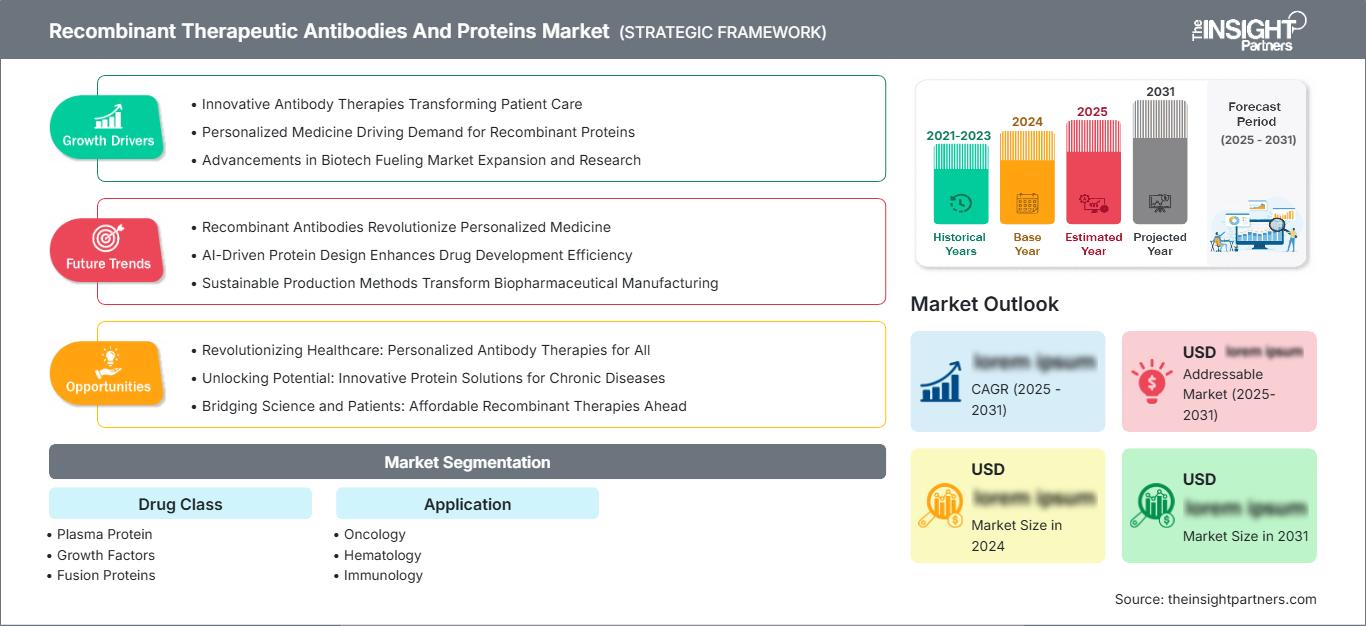
Advancements in recombinant biotechnology are reshaping the global biopharmaceutical landscape by enabling the development of highly targeted therapies for complex diseases. Increasing adoption of precision medicine, expanding biologics research, and growing investments in advanced manufacturing continue to strengthen industry growth.
The Recombinant Therapeutic Antibodies And Proteins Market is projected to grow from US$ 191.72 billion in 2025 to US$ 420.39 billion by 2034, registering a CAGR of 10.31% during the forecast period (2026 to 2034). According to The Insight Partners, the industry is benefiting from rapid innovation in monoclonal antibodies, recombinant proteins, and fusion protein technologies. Rising demand for biologic therapies in oncology, immunology, hematology, and endocrine disorders is accelerating product development, while advancements in artificial intelligence, protein engineering, and sustainable biomanufacturing are creating new commercial opportunities.
Get Sample PDF @ https://www.theinsightpartners.com/sample/TIPRE00019261
Rising Demand for Biologic Therapies Drives Industry Expansion
The increasing prevalence of chronic and life threatening diseases has significantly boosted demand for recombinant therapeutic antibodies and proteins. These therapies offer greater target specificity, improved safety profiles, and enhanced treatment outcomes compared to conventional drugs.
Monoclonal antibodies continue to dominate the drug class segment due to their widespread application in cancer treatment and autoimmune disorders. Meanwhile, recombinant hormones, plasma proteins, coagulation factors, enzymes, and growth factors are expanding their presence across multiple therapeutic areas. Continuous investments in biotechnology research and favorable regulatory support are encouraging manufacturers to introduce innovative biologic products.
Technological Innovations Strengthen Competitive Landscape
The biotechnology sector is witnessing remarkable progress in recombinant protein production, antibody engineering, and manufacturing efficiency. Artificial intelligence is increasingly being integrated into protein design, enabling researchers to accelerate drug discovery while improving therapeutic precision.
Personalized medicine is another transformative trend shaping the industry. Tailored biologic therapies based on patient specific biomarkers are improving clinical outcomes and reducing adverse reactions. In addition, sustainable manufacturing processes and next generation cell culture technologies are helping companies reduce production costs while maintaining product quality and scalability.
Broad Therapeutic Applications Support Market Growth
The report categorizes the industry by drug class and application, reflecting the expanding use of recombinant biologics across healthcare.
By Drug Class:
- Plasma Protein
- Growth Factors
- Fusion Proteins
- Monoclonal Antibodies
- Hormones
- Enzyme
- Coagulation Factors
- Others
By Application:
- Oncology
- Hematology
- Immunology
- Endocrinology
- Infectious Disease
- Cardiovascular Diseases
- Others
Among these applications, oncology represents the largest revenue contributor due to increasing adoption of antibody based cancer therapies. Immunology and hematology are also experiencing strong growth as biologic treatments continue to replace conventional therapeutic approaches.
Regional Insights Highlight Strong Global Opportunities
North America maintains its leadership position owing to robust biotechnology infrastructure, high healthcare expenditure, strong research funding, and the presence of leading pharmaceutical companies. The United States remains a major contributor with continuous innovation in antibody therapeutics and personalized medicine.
Europe follows closely, supported by favorable regulatory frameworks and growing biologics adoption across major healthcare systems. Asia Pacific is expected to record the fastest growth during the forecast period, driven by expanding pharmaceutical manufacturing capabilities, increasing healthcare investments, and rising demand for advanced biologic treatments in countries such as China, India, and Japan.
South and Central America, along with the Middle East and Africa, are also witnessing gradual expansion as healthcare infrastructure improves and access to advanced therapies increases.
Competitive Landscape
Leading companies continue to invest heavily in research, strategic collaborations, manufacturing expansion, and product innovation to strengthen their global presence.
Key players include:
- Eli Lilly and Company
- Abbott
- F. Hoffmann-La Roche
- Johnson & Johnson
- Amgen Inc.
- Biogen Inc.
- Merck & Co.
- Sanofi S.A.
- Novo Nordisk
- Pfizer Inc.
These organizations are actively developing next generation recombinant therapeutics while expanding production capacity to address increasing global demand.
Interested in Purchasing this Report? Click here @ https://www.theinsightpartners.com/buy/TIPRE00019261
Future Outlook
The Recombinant Therapeutic Antibodies And Proteins Market is expected to maintain strong momentum through 2034, supported by continuous innovation in biologics, growing adoption of personalized medicine, and advancements in recombinant protein engineering. The integration of artificial intelligence into drug discovery, sustainable manufacturing technologies, and expanding therapeutic applications will further enhance industry growth.
Related Report:
1) Oxycodone Hydrochloride Market Size, Share & Trends by 2034
2) Immuno-Oncology Drugs Market Outlook, Geography, Dynamics, and Insights by 2031
3) Acute Lymphocytic Leukemia Market Report 2034 by Segments, Geography
About Us –
The Insight Partners provides comprehensive syndicated and tailored market research services in the healthcare, technology, and industrial domains. Renowned for delivering strategic intelligence and practical insights, the firm empowers businesses to remain competitive in ever-evolving global markets.
Contact Us:
Ankit Mathur | The Insight Partners
E-mail: ankit.mathur@theinsightpartners.com
Phone: +1-646-491-9876
Also Available in : Korean German Japanese French Chinese Italian Spanish
