Microcarriers play a pivotal role in modern cell culture technologies, providing an efficient surface for adherent cell growth in large scale bioprocessing applications. Their expanding use across regenerative medicine, vaccine production, and biopharmaceutical manufacturing reflects the increasing demand for advanced cell cultivation solutions.
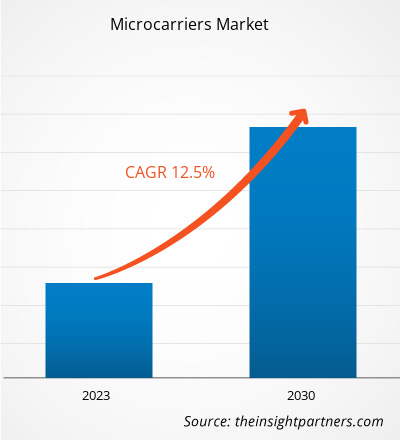
The Microcarriers Market is experiencing significant growth due to rapid advancements in cell and gene therapy, increasing investments in biopharmaceutical research, and rising demand for scalable manufacturing technologies. According to The Insight Partners, the Microcarriers Market is projected to expand from US$ 1.63 billion in 2022 to US$ 4.18 billion by 2030, registering a CAGR of 12.5% during the forecast period. Growing prevalence of chronic diseases, technological innovation, and increasing clinical research activities continue to strengthen industry expansion worldwide.
Get Sample PDF @ https://www.theinsightpartners.com/sample/TIPBT00002183
Rising Adoption in Cell Therapy and Biopharmaceutical Manufacturing
Microcarriers have become an essential component of large scale cell culture processes because they provide a significantly larger surface area for adherent cell growth within stirred tank bioreactors. Their ability to improve production efficiency has accelerated their adoption in therapeutic protein manufacturing, vaccine development, and regenerative medicine.
The increasing burden of diseases such as cancer, diabetes, autoimmune disorders, and infectious diseases has fueled demand for innovative biologics and cell therapies. According to global health organizations, the growing incidence of chronic illnesses has intensified research efforts focused on advanced therapeutic solutions. Consequently, pharmaceutical companies are investing heavily in manufacturing platforms that support commercial scale production of cell based therapies, creating sustained demand for microcarriers.
In addition, continuous improvements in cell biology research, automation, and bioprocess optimization are enhancing production quality while reducing manufacturing costs.
Product and Application Segments Driving Industry Growth
Among product categories, microcarrier beads accounted for the largest revenue share in 2022. Their extensive use in adherent cell culture, availability of animal component free variants, and compatibility with advanced bioreactors have strengthened their commercial adoption. Manufacturers continue introducing innovative bead technologies designed to improve cell attachment, proliferation, and harvesting efficiency.
Bioreactors remain the fastest growing equipment segment due to their ability to maintain controlled culture environments while supporting large scale production. Modern bioreactor systems also enable real time monitoring of cell growth and metabolite analysis, improving manufacturing consistency.
By application, biopharmaceutical production represents the largest revenue generating segment. Therapeutic protein manufacturing and vaccine production continue to rely heavily on microcarrier technology for efficient expansion of adherent cells. Growing investments in cell and gene therapy, tissue engineering, and regenerative medicine are expected to further diversify application opportunities over the coming years.
Regional Landscape Highlights Strong Global Expansion
North America dominated the global industry with 45.3% market share in 2022, supported by its mature biotechnology ecosystem, strong research infrastructure, and high adoption of advanced manufacturing technologies. The United States continues to lead regional growth owing to increasing approvals for cell and gene therapies, expanding clinical trials, and substantial investments in biotechnology innovation.
Asia Pacific is expected to register the fastest growth throughout the forecast period, recording a CAGR of approximately 13.3%. Countries such as China, Japan, India, and South Korea are significantly expanding investments in biotechnology research, contract manufacturing, and regenerative medicine. Government support for life sciences innovation and growing healthcare infrastructure further strengthen regional growth prospects.
Europe also maintains a strong position due to increasing research collaborations, favorable regulatory initiatives, and rising investments in advanced therapeutic medicinal products.
Competitive Landscape and Strategic Developments
Competition within the industry continues to intensify as manufacturers focus on expanding production capabilities, launching innovative products, and strengthening strategic collaborations. Companies are investing in research to develop highly efficient, protein free, and biodegradable microcarrier technologies suitable for next generation therapies.
For example, Kuraray introduced new PVA hydrogel microcarriers designed specifically for regenerative medicine applications, highlighting the industry’s emphasis on technological innovation.
Key players operating in the Microcarriers Market include:
- Bio-Rad Laboratories Inc.
- Sartorius AG
- Corning Inc.
- Danaher Corp.
- Asahi Kasei Corp.
- Eppendorf SE
- Teijin Ltd
- Polysciences Inc.
- Percell Biolytica AB
- denovoMATRIX GmbH
These companies continue expanding their global presence through acquisitions, partnerships, product launches, and manufacturing capacity enhancements to address growing customer demand.
Emerging Opportunities Supporting Long Term Growth
The rapid commercialization of cell and gene therapies presents one of the most promising opportunities for the industry. Increasing approvals of CAR-T therapies, stem cell treatments, and regenerative medicine products require scalable manufacturing platforms capable of producing high quality adherent cells.
Growing outsourcing activities among pharmaceutical companies are also boosting demand from contract research organizations and contract manufacturing organizations. Furthermore, advances in biodegradable microcarriers, automation technologies, and artificial intelligence enabled bioprocess optimization are expected to improve production efficiency and lower manufacturing costs.
Academic institutions and biotechnology startups continue contributing to innovation through extensive research focused on next generation cell culture technologies, creating additional commercial opportunities.
Interested in Purchasing this Report? Click here @ https://www.theinsightpartners.com/buy/TIPBT00002183
Future Outlook
The outlook for the Microcarriers Market remains highly positive as the global biotechnology industry continues expanding. Increasing demand for cell based therapeutics, continuous advancements in bioprocessing technologies, rising investments in regenerative medicine, and growing commercialization of advanced biologics will continue driving industry growth through 2030. Companies that prioritize innovation, strategic partnerships, and scalable manufacturing solutions are expected to strengthen their competitive position while benefiting from the accelerating adoption of advanced cell culture technologies worldwide.
Related Report:
1) Oral Anticoagulants Market Growth, Trends & Forecast by 2034
2) Thrombosis Drugs Market Dynamics, Analysis, Trends, and Opportunities 2031
3) Cancer Monoclonal Antibodies Market Growth, Size, Share, Trends, and Forecast by 2031
About Us –
The Insight Partners provides comprehensive syndicated and tailored market research services in the healthcare, technology, and industrial domains. Renowned for delivering strategic intelligence and practical insights, the firm empowers businesses to remain competitive in ever-evolving global markets.
Contact Us:
Ankit Mathur | The Insight Partners
E-mail: ankit.mathur@theinsightpartners.com
Phone: +1-646-491-9876
Also Available in : Korean German Japanese French Chinese Italian Spanish

- AR SDK Software Market Forecast to 2034: Growth Drivers, Trends, and Competitive Landscape - 2026-07-24
- Pricing Software Market Size, Share, Trends, and Global Forecast to 2031 - 2026-07-24
- Wankel Engines Market Size Set to Reach US$ 110.98 Million by 2034, Growing at a Robust 8.41% CAGR - 2026-07-24