Automotive blind spot detection (BSD) systems have evolved from optional luxury features into essential active safety technologies across modern vehicles. Designed to monitor areas around the vehicle that are difficult or impossible for drivers to view directly through standard mirrors, these systems play a pivotal role in preventing lane-change collisions, protecting vulnerable road users, and advancing overall vehicle autonomy. As global safety mandates become stricter and consumer demand for Advanced Driver Assistance Systems (ADAS) increases, the BSD market is experiencing unprecedented momentum.
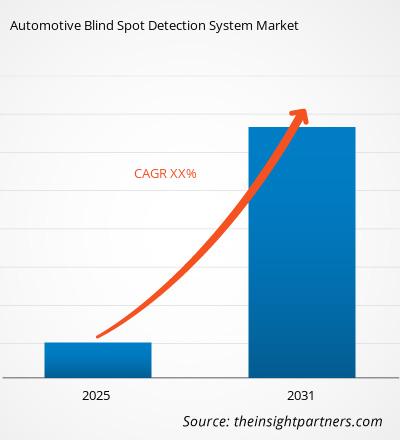
The global Automotive Blind Spot Detection System Market size is expected to reach US$ 14.75 Billion by 2034 from US$ 4.84 Billion in 2025. The market is estimated to record a CAGR of 13.17% from 2026 to 2034.
Key Market Drivers and Trends
Increasing Emphasis on Road Safety and Regulations
Government bodies and regulatory organizations worldwide are prioritizing road safety by introducing stringent vehicle safety standards. Organizations such as Euro NCAP and the National Highway Traffic Safety Administration (NHTSA) continually revise rating criteria to favor vehicles equipped with proactive collision-avoidance systems. Consequently, automakers are integrating blind spot detection into mid-range and entry-level passenger vehicles to satisfy safety benchmarks.
Rapid Technological Advancements in Sensor Technology
Modern blind spot detection systems rely on a sophisticated combination of radar sensors, ultrasonic devices, and high-resolution optical cameras. The integration of high-frequency 77 GHz radar sensors offers longer range and higher resolution capabilities compared to legacy 24 GHz systems. Furthermore, multi-sensor fusion algorithms enable seamless operation under adverse weather conditions, such as heavy rain, fog, and low lighting, significantly enhancing system accuracy and driver reliability.
Surge in Autonomous and Connected Vehicles
The ongoing transition toward semi-autonomous and autonomous driving relies heavily on comprehensive environment perception. Blind spot detection functions as a core sub-system of broader ADAS architectures. As automakers work toward higher levels of autonomy (Level 2+ and Level 3), BSD systems are increasingly fused with automatic steering, lane-keeping assistance, and automated emergency braking features to deliver active intervention rather than passive warnings.
Growing Electric Vehicle (EV) Adoption
The rapid expansion of the global electric vehicle market provides a fertile ground for high-tech safety integrations. EV manufacturers leverage digital-first vehicle architectures, making the integration of electronic control units (ECUs), digital side-view mirrors, and blind spot monitoring systems more efficient and cost-effective.
Get a PDF Sample– https://www.theinsightpartners.com/sample/TIPRE00020867
Key Market Players
The Automotive Blind Spot Detection System market is characterized by high competition and strategic collaboration among leading tier-1 automotive suppliers and technology providers. Prominent market participants driving innovation and global distribution include:
Continental AG
Denso Corporation
Robert Bosch
Delphi Automotive
Autoliv Inc
ZF TRW
Xiamen Autostar Electronics
Auto-i Corp
Valeo S.A
Ficosa International
Preco Electronics
These key players are investing significantly in research and development to manufacture lighter, more compact, and cost-effective radar and vision modules. Strategic partnerships with original equipment manufacturers (OEMs), software developers, and sensor manufacturers remain crucial to maintaining competitive positioning in this rapidly expanding landscape.
Market Segmentation Insights
By Component: The market is divided into hardware (radar sensors, cameras, ultrasonic sensors, electronic control units) and software modules. Sensor hardware accounts for a substantial revenue share due to the multiple sensing units required per vehicle.
By Technology: Radar-based systems dominate the market owing to their robust performance across varying environmental conditions, though optical camera systems and hybrid multi-sensor systems are gaining significant traction.
By Vehicle Type: Passenger cars represent the largest segment, driven by high production volumes and consumer demand. However, commercial vehicles including heavy-duty trucks and buses are witnessing the fastest growth rate due to fleet safety regulations and larger blind spot areas inherent to larger chassis.
Get Full Copy of This Report- https://www.theinsightpartners.com/buy/TIPRE00020867
Future Outlook
Looking ahead, the Automotive Blind Spot Detection System Market is poised for transformative growth as vehicle architectures shift toward centralized computing and software-defined platforms. Over the coming decade, blind spot detection will transition fully from driver-warning alerts (such as visual LED indicators on side mirrors) to automated, active collision-avoidance interventions integrated directly with vehicle steering and braking systems. Furthermore, the commercialization of Vehicle-to-Everything (V2X) communication will allow vehicles to share blind spot data in real time with surrounding traffic, effectively eliminating blind spots beyond direct line-of-sight. Coupled with declining sensor hardware costs and widening adoption across emerging economies, the market is set to solidify its position as an indispensable cornerstone of automotive safety through 2034 and beyond.
Related Reports-
About Us
The Insight Partners is a one-stop industry research provider of actionable intelligence. We help our clients in getting solutions to their research requirements through our syndicated and consulting research services. We specialize in industries such as Semiconductor and Electronics, Aerospace and Defense, Automotive and Transportation, Biotechnology, Healthcare IT, Manufacturing and Construction, Medical Devices, Technology, Media, and Telecommunications, as well as chemicals and Materials.
Contact Us
If you have any queries about this report or if you would like further information, don’t hesitate to get in touch with us:
Contact Person: Ankit Mathur
E-mail: ankit.mathur@theinsightpartners.com
