Bipolar disorder remains one of the most challenging mental health conditions, requiring long term clinical management and personalized care strategies. Growing awareness, improved diagnosis rates, and continuous advances in psychiatric therapies are creating new opportunities for healthcare providers and pharmaceutical companies worldwide.
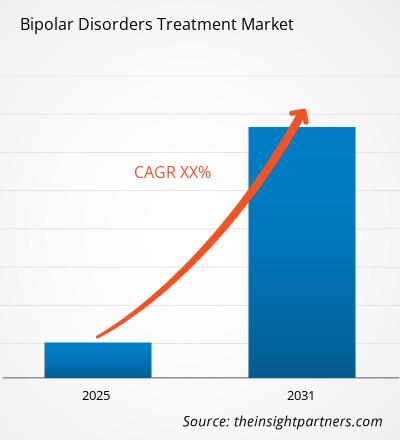
The Bipolar Disorders Treatment Market is projected to grow from US$ 7.24 billion in 2024 to US$ 9.65 billion by 2031, registering a CAGR of 4.2% during the forecast period from 2025 to 2031. Growth is supported by increasing investments in mental healthcare, expanding access to innovative medications, and the adoption of advanced therapeutic approaches such as digital mental health platforms and personalized treatment plans. According to The Insight Partners, the market is segmented by type, medication, treatment, and geography, offering a comprehensive assessment of current trends and future opportunities.
Get Sample PDF @ https://www.theinsightpartners.com/sample/TIPRE00004415
Rising Prevalence of Bipolar Disorder Supports Industry Expansion
The increasing global burden of bipolar disorder continues to drive demand for effective therapeutic interventions. Greater public awareness and reduced stigma surrounding mental health have encouraged more patients to seek medical diagnosis and treatment. Governments and healthcare organizations are also strengthening mental health initiatives, resulting in improved access to psychiatric services across developed and emerging economies.
The growing emphasis on early diagnosis has significantly enhanced treatment outcomes. Healthcare professionals are increasingly adopting integrated care models that combine pharmacological therapies with psychotherapy, lifestyle management, and patient education. These multidisciplinary approaches are improving long term disease management while supporting sustained demand for advanced treatment solutions.
Innovation in Medications and Therapeutic Approaches
The treatment landscape is evolving with continuous innovation in both pharmaceutical products and non drug therapies. While lithium remains a cornerstone therapy for bipolar disorder, newer antipsychotics, anticonvulsants, antidepressants, and anti anxiety medications continue to expand available treatment options.
In addition to medications, advanced interventions such as Electroconvulsive Therapy (ECT) and Transcranial Magnetic Stimulation (TMS) are gaining wider clinical acceptance for patients with treatment resistant bipolar disorder. Digital health technologies, artificial intelligence based monitoring systems, and telepsychiatry platforms are also improving patient engagement, medication adherence, and remote disease management.
Personalized medicine is becoming increasingly important as clinicians seek treatment strategies tailored to individual patient profiles, improving efficacy while minimizing adverse effects.
Market Segmentation Highlights
The bipolar disorders treatment industry is segmented based on disease type, medication, treatment modality, and geography.
By type, the market includes:
- Bipolar I
- Bipolar II
- Cyclothymia
By medication, the report covers:
- Lithium
- Anticonvulsants
- Antipsychotics
- Antidepressants
- Anti anxiety medications
By treatment, the market includes:
- Electroconvulsive Therapy (ECT)
- Transcranial Magnetic Stimulation (TMS)
- Other psychotic therapies
North America continues to lead the global market due to advanced healthcare infrastructure, favorable reimbursement policies, strong pharmaceutical innovation, and growing awareness regarding mental health disorders. The United States represents the largest regional contributor, supported by increasing adoption of personalized care and innovative treatment technologies.
Europe maintains a significant share with expanding mental healthcare programs and strong regulatory support. Meanwhile, Asia Pacific is expected to witness notable growth during the forecast period owing to rising healthcare expenditure, improving psychiatric services, growing patient awareness, and expanding pharmaceutical investments across countries such as China, India, and Japan.
Competitive Landscape
The bipolar disorders treatment market remains highly competitive, with major pharmaceutical companies focusing on research, strategic collaborations, product development, and geographic expansion to strengthen their market positions.
Key players include:
- AbbVie Inc.
- AstraZeneca
- Allergan Plc.
- Bristol-Myers Squibb
- Eli Lilly and Company
- GlaxoSmithKline
- Janssen Pharmaceuticals
- Merck & Co., Inc.
- Novartis AG
- Pfizer Inc.
- Otsuka Holdings Co. Ltd.
These organizations continue to invest in innovative drug development, clinical research, and precision medicine initiatives aimed at improving treatment outcomes while addressing unmet clinical needs in bipolar disorder management.
Emerging Trends and Growth Opportunities
Several emerging trends are expected to influence future industry development. Artificial intelligence powered diagnostic tools are improving patient monitoring and enabling earlier intervention. Telehealth services are expanding access to psychiatric care, particularly in underserved regions where specialist availability remains limited.
Digital therapeutics, mobile health applications, and remote monitoring solutions are empowering patients to actively participate in managing their conditions. Additionally, personalized medicine supported by genetic and biomarker research is expected to play a larger role in optimizing treatment selection and improving long term clinical outcomes.
Growing investments in mental health infrastructure, supportive government initiatives, and increasing collaboration between pharmaceutical companies and technology providers will continue creating favorable growth opportunities throughout the forecast period.
Interested in Purchasing this Report? Click here @ https://www.theinsightpartners.com/buy/TIPRE00004415
Future Outlook
The Bipolar Disorders Treatment Market is expected to demonstrate steady growth through 2031, supported by rising awareness, continuous pharmaceutical innovation, expanding access to mental healthcare, and increasing adoption of digital health technologies. As healthcare systems increasingly prioritize personalized treatment strategies and integrated psychiatric care, industry participants are well positioned to capitalize on emerging opportunities.
Related Report:
1) Preservative-Free Eye Drops Market Size & Trends 2031
2) Viral Vector Manufacturing Market Insights & Growth Scope by 2031
3) Fluorine-18 Market Size, Trends & Forecast 2031
About Us –
The Insight Partners provides comprehensive syndicated and tailored market research services in the healthcare, technology, and industrial domains. Renowned for delivering strategic intelligence and practical insights, the firm empowers businesses to remain competitive in ever-evolving global markets.
Contact Us:
Ankit Mathur | The Insight Partners
E-mail: ankit.mathur@theinsightpartners.com
Phone: +1-646-491-9876
Also Available in : Korean German Japanese French Chinese Italian Spanish
