The global transport and logistics landscape is undergoing a profound digital transition driven by telematics integration, advanced sensor networks, and real-time connectivity. Fleet telematics systems combining GPS navigation, vehicular diagnostics, wireless communication, and data analytics have evolved from simple asset-tracking tools into comprehensive operational hubs. Modern fleet management platforms empower organizations to monitor driver behavior, optimize fuel consumption, automate regulatory compliance, and reduce downtime through predictive maintenance. As commercial transport operators prioritize cost reduction, safety, and operational sustainability, adoption rates for advanced telematics solutions continue to rise rapidly worldwide.
Market Size and Growth Trajectory
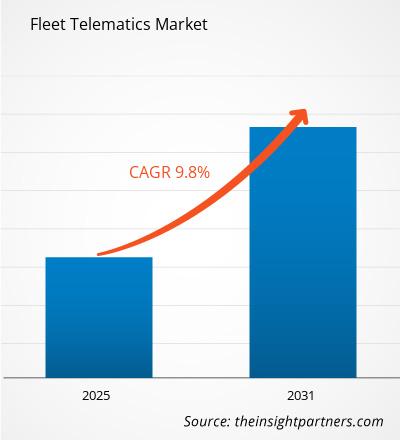
The Fleet Telematics Market size is expected to reach US$ 31.20 Billion by 2034 from US$ 11.50 Billion in 2025. The market is anticipated to register a CAGR of 11.73% during the forecast period 2026–2034.
This sustained growth rate underscores a structural shift toward digitized fleet administration. Rising fuel costs, stringent government regulations concerning driver hours and vehicle safety, and the expanding e-commerce ecosystem are driving demand across logistics, construction, agriculture, passenger transit, and emergency response sectors. Furthermore, the transition toward electric vehicle (EV) fleets is creating new opportunities for telematics solutions equipped with battery management systems, charging schedule optimizers, and range monitoring capabilities.
Key Drivers Shaping Market Dynamics
1. Integration of Artificial Intelligence and Edge Computing
Modern telematics hardware increasingly incorporates edge AI devices and video intelligence. Dashcams featuring AI-driven Computer Vision (CV) analyze road conditions, detect distracted or fatigued driving, and provide real-time audio alerts to prevent collisions. These technologies significantly lower insurance premiums and mitigate liability risks for commercial fleet owners.
2. Regulatory Compliance and Electronic Logging
Governments across North America, Europe, and Asia-Pacific have implemented mandates requiring commercial vehicles to record operating metrics automatically. Regulations such as Electronic Logging Device (ELD) rules and driver fatigue monitoring policies necessitate secure, tamper-proof telematics solutions to maintain continuous compliance.
3. Transition to 5G Cellular Networks
The gradual decommissioning of older 3G networks and the worldwide deployment of 5G infrastructure enable ultra-low latency and higher bandwidth data transmission. High-speed connectivity supports instantaneous telematics data transfers, high-definition video streaming from onboard cameras, and seamless over-the-air (OTA) software updates.
4. Fleet Decarbonization and Sustainability Goals
Corporate sustainability targets and stringent emissions standards force fleet operators to reduce carbon footprints. Telematics software tracks idling time, optimizes multi-stop dispatching routes, and analyzes driver habits to achieve higher fuel economy and lower carbon emissions.
Get a PDF Sample– https://www.theinsightpartners.com/sample/TIPRE00014954
Key Market Players
The fleet telematics landscape is characterized by strategic innovations, software updates, partnerships, and global expansions among leading technology vendors and automotive original equipment manufacturers (OEMs). Key prominent companies operating in the market include:
Ctrack – Known for robust vehicle tracking, asset monitoring, and tailor-made fleet software solutions.
Daimler AG – Integrating factory-installed connectivity and connected fleet services directly into commercial vehicle lines.
Deere and Company – Innovating off-highway telematics, advanced machinery diagnostics, and precision agriculture technology.
Harman International – Specializing in connected car solutions, automotive cybersecurity, and cloud platform integrations.
KORE Wireless – Providing global IoT connectivity, sensor aggregation, and cellular management services for telematics devices.
Loconav – Delivering accessible, AI-powered fleet management platforms tailored for emerging and established transport markets.
Samsara Inc. – Offering integrated Connected Operations Clouds featuring video-based safety, real-time GPS tracking, and workflow automation.
Sprint Group Holdings Limited – Providing enterprise communication infrastructure and telematics connectivity solutions.
Trimble – Delivering comprehensive positioning, navigation, routing optimization, and transportation management software.
Verizon – Operating Verizon Connect to provide enterprise-grade fleet management, field service tracking, and connected asset platforms.
Regional Insights and Sector Applications
North America and Europe hold substantial market shares due to high commercial vehicle density, early technological adoption, and enforced regulatory frameworks. Meanwhile, the Asia-Pacific region is projected to register rapid growth during the forecast period, powered by expanding logistics networks in China, India, and Southeast Asia, coupled with rapid urbanization and infrastructure investments.
From long-haul freight and last-mile parcel delivery to municipal transit and heavy construction fleets, telematics solutions provide measurable return on investment (ROI). By digitizing work orders, tracking engine health indicators, and streamlining dispatch communication, enterprises achieve greater operational resilience.
Get Full Copy of This Report- https://www.theinsightpartners.com/buy/TIPRE00014954
Future Outlook
The future of the fleet telematics market will be defined by deeper convergence with autonomous driving technologies, cloud-native analytics, and unified IoT ecosystems. As commercial transportation transitions toward semi-autonomous and fully autonomous vehicles, telematics systems will serve as the core nervous system responsible for remote diagnostics, dynamic path planning, security validation, and cloud-to-vehicle telemetry. Furthermore, the convergence of generative AI and predictive analytics will allow fleet managers to move beyond reactive reporting toward proactive operational automation where routes, maintenance schedules, and energy management are optimized dynamically in real time. As these technology trends mature between 2026 and 2034, fleet telematics will remain an indispensable pillar of global logistics and mobility.
Related Reports-
About Us
The Insight Partners is a one-stop industry research provider of actionable intelligence. We help our clients in getting solutions to their research requirements through our syndicated and consulting research services. We specialize in industries such as Semiconductor and Electronics, Aerospace and Defense, Automotive and Transportation, Biotechnology, Healthcare IT, Manufacturing and Construction, Medical Devices, Technology, Media, and Telecommunications, as well as chemicals and Materials.
Contact Us
If you have any queries about this report or if you would like further information, don’t hesitate to get in touch with us:
Contact Person: Ankit Mathur
E-mail: ankit.mathur@theinsightpartners.com
