The global industrial sector is undergoing a profound transformation driven by automation, sustainability, and the relentless search for operational efficiency. At the heart of this evolution is the industrial utility vehicle (IUV) market. Tailored to haul heavy loads, transport personnel, and streamline intra-facility logistics, these robust vehicles have become indispensable across manufacturing plants, warehousing facilities, construction sites, and agricultural operations.
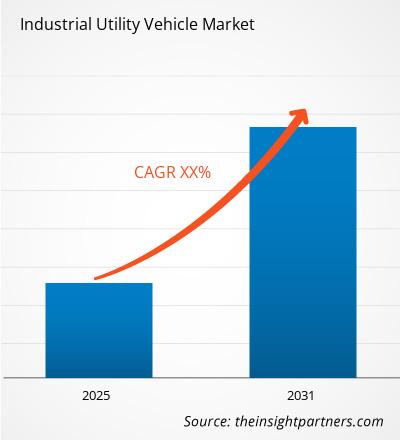
According to a comprehensive research report by The Insight Partners, the Industrial Utility Vehicle Market size is expected to reach US$ 33.51 Billion by 2034 from US$ 17.35 Billion in 2025. The market is anticipated to register a CAGR of 7.59% during the forecast period 2026–2034. This significant expansion underscores the vital role utility vehicles play in modern industrial workflows and highlights the ongoing transition toward electrified and connected fleet solutions.
Key Drivers Fueling Market Growth
Several macro-environmental and industry-specific factors are accelerating the demand for industrial utility vehicles worldwide:
Expansion of E-Commerce and Warehousing: The rapid boom in global e-commerce has led to the proliferation of mega-fulfillment centers and high-capacity warehouses. Industrial utility vehicles, particularly electric burden carriers and tuggers, are critical for maintaining fast-paced inventory movement within these sprawling facilities.
Shift Toward Electrification: Fleet operators are increasingly replacing traditional internal combustion engine (ICE) vehicles with electric alternatives. Driven by stringent environmental regulations and corporate net-zero commitments, electric utility vehicles offer zero emissions, significantly lower operating costs, and reduced noise pollution—making them ideal for indoor environments.
Safety and Ergonomic Focus: Modern utility vehicles are designed to replace manual material handling, substantially reducing workplace injuries, operator fatigue, and downtime. Features such as advanced braking systems, ergonomic seating, and enhanced visibility parameters contribute to a safer industrial environment.
Integration of IoT and Autonomous Tech: The infusion of Internet of Things (IoT) sensors, telematics, and autonomous navigation allows facility managers to monitor fleet health, track real-time location, optimize routing, and schedule predictive maintenance, maximizing uptime and asset utilization.
Get a PDF Sample– https://www.theinsightpartners.com/sample/TIPRE00014277
Industry Competitive Landscape: Key Market Players
The global industrial utility vehicle market is characterized by a strong mix of established global OEMs and specialized innovators pushing the boundaries of vehicle design, battery efficiency, and payload capability. Prominent organizations operating in this domain include:
AMERICAN LANDMASTER
DEERE & COMPANY
INGERSOLL-RAND PLC
KUBOTA CORPORATION
POLARIS INC.
SUZHOU EAGLE ELECTRIC VEHICLE MANUFACTURING CO., LTD.
TEXTRON INC.
THE TORO COMPANY
TROPOS TECHNOLOGIES INC.
YAMAHA MOTOR CO., LTD.
These industry leaders are actively focusing on strategic initiatives such as product launches, modular platform development, partnerships, and geographical expansions to strengthen their market positioning and meet the dynamic needs of diverse industrial end-users.
Get Full Copy of This Report- https://www.theinsightpartners.com/buy/TIPRE00014277
Regional Insights
North America and Europe currently hold substantial market shares owing to early technological adoption, rigorous workplace safety norms, and a strong presence of key manufacturing hubs. Meanwhile, the Asia-Pacific region is projected to experience the highest growth rate during the forecast period. Rapid industrialization, expanding manufacturing bases in emerging economies, massive investments in infrastructure development, and the surging adoption of warehouse automation across China, India, and Southeast Asia are primary factors propelling the market in APAC.
Future Outlook
The future of the industrial utility vehicle market is firmly rooted in technological convergence and sustainability. Over the next decade, the industry will see a complete shift toward high-performance lithium-ion batteries and hydrogen fuel cells, delivering longer operating ranges and rapid charging capabilities that eliminate operational bottlenecks. Furthermore, the integration of fully autonomous driverless tuggers and micro-utility vehicles will reshape indoor logistics, enabling seamless integration with automated guided vehicles (AGVs) and warehouse management software. As industries worldwide continue to modernize their infrastructure and prioritize carbon neutrality, the industrial utility vehicle market is set to remain a crucial enabler of resilient, smart, and sustainable industrial ecosystems through 2034 and beyond.
Related Reports-
Compact Utility Vehicles Market
About Us
The Insight Partners is a one-stop industry research provider of actionable intelligence. We help our clients in getting solutions to their research requirements through our syndicated and consulting research services. We specialize in industries such as Semiconductor and Electronics, Aerospace and Defense, Automotive and Transportation, Biotechnology, Healthcare IT, Manufacturing and Construction, Medical Devices, Technology, Media, and Telecommunications, as well as chemicals and Materials.
Contact Us
If you have any queries about this report or if you would like further information, don’t hesitate to get in touch with us:
Contact Person: Ankit Mathur
E-mail: ankit.mathur@theinsightpartners.com
