Automotive human-machine interface (HMI) technologies are transforming the driving experience by enabling intuitive interaction between drivers, passengers, and vehicles through digital displays, voice recognition, haptic controls, gesture recognition, and intelligent software platforms. The rapid shift toward connected vehicles, electric vehicles (EVs), software-defined vehicles, and advanced driver assistance systems (ADAS) is accelerating the adoption of digital cockpits that combine safety, convenience, personalization, and immersive user experiences. Continuous innovation in augmented reality, artificial intelligence, over-the-air software updates, and multimodal interfaces is redefining next-generation automotive interiors.
Market Overview
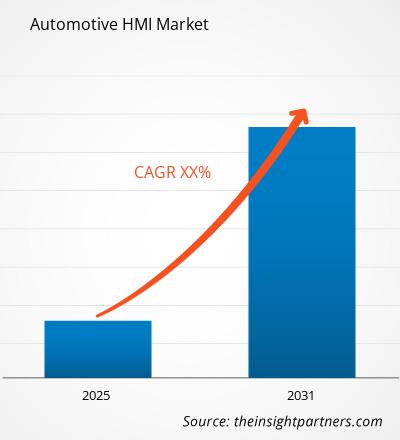
The Automotive HMI Market is projected to grow from US$ 27.83 Billion in 2025 to US$ 81.86 Billion by 2034, registering a CAGR of 12.74% during the forecast period 2026–2034. Market growth is driven by increasing deployment of digital instrument clusters, head-up displays, connected vehicle technologies, software-defined cockpits, and multimodal user interfaces. Growing consumer demand for intelligent in-vehicle experiences, enhanced safety, and seamless connectivity continues to accelerate investments in advanced HMI technologies across passenger and commercial vehicles.
Key Market Insights
- Market Size (2025): US$ 27.83 Billion
- Forecast Market Size (2034): US$ 81.86 Billion
- CAGR (2026–2034): 12.74%
- Key Growth Driver: Rising adoption of digital cockpits, connected vehicles, and advanced driver assistance technologies
- Major Trend: Integration of AI-powered multimodal interfaces, augmented reality displays, and software-defined cockpit platforms
- Forecast Period: 2026–2034
Get a Sample PDF of the Report: https://www.theinsightpartners.com/sample/TIPTE100000888
Market Drivers
Growing Adoption of Connected Vehicles
Automotive manufacturers are increasingly integrating connected services, cloud-based applications, navigation platforms, and intelligent infotainment systems to enhance the overall driving experience.
Expansion of Electric Vehicle Production
Electric vehicles rely heavily on digital interfaces for battery monitoring, charging management, navigation, energy optimization, and advanced vehicle controls, significantly increasing demand for automotive HMI solutions.
Increasing Deployment of Advanced Driver Assistance Systems
ADAS technologies require sophisticated human-machine interfaces capable of presenting real-time safety alerts, navigation guidance, driver monitoring information, and vehicle status with minimal distraction.
Rising Consumer Demand for Intelligent Cabin Experiences
Consumers increasingly expect intuitive touchscreens, voice assistants, gesture recognition, personalized interfaces, and seamless smartphone integration, encouraging automakers to invest in advanced cockpit technologies.
Market Trends
Software-Defined Cockpit Platforms
Automotive manufacturers are transitioning toward software-centric cockpit architectures that enable continuous feature upgrades through over-the-air software updates.
Artificial Intelligence-Based Voice Assistants
AI-powered virtual assistants are improving natural language interaction, personalized vehicle settings, navigation, and infotainment accessibility while reducing driver distraction.
Augmented Reality Head-Up Displays
AR head-up displays are becoming increasingly popular by projecting navigation instructions, hazard warnings, and driving information directly into the driver’s field of vision.
Multimodal Human-Machine Interfaces
Manufacturers are combining touch, voice, gesture, haptic feedback, and eye-tracking technologies to create safer and more intuitive driver interaction systems.
Get the Premium Research Report @ https://www.theinsightpartners.com/buy/TIPTE100000888
Regional Analysis
North America
North America accounted for approximately 36%–38% of the global market in 2025 and is projected to grow at a CAGR of 11.8%–12.4% during 2026–2034. Market growth is supported by increasing adoption of connected vehicles, advanced driver assistance systems, premium vehicle production, and expanding software-defined vehicle platforms. The US represented approximately 78%–82% of North America’s market in 2025 and is expected to register a CAGR of 11.9%–12.5%, driven by electric vehicle launches, connected mobility services, digital cockpit innovation, and expanding automotive software ecosystems.
Europe
Europe held approximately 27%–29% of the market in 2025 and is anticipated to grow at a CAGR of 11.2%–11.8%. Germany, France, and the UK continue leading investments in premium automotive manufacturing, intelligent cockpit technologies, vehicle safety innovation, and software-defined mobility solutions.
Asia-Pacific
Asia-Pacific captured approximately 28%–30% of the global market in 2025 and is projected to register the fastest regional growth with a CAGR of 13.8%–14.6% during 2026–2034. China, Japan, South Korea, and India continue expanding electric vehicle production, connected mobility, automotive electronics manufacturing, and digital cockpit deployment, creating significant opportunities for automotive HMI providers.
Middle East and Africa
The Middle East and Africa are steadily increasing adoption of connected vehicles, premium passenger cars, intelligent transportation systems, and electric mobility, supporting long-term demand for advanced automotive HMI technologies.
Segment Analysis
By Component
The Hardware segment accounted for approximately 54%–57% of the market in 2025 and is projected to grow at a CAGR of 11.5%–12.1% through 2034. Increasing deployment of digital displays, instrument clusters, controllers, sensors, and advanced cockpit electronics continues supporting the segment’s dominant market position.
By Component
The Software segment represented approximately 25%–28% of the market in 2025 and is expected to register the fastest growth with a CAGR of 14.8%–15.6%. Growing demand for cockpit operating systems, artificial intelligence, voice recognition, over-the-air software updates, and connected vehicle platforms continues driving rapid market expansion.
Competitive Landscape
The Automotive HMI Market remains highly competitive as automotive electronics suppliers, software developers, and Tier 1 manufacturers continue investing in intelligent cockpit platforms and next-generation human-machine interfaces. Companies are strengthening their competitive positions through innovations in AI-powered voice assistants, digital instrument clusters, augmented reality head-up displays, touch-enabled interfaces, haptic feedback systems, gesture recognition, software-defined vehicle platforms, and cloud-connected cockpit solutions. Strategic collaborations with automotive OEMs, semiconductor manufacturers, electric vehicle companies, and software providers continue accelerating deployment across passenger and commercial vehicles.
Key Players
- ALPS ALPINE CO., LTD.
- Clarion Co., Ltd.
- Continental AG
- HARMAN International Industries, Incorporated
- Intellias Ltd.
- Luxoft, a DXC Technology Company
- Marelli Holdings Co., Ltd.
- Robert Bosch GmbH
- Valeo SE
- Visteon Corporation
Emerging Trends
The automotive HMI industry is evolving through software-defined cockpits, AI-powered voice assistants, augmented reality head-up displays, multimodal interaction platforms, gesture recognition, haptic feedback technologies, digital instrument clusters, cloud-connected infotainment systems, over-the-air software updates, and intelligent driver monitoring systems. Manufacturers are developing next-generation HMI solutions that deliver enhanced personalization, seamless connectivity, improved driver safety, intuitive user experiences, faster software integration, advanced cybersecurity, and compatibility with autonomous driving technologies. These technological advancements are expected to create significant growth opportunities across electric vehicles, connected mobility, premium automotive segments, autonomous transportation, and software-defined vehicle ecosystems throughout the forecast period.
Future Outlook
The future outlook for the Automotive HMI Market remains highly promising as automakers continue accelerating digital cockpit transformation, connected vehicle deployment, and software-defined vehicle development. Continued innovation in artificial intelligence, augmented reality, multimodal interfaces, cloud connectivity, and intelligent cockpit software is expected to support sustained market growth through 2034.
Related Market Research Reports
Functional Safety Market Forecast 2024-2031 | Growth, Trends & Analysis
RF Signal Chain Component Market Size, Demand & Growth by 2034
UPS Battery Market Size, Share, Growth & Scope Analysis 2031
Ultrafast Lasers Market Report | Growth & Size Analysis by 2031
About The Partners
The Insight Partners is a Insight global leader in market research, delivering comprehensive analysis and actionable insights across diverse industries. The company empowers decision-makers with data-driven intelligence to navigate evolving markets and accelerate growth.
Contact Us:
- Contact Person: Ankit Mathur
- E-mail:ankit.mathur@theinsightpartners.com
- Phone: +1-646-491-9876
Also Available in :
