Advanced cardiac rhythm management technologies are transforming the way complex heart conditions are diagnosed and treated. Increasing adoption of minimally invasive procedures and next-generation electrophysiology systems is improving clinical outcomes worldwide. Rising investments in specialized cardiac care infrastructure are accelerating technological advancements in this field.
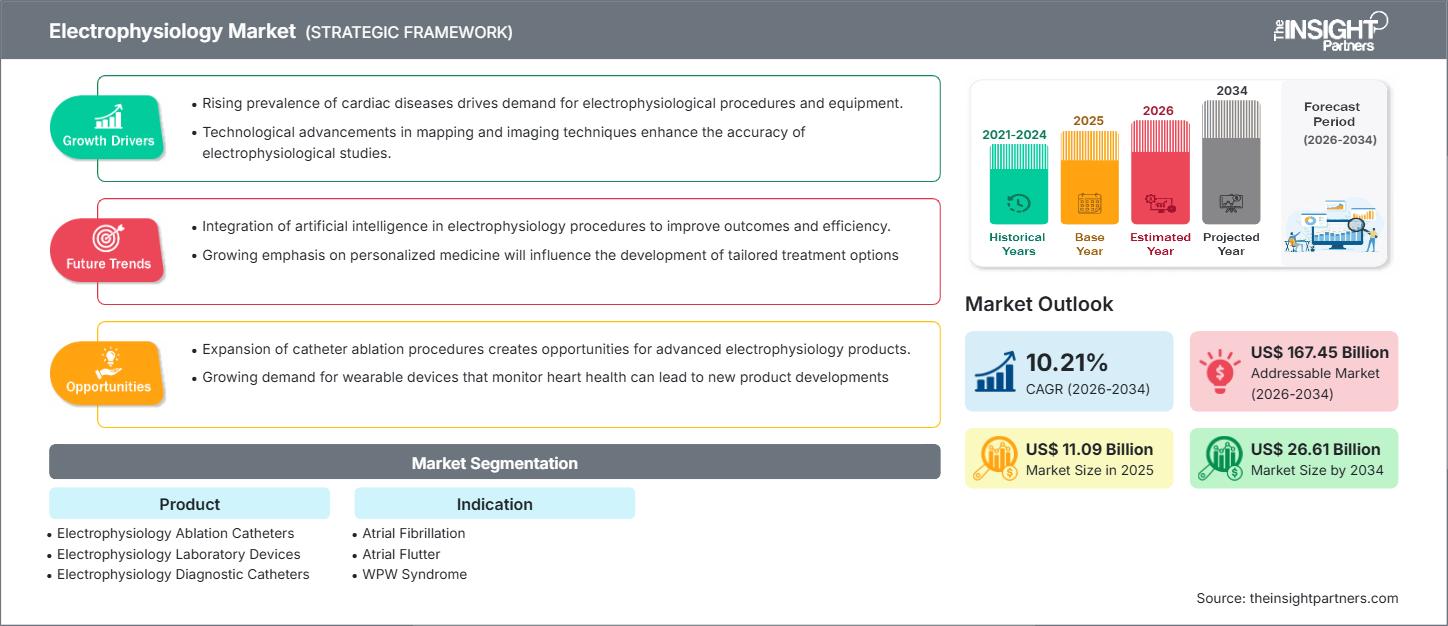
The Electrophysiology Market was valued at US$ 11.09 billion in 2025 and is projected to reach US$ 26.61 billion by 2034, registering a CAGR of 10.21% during 2026–2034. Growth is driven by the rising prevalence of cardiac arrhythmias, increasing demand for catheter-based interventions, advancements in mapping and ablation technologies, and expanding electrophysiology laboratory capabilities across hospitals and specialty cardiac centers.
Get Sample PDF @ https://www.theinsightpartners.com/sample/TIPRE00023663
Growing Burden of Cardiac Arrhythmias Driving Electrophysiology Adoption
The increasing incidence of atrial fibrillation, atrial flutter, Wolff-Parkinson-White syndrome, and atrioventricular nodal reentry tachycardia is a major factor supporting industry expansion. Aging populations, sedentary lifestyles, obesity, hypertension, and diabetes are contributing to a higher global burden of cardiovascular disorders, creating greater demand for advanced rhythm management solutions.
Healthcare providers are increasingly adopting electrophysiology procedures due to their effectiveness compared with conventional medication-based approaches. The growing use of wearable cardiac monitoring devices and continuous electrocardiographic technologies is enabling earlier diagnosis and improving patient referral rates for electrophysiology procedures.
Hospitals worldwide are expanding electrophysiology laboratories to accommodate rising procedure volumes and integrate advanced diagnostic, mapping, and therapeutic platforms. This shift is supporting increased adoption of electrophysiology ablation catheters, diagnostic catheters, laboratory devices, and access systems.
Technological Advancements Transforming Electrophysiology Procedures
Continuous innovation in electrophysiology technologies is reshaping treatment approaches for complex cardiac rhythm disorders. Advanced three-dimensional electroanatomical mapping systems, force-sensing catheters, intracardiac imaging, robotic navigation, and improved energy delivery platforms are enhancing procedural accuracy and reducing complications.
Manufacturers are increasingly developing integrated solutions that combine imaging, navigation, mapping, and therapy systems into unified platforms. These technologies enable physicians to perform complex ablation procedures with improved efficiency, reduced fluoroscopy exposure, and better patient outcomes.
The emergence of pulsed field ablation technology is expected to become a significant trend during the forecast period. This innovative energy source offers selective tissue treatment capabilities and may improve procedural safety compared with traditional ablation techniques. Increasing clinical validation, regulatory approvals, and physician training programs are expected to support wider adoption.
Product and Indication Analysis of Electrophysiology Solutions
Based on product, electrophysiology ablation catheters accounted for the largest share in 2025 and are expected to maintain strong growth during 2026–2034. Increasing preference for minimally invasive catheter ablation procedures, particularly for atrial fibrillation treatment, is supporting segment expansion.
Electrophysiology laboratory devices are also witnessing significant demand due to increasing investments in advanced mapping systems, recording platforms, navigation technologies, and digital workflow solutions. Diagnostic catheters continue to play an essential role in identifying electrical abnormalities and guiding appropriate therapeutic interventions.
Key indications covered in the electrophysiology sector include:
- Atrial Fibrillation (AF), driven by rising diagnosis rates, aging demographics, and increased adoption of catheter ablation.
- Atrial Flutter, supported by established clinical guidelines and high procedural success rates.
- Wolff-Parkinson-White (WPW) Syndrome, where catheter ablation remains an effective curative treatment option.
- Atrioventricular Nodal Reentry Tachycardia (AVNRT), supported by strong clinical outcomes and minimally invasive treatment advantages.
Regional Growth Outlook and Competitive Landscape
North America dominated the electrophysiology landscape in 2025, accounting for approximately 39–43% share, supported by advanced healthcare infrastructure, favorable reimbursement policies, and widespread availability of specialized cardiac services. The United States represents the leading contributor in the region due to high procedure volumes and strong adoption of advanced ablation technologies.
Europe continues to demonstrate steady growth due to established cardiovascular care systems, increasing electrophysiology program development, and rising adoption of advanced cardiac devices. Germany, the United Kingdom, and France remain important contributors to regional expansion.
Asia Pacific is expected to register the fastest growth during 2026–2034, supported by increasing healthcare investments, rising cardiovascular disease prevalence, improving access to specialized cardiac treatment, and expansion of tertiary healthcare facilities in China, Japan, and India.
Leading companies operating in the electrophysiology sector include:
- Abbott Laboratories
- Medtronic plc
- Boston Scientific Corporation
- Johnson & Johnson
- Koninklijke Philips N.V.
- GE HealthCare Technologies Inc.
- BIOTRONIK SE & Co. KG
- MicroPort Scientific Corporation
- CardioFocus, Inc.
- Stereotaxis, Inc.
Interested in Purchasing this Report? Click here @ https://www.theinsightpartners.com/buy/TIPRE00023663
Future Outlook
The future outlook for the Electrophysiology Market remains highly promising as healthcare systems worldwide prioritize advanced cardiac care solutions and minimally invasive treatment approaches. Increasing adoption of artificial intelligence-assisted mapping, digital electrophysiology laboratories, robotic navigation systems, and next-generation ablation technologies will continue shaping industry development. Expanding healthcare infrastructure in emerging economies, growing physician training initiatives.
Related Report:
1) Micro-Invasive Glaucoma Implants Market Size, Demand & Growth by 2034
2) Surgical Pliers Market Drivers, Trends, and Forecasts by 2031
3) Medical Retractors Market Outlook, Segments, Recent Developments, and Insights by 2031
About Us –
The Insight Partners provides comprehensive syndicated and tailored market research services in the healthcare, technology, and industrial domains. Renowned for delivering strategic intelligence and practical insights, the firm empowers businesses to remain competitive in ever-evolving global markets.
Contact Us:
Ankit Mathur | The Insight Partners
E-mail: ankit.mathur@theinsightpartners.com
Phone: +1-646-491-9876
Also Available in : Korean German Japanese French Chinese Italian Spanish
