Automotive intelligent battery sensors have become essential components in modern vehicles by continuously monitoring battery voltage, current, temperature, state of charge (SoC), and state of health (SoH). These sensors enable efficient energy management, improve battery lifespan, support start-stop functionality, and optimize power distribution across conventional, hybrid, and electric vehicles. As vehicle electrification accelerates and automotive electronics become increasingly sophisticated, intelligent battery sensors are playing a critical role in ensuring reliable vehicle performance, predictive diagnostics, and enhanced energy efficiency.
Market Overview
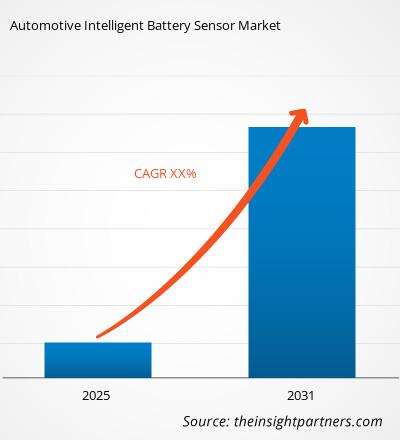
The Automotive Intelligent Battery Sensor Market was valued at US$ 3.91 Billion in 2025 and is projected to reach US$ 8.93 Billion by 2034, registering a CAGR of 9.6% during the forecast period 2026–2034. Market growth is driven by increasing adoption of start-stop systems, 48V architectures, hybrid powertrains, connected vehicle diagnostics, and intelligent battery management technologies. Rising demand for vehicle electrification, predictive maintenance, and energy optimization is further supporting market expansion across passenger cars, light commercial vehicles, and heavy commercial vehicles.
Key Market Insights
- Market Size (2025): US$ 3.91 Billion
- Forecast Market Size (2034): US$ 8.93 Billion
- CAGR (2026–2034): 9.6%
- Key Growth Driver: Increasing adoption of vehicle electrification and intelligent battery management systems
- Major Trend: Integration of CAN and LIN communication, predictive diagnostics, and advanced battery health monitoring technologies
- Forecast Period: 2026–2034
Get a Sample PDF of the Report: https://www.theinsightpartners.com/sample/TIPAT00002415
Market Drivers
Growing Adoption of Vehicle Electrification
The increasing production of hybrid vehicles, mild hybrids, and electric vehicles is driving demand for intelligent battery sensors capable of delivering accurate battery monitoring and energy optimization.
Expansion of Start-Stop Systems
Automotive manufacturers are integrating intelligent battery sensors into start-stop systems to improve fuel efficiency, reduce emissions, and enhance battery durability under frequent engine restart conditions.
Increasing Demand for Predictive Vehicle Diagnostics
Connected vehicle platforms and fleet management systems require intelligent battery sensors that support real-time diagnostics, predictive maintenance, and remote monitoring to improve vehicle reliability.
Rising Electrical Load in Modern Vehicles
The growing number of electronic control units, infotainment systems, ADAS features, lighting systems, and connected services is increasing the need for advanced battery monitoring and power management solutions.
Market Trends
Advanced Battery Health Monitoring
Manufacturers are developing intelligent battery sensors capable of accurately measuring voltage, current, temperature, state of charge, and state of health to improve battery performance and longevity.
Integration with Vehicle Communication Networks
Modern battery sensors increasingly support CAN and LIN communication protocols, enabling seamless integration with body control modules, battery management systems, and vehicle diagnostics.
Growth of 48V Vehicle Architectures
The rapid adoption of 48V mild-hybrid systems is creating demand for high-precision battery sensors that support efficient energy recovery and intelligent power management.
Low-Power Sensor Electronics
Manufacturers are focusing on low-quiescent-current designs, automotive-grade microcontrollers, secure communication, and highly accurate sensing technologies to improve system efficiency and reliability.
Get the Premium Research Report @ https://www.theinsightpartners.com/buy/TIPAT00002415
Regional Analysis
North America
North America accounted for approximately 26%–30% of the global market in 2025 and is projected to grow at a CAGR of 8.4%–9.4% during 2026–2034. Market growth is supported by increasing adoption of connected vehicle diagnostics, electrified pickups and SUVs, advanced battery management systems, and expanding deployment of 48V vehicle architectures. The US represented approximately 79%–84% of North America’s market in 2025 and is expected to register a CAGR of 8.5%–9.5%, driven by hybrid vehicle production, fleet management solutions, battery diagnostics, and intelligent energy management technologies.
Europe
Europe held approximately 27%–31% of the market in 2025 and is anticipated to grow at a CAGR of 8.0%–9.0%. Germany, France, the UK, Italy, and Spain continue investing in vehicle electrification, emission reduction technologies, intelligent battery management systems, and connected automotive platforms.
Asia-Pacific
Asia-Pacific captured approximately 34%–38% of the global market in 2025 and is projected to register the fastest regional growth with a CAGR of 10.2%–11.2% during 2026–2034. China, Japan, South Korea, India, and Australia continue expanding electric vehicle manufacturing, automotive electronics production, battery technologies, and intelligent energy management systems, creating significant opportunities for automotive intelligent battery sensor manufacturers.
Middle East and Africa
The Middle East and Africa are steadily increasing adoption of connected vehicles, hybrid powertrains, commercial fleet modernization, and advanced automotive electronics, supporting long-term demand for intelligent battery monitoring solutions.
Segment Analysis
By Voltage
The 12V segment accounted for approximately 55%–59% of the market in 2025 and is projected to grow at a CAGR of 8.3%–9.3% through 2034. Strong demand from conventional passenger vehicles, commercial vehicles, and start-stop systems continues supporting the segment’s dominant market position.
By Voltage
The 48V segment represented approximately 11%–15% of the market in 2025 and is expected to register the fastest growth with a CAGR of 11.4%–12.4%. Rising deployment of mild-hybrid vehicles, energy recovery systems, and advanced electrification technologies continues driving rapid market expansion.
Competitive Landscape
The Automotive Intelligent Battery Sensor Market remains highly competitive as automotive electronics manufacturers, semiconductor companies, and Tier 1 suppliers continue investing in intelligent battery monitoring and energy management technologies. Companies are strengthening their competitive positions through innovations in battery sensing integrated circuits, CAN and LIN communication, low-power ASICs, predictive diagnostics, secure data communication, temperature monitoring, and advanced software calibration. Strategic collaborations with automotive OEMs, battery manufacturers, semiconductor suppliers, and electric vehicle companies continue accelerating deployment across passenger vehicles, commercial vehicles, and hybrid platforms.
Key Players
- Continental AG
- Furukawa Electric Co., Ltd.
- FORVIA HELLA
- Inomatic GmbH
- MTA S.p.A.
- NXP Semiconductors N.V.
- Qinuo Electronics Co., Ltd.
- Robert Bosch GmbH
- Texas Instruments Incorporated
- Vishay Intertechnology, Inc.
Emerging Trends
The automotive intelligent battery sensor industry is evolving through AI-enabled battery diagnostics, predictive maintenance, CAN and LIN communication, low-power sensing integrated circuits, cloud-connected vehicle monitoring, battery state-of-health analytics, secure data transmission, intelligent energy management, software-defined vehicle architectures, and advanced 48V power management technologies. Manufacturers are developing next-generation battery sensors that deliver higher measurement accuracy, lower power consumption, enhanced durability, improved cybersecurity, seamless integration with battery management systems, and real-time diagnostics for connected vehicles. These technological advancements are expected to create significant growth opportunities across electric vehicles, hybrid vehicles, commercial fleets, connected mobility, intelligent transportation, and software-defined automotive platforms throughout the forecast period.
Future Outlook
The future outlook for the Automotive Intelligent Battery Sensor Market remains highly positive as vehicle electrification, connected mobility, and intelligent energy management continue to reshape the automotive industry. Continued innovation in battery sensing technologies, predictive analytics, secure communication, semiconductor integration, and software-defined vehicle platforms is expected to support sustained market growth through 2034.
Related Market Research Reports
Satellite Modem Market Demand, Trends & Forecast by 2034
Optoelectronic Components Market Size, Share & Growth by 2034
Smart Plug Market Demand, Size & Forecast by 2034
Data Center Rack PDU Market Size, Growth & Trends by 2034
About The Partners
The Insight Partners is a Insight global leader in market research, delivering comprehensive analysis and actionable insights across diverse industries. The company empowers decision-makers with data-driven intelligence to navigate evolving markets and accelerate growth.
Contact Us:
- Contact Person: Ankit Mathur
- E-mail:ankit.mathur@theinsightpartners.com
- Phone: +1-646-491-9876
Also Available in :
