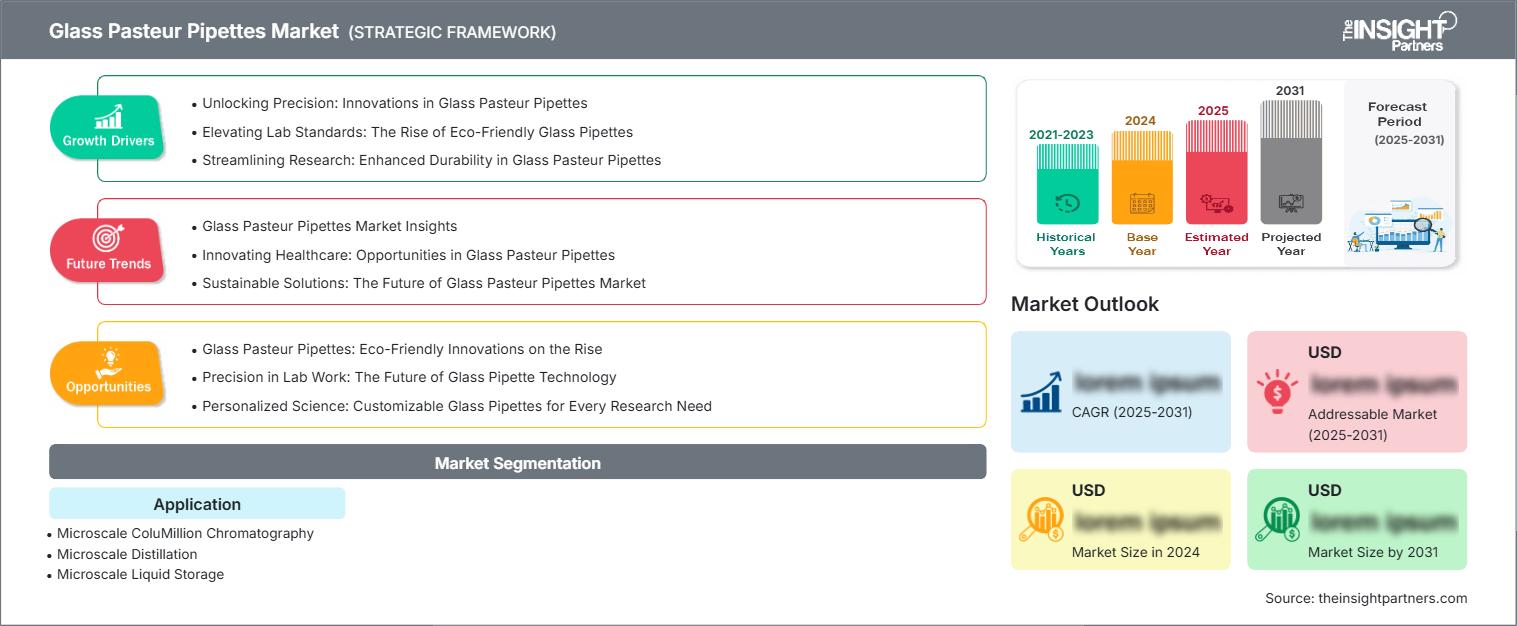
Walk into almost any laboratory, and you will find a box of thin glass tubes sitting near the bench, unremarkable and easy to overlook. Those tubes, known as Pasteur pipettes, have been a staple of lab work for well over a century. The Glass Pasteur Pipettes Market is proof that this simple tool still has plenty of growth left in it. The market was valued at US$ 146.68 Million in 2025 and is projected to reach US$ 310.04 Million by 2034, at a CAGR of 9.81%. That is more than double in under a decade for a product most researchers barely think twice about.
What Are Glass Pasteur Pipettes?
Glass Pasteur pipettes are simple, disposable glass tubes used to transfer small volumes of liquid in laboratory settings. They are drawn to a fine tip, allowing precise, low-volume dispensing without the need for calibrated measurement.
Laboratory activity worldwide has climbed steadily, and that alone explains much of this market’s momentum. Pharmaceutical research, clinical diagnostics and academic science have all expanded their footprint since the pandemic reshaped funding priorities across healthcare and biotechnology. Every one of those settings still relies on basic, dependable tools for everyday liquid handling, and glass Pasteur pipettes remain one of the cheapest, most trusted options available. What makes this particularly significant is that demand has grown even as plastic alternatives have flooded the market, a sign that glass still holds a clear advantage in certain applications.
Request a Sample Copy of the Report: https://www.theinsightpartners.com/sample/TIPRE00026457
Chemical compatibility is where glass earns its keep. Plastic pipettes can react with, absorb, or leach into certain solvents and reagents, which makes them unsuitable for sensitive chromatography and distillation work. Glass does not carry that risk. Researchers working with organic solvents, volatile compounds or high-purity samples consistently reach for glass instead, and that preference has kept demand steady even as budget-conscious labs shift other consumables toward cheaper plastic equivalents.
Sustainability concerns are quietly reinforcing this trend too. Plastic lab waste has come under growing scrutiny from environmentally conscious institutions, and reusable or recyclable glass options are increasingly seen as the more responsible choice. Beyond that, many academic and government labs are actively reviewing their plastic consumption as part of broader sustainability commitments, a shift that favours glass Pasteur pipettes in settings where reuse is practical. So why has such a basic tool managed to stay relevant for over a hundred years? Simplicity is hard to improve on, and in a lab environment, dependable simplicity is exactly what researchers want.
Segmentation Overview
By Application: Microscale column chromatography relies heavily on glass Pasteur pipettes for precise, low-volume transfers where chemical purity matters most. Microscale distillation uses them for small-batch liquid handling in organic chemistry workflows. Microscale liquid storage covers short-term sample holding and transfer between experimental stages. Medical laboratory applications include diagnostic sample handling and reagent transfer in clinical settings. The Others segment captures educational use and general-purpose laboratory tasks across various research fields.
Key Market Players
- Thermo Fisher Scientific
- Heger
- Hilgenberg
- Cole-Parmer
- Globe Scientific Inc.
- Glass Colab
- Narang Medical Ltd.
Competition in this market is less about innovation and more about consistency, supply reliability and price. Laboratories buy these pipettes in bulk and expect uniform quality across every batch, so manufacturers who can guarantee that consistency tend to win long-term supply contracts with hospitals, universities and research institutions alike.
Sustainability and Innovation Trends
Manufacturers are exploring lower-emission glass production methods and recyclable packaging to align with the sustainability goals of their institutional buyers. Some suppliers are also introducing sterile, individually wrapped options to meet stricter contamination control standards in clinical and pharmaceutical laboratories, a trend that adds value without changing the fundamental simplicity of the product itself.
Buy Premium Report: https://www.theinsightpartners.com/buy/TIPRE00026457
Regional Outlook
North America leads this market, supported by extensive pharmaceutical research activity and a dense network of academic and clinical laboratories. Europe follows closely, driven by strong life sciences funding and strict laboratory quality standards. Asia Pacific is the fastest-growing region, as countries like China and India expand their biotechnology and pharmaceutical manufacturing base rapidly. South and Central America remains a smaller market, with gradual growth tied to expanding healthcare and academic research infrastructure.
Related Reports:
About The Insight Partners
The Insight Partners is among the leading market research and consulting firms in the world. We take pride in delivering exclusive reports along with sophisticated strategic and tactical insights into the industry. Reports are generated through a combination of primary and secondary research, solely aimed at giving our clientele a knowledge-based insight into the market and domain. This is done to assist clients in making wiser business decisions. A holistic perspective in every study undertaken forms an integral part of our research methodology and makes the report unique and reliable.
Contact Us:
If you have any queries about this report or if you would like further information, please contact us:
Phone: +1-646-491-9876
E-mail: sales@theinsightpartners.com
Also Available in: Korean | German | Japanese | French | Chinese | Italian | Spanish
