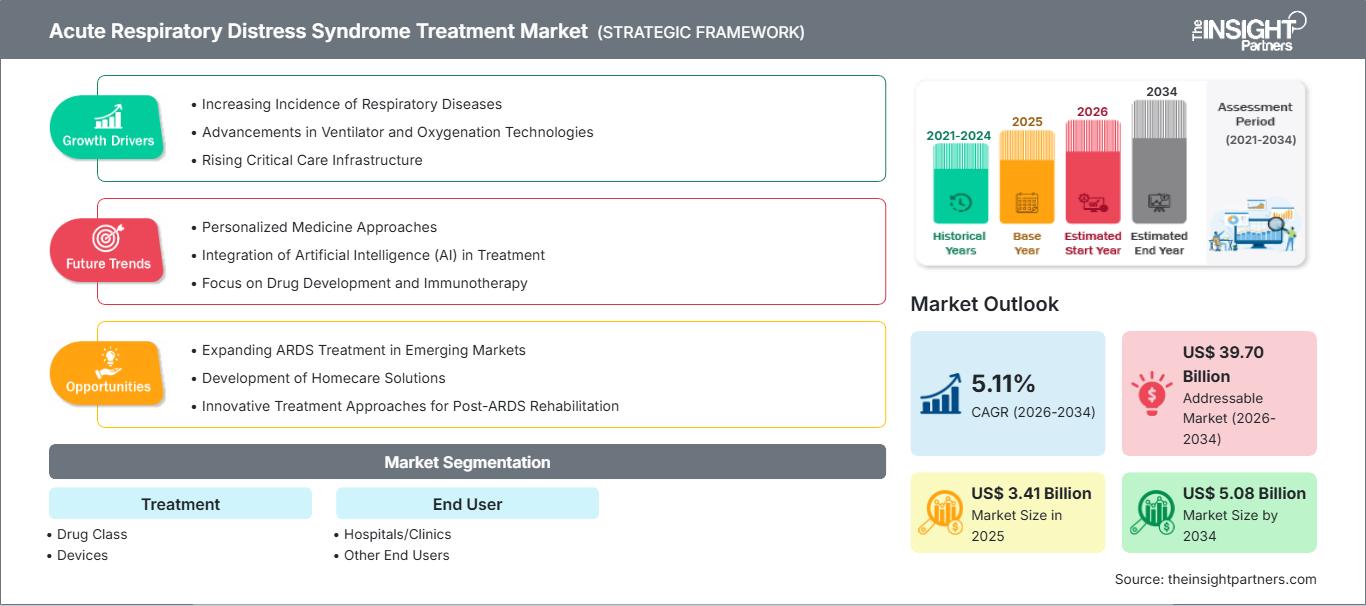
The Acute Respiratory Distress Syndrome Treatment Market accounted for US$ 3.41 Billion in 2025 and is estimated to reach US$ 5.08 Billion by 2034, with a CAGR of 5.11% during 2026–2034.
The growing burden of acute lung injuries and life-threatening respiratory conditions has significantly increased the need for advanced ARDS treatment approaches. Healthcare providers are focusing on early diagnosis, optimized ventilatory support, and comprehensive intensive care strategies to improve patient survival and reduce complications. The expansion of critical care infrastructure and increasing awareness of evidence-based treatment protocols continue to support market growth throughout the forecast period.
Get Sample PDF – https://www.theinsightpartners.com/sample/TIPRE00040720
Key Market Drivers
The increasing prevalence of respiratory diseases remains one of the major factors driving the ARDS treatment market. Conditions such as severe pneumonia, sepsis, aspiration, and pulmonary infections frequently lead to acute respiratory distress syndrome, creating substantial demand for effective treatment solutions. The rising geriatric population, which is more vulnerable to severe respiratory complications, further contributes to the growing patient pool.
Growing investments in intensive care units (ICUs), advanced respiratory support equipment, and emergency healthcare infrastructure are also supporting market expansion. In addition, healthcare providers are emphasizing early intervention and multidisciplinary treatment strategies to improve clinical outcomes for critically ill patients.
Technological Advancements Improving Patient Care
Technological innovation continues to enhance ARDS treatment by improving respiratory monitoring, ventilator performance, and patient management. Modern mechanical ventilators incorporate advanced ventilation modes that allow clinicians to deliver personalized respiratory support while minimizing ventilator-induced lung injury.
Artificial intelligence, digital monitoring platforms, and real-time patient data analytics are helping healthcare professionals optimize treatment decisions in intensive care settings. High-flow oxygen therapy systems, non-invasive ventilation technologies, and advanced respiratory monitoring devices are increasingly being integrated into critical care practices to improve treatment efficiency and patient safety.
Continuous research into novel therapeutic approaches, supportive care techniques, and precision medicine is expected to further strengthen the market over the coming years.
Treatment Applications Across Critical Care Settings
ARDS treatment is primarily delivered in hospitals, intensive care units, emergency departments, and specialized respiratory care centers. Mechanical ventilation remains a cornerstone of treatment for patients with severe respiratory failure, while oxygen therapy, fluid management, and supportive pharmacological interventions continue to play important roles in patient care.
Critical care teams increasingly utilize evidence-based ventilation strategies, prone positioning techniques, and comprehensive respiratory management protocols to improve oxygenation and reduce mortality. The growing availability of advanced respiratory support systems has enabled healthcare providers to deliver more effective treatment for complex ARDS cases.
Regional Market Insights
North America continues to account for a significant share of the ARDS treatment market due to its well-established healthcare infrastructure, advanced critical care facilities, and widespread availability of sophisticated respiratory support technologies. Strong investments in intensive care medicine and continuous adoption of innovative treatment solutions support regional market growth.
Europe also maintains a substantial market presence, driven by advanced hospital networks, increasing respiratory disease management programs, and growing investments in critical care technologies. Meanwhile, Asia Pacific is expected to witness significant growth due to expanding healthcare infrastructure, rising healthcare expenditure, improving access to intensive care services, and increasing awareness of advanced respiratory treatment. Emerging markets across Latin America and the Middle East & Africa are gradually strengthening their critical care capabilities, creating additional opportunities for market expansion.
Competitive Landscape
The ARDS treatment market is characterized by continuous innovation and strategic investments by leading healthcare technology companies. Manufacturers are focusing on developing advanced ventilators, respiratory monitoring systems, oxygen therapy devices, and integrated critical care solutions to improve patient outcomes.
Strategic partnerships, product launches, research collaborations, and technological advancements remain key competitive strategies. Companies continue investing in intelligent respiratory care systems that support clinicians with accurate monitoring, automated ventilation adjustments, and improved patient management capabilities.
Top Players
- Philips Healthcare
- Medtronic plc
- Fisher & Paykel Healthcare Corporation Limited
- Hamilton Medical AG
- ResMed Inc.
- GE HealthCare Technologies Inc.
- Smiths Medical
- Drägerwerk AG & Co. KGaA
- Becton, Dickinson and Company
- Getinge AB
Emerging Industry Trends
Several important trends are shaping the future of the ARDS treatment market. The integration of artificial intelligence into respiratory monitoring systems is improving clinical decision-making and enabling more personalized ventilation strategies. Increasing adoption of non-invasive respiratory support technologies is helping reduce complications associated with prolonged mechanical ventilation.
Get Full Copy of This Report @ https://www.theinsightpartners.com/buy/TIPRE00040720
Healthcare facilities are also investing in connected critical care platforms that integrate ventilators, monitoring devices, and electronic medical records to enhance workflow efficiency. Ongoing clinical research into novel therapies, regenerative medicine approaches, and targeted respiratory treatments may further expand future treatment options for patients with acute respiratory distress syndrome.
Future Outlook
The future outlook for the acute respiratory distress syndrome treatment market remains positive as healthcare providers continue prioritizing advanced respiratory care and critical care innovation. Growing investments in intensive care infrastructure, technological advancements in ventilatory support, and increasing adoption of digital patient monitoring systems are expected to support sustained market growth. Continuous research into new therapeutic approaches, improved respiratory management protocols, and precision critical care solutions will further strengthen the market’s long-term potential. As hospitals continue enhancing their capabilities to manage severe respiratory conditions, the ARDS treatment market is expected to experience steady expansion through 2034.
Related Reports @
ICU Equipment Market Size, Trends & Demand by 2034
Respiratory Care Devices Market Trends and Analysis by 2031
About Us –
The Insight Partners provides comprehensive syndicated and tailored market research services in the healthcare, technology, and industrial domains. Renowned for delivering strategic intelligence and practical insights, the firm empowers businesses to remain competitive in ever-evolving global markets.
Contact Us:
Contact Person: Ankit Mathur
E-mail: ankit.mathur@theinsightpartners.com
Phone: +1-646-491-9876
