The global Media Function Virtualization market is undergoing a significant transformation as media enterprises, broadcasters, and Over-The-Top (OTT) streaming platforms shift away from legacy hardware infrastructure toward software-defined, virtualized architectures. Media Function Virtualization replaces proprietary hardware appliances with virtualized software instances running on commercial off-the-shelf (COTS) servers or cloud platforms. This structural change allows broadcasting networks and content producers to process, transcode, edit, and distribute high-definition and 4K/8K video streams dynamically.
The Media Function Virtualization Market size is expected to reach US$ 4.04 Billion by 2034 from US$ 1.37 Billion in 2025. The market is estimated to record a CAGR of 12.79% from 2026 to 2034.
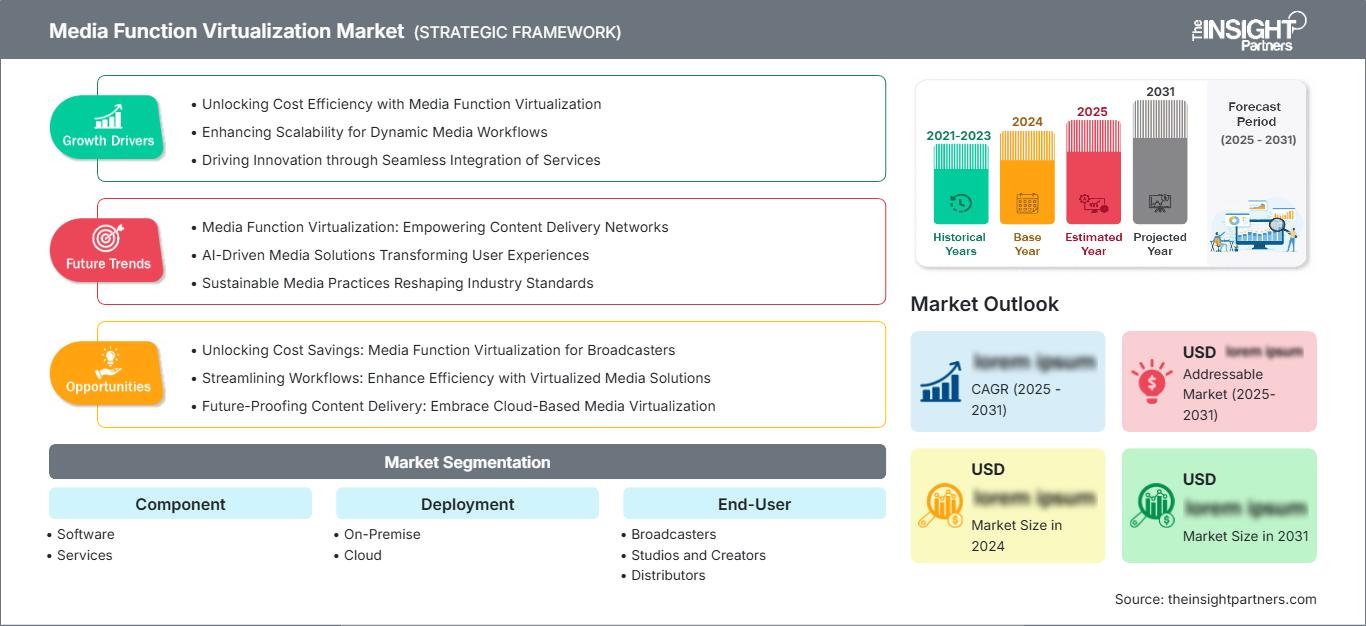
Key Market Drivers
- Unlocking Cost Efficiency: Traditional broadcast workflows rely on specialized, capital-intensive physical hardware. Virtualizing media functions allows media companies to transition from high upfront capital expenditures (CapEx) to a predictable operational expense (OpEx) model, significantly reducing server overhead, energy consumption, and maintenance costs.
- Enhancing Scalability for Dynamic Workflows: Live media events, breaking news coverage, and episodic releases require unpredictable processing capacity. Virtualized architectures allow operators to auto-scale compute resources instantly during demand spikes and spin them down when traffic normalizes.
- Rapid Service Innovation and Integration: By leveraging microservices and API-driven virtualized environments, media organizations can integrate new video codecs, advanced analytics, and automated metadata insertion tools without replacing physical hardware racks.
Download Sample Report@ https://www.theinsightpartners.com/sample/TIPRE00028884
Key Market Opportunities
- Cost Optimization for Regional and Global Broadcasters: Media Function Virtualization enables traditional linear broadcasters to modernize existing infrastructure while extending their global delivery reach without building localized data centers.
- Streamlining Content Workflows: Automated virtualized pipelines streamline ingest, signal processing, encoding, and multiplexing, resulting in fewer operational bottlenecks and faster content turnarounds.
- Cloud-Native Content Delivery: Embracing hybrid and multi-cloud virtual environments gives studios and creators future-proof content architectures, facilitating seamless collaboration across globally dispersed production teams.
Market Segmentation
The Media Function Virtualization market is segmented by component, deployment mode, and end-user across major geographic regions including North America, Europe, Asia-Pacific, South & Central America, and the Middle East & Africa.
- By Component:
- Software: Virtualized media engines, orchestration tools, virtual network functions (VNFs), and video processing stacks.
- Services: Professional consulting, system integration, continuous support, and managed deployment services.
- By Deployment:
- Cloud: Hybrid, private, and public cloud deployments offering elastic scalability and remote accessibility.
- On-Premise: Localized virtual server clusters designed for strict low-latency live broadcasting and secure studio environments.
- By End-User:
- Broadcasters: Linear television networks and radio stations modernizing core signal delivery.
- Studios and Creators: Post-production houses and original content developers managing high-bitrate media files.
- Distributors: Content delivery networks (CDNs) and satellite/cable aggregators managing multi-channel delivery.
- OTT Platforms: On-demand and live streaming services delivering localized content across multiple consumer screens.
Market News and Recent Developments
The industry is witnessing accelerated convergence between telecommunication standards, cloud infrastructure providers, and broadcast technology specialists. Recent technological developments highlight a strong shift toward cloud-native microservices architecture, artificial intelligence integration, and IP-based broadcast standards such as SMPTE ST 2110.
Leading media delivery networks are increasingly collaborating with cloud hyperscalers to deploy virtualized video processing chains directly at the edge. Furthermore, the integration of AI-driven video compression algorithms within virtualized software stacks is helping operators optimize bandwidth consumption while maintaining pristine video quality for end viewers.
Competitive Landscape and Top Players
The Media Function Virtualization market is characterized by strategic partnerships, enterprise software innovations, and continuous technology modernizations. Providers are focusing on expanding their software portfolios to support low-latency streaming and cloud orchestration.
Key Market Leaders Include:
- Alepo: Provides scalable virtualized network and subscriber management solutions for telecommunications and media platforms.
- Atos SE: Delivers comprehensive digital transformation, cloud orchestration, and enterprise integration services.
- Infosys Limited: Offers end-to-end cloud transformation, virtualization integration, and managed media services.
- Net Insight AB: Specializes in high-performance media transport, cloud synchronization, and virtualized video delivery solutions.
- Nevion AS: Focuses on software-defined media network solutions for live broadcast workflows and media transport.
- Red Hat, Inc.: Provides enterprise open-source software, cloud container platforms, and Linux-based virtualization infrastructures.
- Huawei (SoftCOM Architecture): Enables virtualized network capabilities and cloud-based telecom media infrastructure.
- NSN Telco Cloud (Nokia): Offers carrier-grade virtualization frameworks for media processing and real-time network functions.
- 6WIND (6WINDGate Software): Delivers high-performance virtual routing and network function virtualization software.
Get Full Copy of This Report @ https://www.theinsightpartners.com/buy/TIPRE00028884
Future Outlook
Looking toward 2034, the Media Function Virtualization market will serve as the backbone of next-generation media infrastructure. The progressive adoption of AI-assisted workflow automation, cloud edge computing, and green broadcasting practices will further accelerate market expansion. As live streaming and multi-platform media consumption continue to rise, virtualized media architectures will remain essential for organizations seeking dynamic scalability, cost control, and agile content delivery.
About The Insight Partners
The Insight Partners provides comprehensive syndicated and tailored market research services in the healthcare, technology, and industrial domains. Renowned for delivering strategic intelligence and practical insights, the firm empowers businesses to remain competitive in ever-evolving global markets.
Contact Information
- Email: sales@theinsightpartners.com
- Website: theinsightpartners.com
- Phone: +1-646-491-9876
