Bipolar ionization equipment is becoming an important technology for improving indoor air quality by generating positive and negative ions that help reduce airborne particles, odors, and certain contaminants within HVAC systems. These solutions are increasingly deployed across commercial buildings, healthcare facilities, educational institutions, manufacturing plants, airports, and hospitality venues to enhance air purification while supporting energy-efficient ventilation strategies. Growing awareness of healthy indoor environments, stricter building standards, and the modernization of HVAC infrastructure are accelerating the adoption of bipolar ionization technologies worldwide.
Market Overview
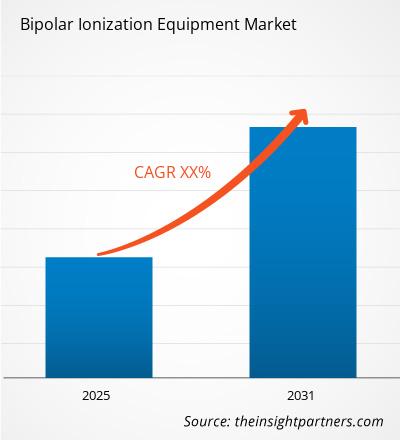
The Bipolar Ionization Equipment Market is projected to grow from US$ 1.35 Billion in 2025 to US$ 2.77 Billion by 2034, registering a CAGR of 8.34% during the forecast period 2026–2034. Market growth is driven by rising investments in indoor air quality (IAQ) solutions, increasing healthcare infrastructure modernization, growing commercial building retrofits, and expanding demand for energy-efficient air purification technologies. Continuous advancements in HVAC-integrated ionization systems, intelligent monitoring, sensor-based controls, and low-power equipment are further supporting global market expansion.
Key Market Insights
- Market Size (2025): US$ 1.35 Billion
- Forecast Market Size (2034): US$ 2.77 Billion
- CAGR (2026–2034): 8.34%
- Key Growth Driver: Rising demand for improved indoor air quality and energy-efficient HVAC air treatment solutions
- Major Trend: Integration of HVAC-connected bipolar ionization systems with intelligent monitoring and building management platforms
- Forecast Period: 2026–2034
Get a Sample PDF of the Report: https://www.theinsightpartners.com/sample/TIPRE00024428
Market Drivers
Growing Focus on Indoor Air Quality
Commercial organizations, healthcare providers, educational institutions, and industrial facilities are increasingly investing in technologies that improve indoor air quality while supporting healthier indoor environments.
Expansion of HVAC Retrofit Projects
Building owners are modernizing aging HVAC systems by integrating bipolar ionization modules that enhance air treatment without significantly increasing energy consumption.
Healthcare Infrastructure Modernization
Hospitals, clinics, and healthcare facilities are adopting advanced air purification technologies to support infection control strategies, improve patient environments, and enhance operational safety.
Energy-Efficient Building Operations
Organizations are seeking air treatment solutions that complement existing filtration systems while reducing energy consumption and maintaining efficient building ventilation.
Market Trends
Smart HVAC Integration
Manufacturers are developing bipolar ionization equipment that integrates seamlessly with building automation systems, enabling centralized monitoring, diagnostics, and operational optimization.
Low-Power Air Purification Technologies
Demand is increasing for compact, energy-efficient bipolar ionization systems that deliver improved indoor air quality while minimizing operating costs.
Advanced Sensor-Based Monitoring
Modern systems incorporate environmental sensors, intelligent controls, and performance monitoring capabilities that enable continuous optimization of air quality management.
Compliance with Indoor Air Quality Standards
Manufacturers are emphasizing product validation, ozone control, safety certifications, and compliance with evolving indoor air quality guidelines to strengthen market adoption.
Get the Premium Research Report @ https://www.theinsightpartners.com/buy/TIPRE00024428
Regional Analysis
North America
North America accounted for approximately 36%–39% of the global market in 2025 and is projected to grow at a CAGR of 7.8%–8.6% during 2026–2034. Market growth is supported by commercial building retrofits, healthcare infrastructure upgrades, HVAC modernization projects, and increasing emphasis on indoor air quality compliance. The US represented approximately 78%–82% of North America’s market in 2025 and is expected to register a CAGR of 7.9%–8.7%, driven by office renovations, hospital modernization, educational facility upgrades, and widespread adoption of advanced HVAC technologies.
Europe
Europe held approximately 25%–28% of the market in 2025 and is anticipated to grow at a CAGR of 7.2%–8.0%. Germany, the UK, France, Italy, and Spain continue investing in sustainable building technologies, energy-efficient HVAC systems, and improved indoor environmental quality across commercial and institutional facilities.
Asia-Pacific
Asia-Pacific captured approximately 22%–25% of the global market in 2025 and is projected to register the fastest regional growth with a CAGR of 9.0%–10.2% during 2026–2034. China, Japan, South Korea, India, and Australia continue expanding commercial construction, healthcare infrastructure, industrial facilities, and smart building deployments, creating significant opportunities for bipolar ionization equipment manufacturers.
Middle East and Africa
The Middle East and Africa are steadily increasing investments in healthcare facilities, commercial real estate, hospitality infrastructure, and smart building technologies, supporting long-term demand for advanced indoor air quality solutions.
Segment Analysis
By Power Rating
The Power Less than 50W segment accounted for approximately 57%–61% of the market in 2025 and is projected to grow at a CAGR of 7.6%–8.4% through 2034. Strong demand for compact, energy-efficient air treatment systems across commercial buildings and institutional facilities continues supporting the segment’s dominant market position.
By End Use
The Healthcare segment represented approximately 28%–32% of the market in 2025 and is expected to register the fastest growth with a CAGR of 9.1%–10.4%. Rising investments in infection prevention, indoor air quality improvement, hospital modernization, and healthcare facility expansion continue driving rapid market growth.
Competitive Landscape
The Bipolar Ionization Equipment Market remains competitive as indoor air quality specialists, HVAC technology providers, and air purification companies continue investing in advanced ionization technologies. Companies are strengthening their competitive positions through innovations in low-power ion generation, intelligent HVAC integration, real-time air quality monitoring, sensor-driven controls, ozone-free system validation, and scalable air treatment solutions. Strategic collaborations with HVAC contractors, healthcare providers, commercial building owners, educational institutions, and facility management companies continue accelerating deployment across multiple application areas.
Key Players
- Pure Air Control Services, Inc.
- Global Plasma Solutions, Inc.
- Plasma Air International, Inc.
- Modine Manufacturing Company
- Airionex, Inc.
- AtmosAir Solutions
- AMV Systems, LLC
- Gibbons Group Ltd.
- Filt Air Ltd.
- Air+ Solutions
Emerging Trends
The bipolar ionization equipment industry is advancing through intelligent HVAC integration, AI-enabled building management, sensor-based environmental monitoring, energy-efficient ion generation, cloud-connected facility management, predictive maintenance, low-power electronics, real-time indoor air quality analytics, smart ventilation control, and sustainable building technologies. Manufacturers are developing next-generation bipolar ionization systems that deliver improved contaminant reduction, enhanced energy efficiency, intelligent performance monitoring, simplified installation, lower maintenance requirements, and seamless compatibility with existing HVAC infrastructure. These technological advancements are expected to create significant growth opportunities across healthcare, commercial buildings, educational institutions, manufacturing facilities, hospitality, airports, and smart infrastructure throughout the forecast period.
Future Outlook
The future outlook for the Bipolar Ionization Equipment Market remains positive as organizations continue prioritizing healthier indoor environments, energy-efficient building operations, and advanced air quality management. Continued innovation in HVAC integration, intelligent monitoring, sensor technologies, and sustainable air purification solutions is expected to support sustained market growth through 2034.
Related Market Research Reports
LTE Chipset Market Trends, Demand & Growth by 2034
Intelligent Traffic Camera Market Size, Growth & Trends by 2034
Biometric System Market Size, Share & Trends by 2034
Wireless Keyboard Market Trends, Share & Demand by 2034
About The Partners
The Insight Partners is a Insight global leader in market research, delivering comprehensive analysis and actionable insights across diverse industries. The company empowers decision-makers with data-driven intelligence to navigate evolving markets and accelerate growth.
Contact Us:
