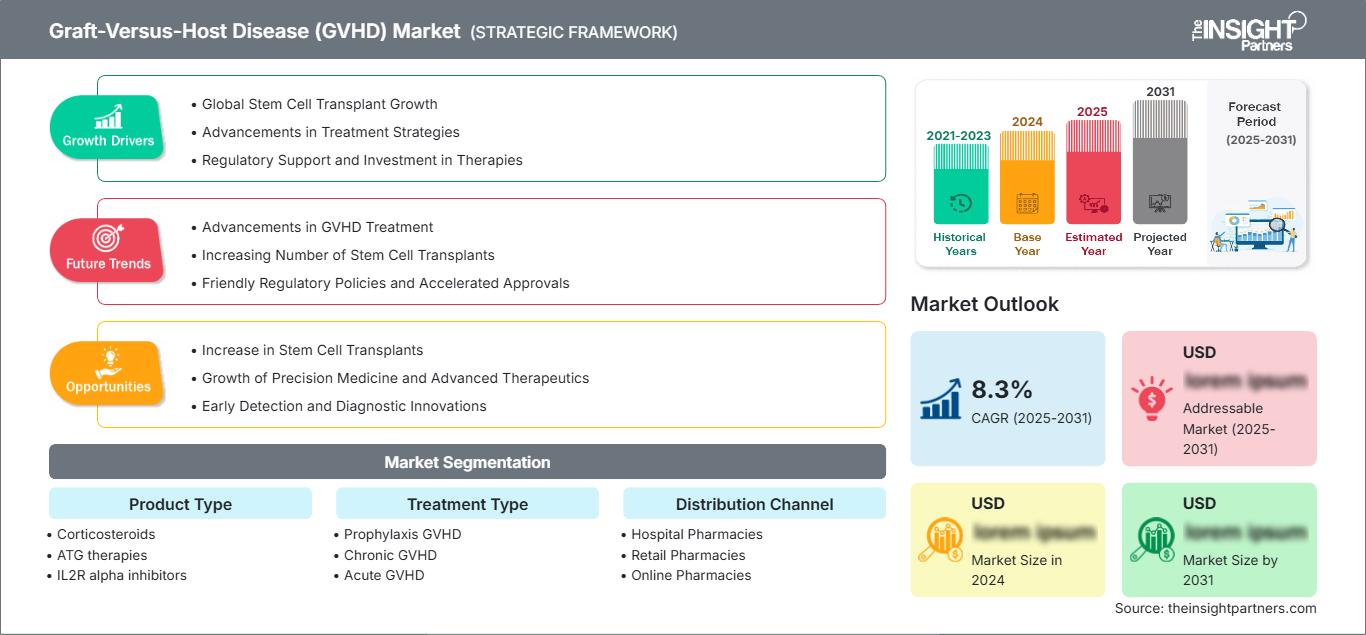
Graft-versus-host disease (GVHD) remains one of the most significant complications following allogeneic stem cell transplantation, creating an ongoing need for effective prevention and treatment strategies. Continuous innovation in immunotherapy and targeted therapeutics is reshaping the clinical landscape while improving patient outcomes.
The Graft-Versus-Host Disease (GVHD) Market is projected to grow from US$ 3,643.58 million in 2024 to US$ 6,285.04 million by 2031, registering a CAGR of 8.1% during 2025 to 2031. Rising stem cell transplantation procedures, advancements in biologics, favorable regulatory support, and increasing investment in precision medicine continue to strengthen market expansion. The industry analysis covers product type, treatment type, distribution channel, and regional performance across North America, Europe, Asia Pacific, South and Central America, and the Middle East and Africa.
Get Sample PDF @ https://www.theinsightpartners.com/sample/TIPRE00006856
Rising Stem Cell Transplants Fuel Demand for Advanced Therapies
The growing number of hematopoietic stem cell transplants worldwide remains the primary driver for GVHD treatment demand. As transplant procedures become more accessible and survival rates improve, the incidence of acute and chronic GVHD continues to increase, creating sustained demand for effective therapeutic interventions.
Healthcare providers are increasingly adopting comprehensive post-transplant management programs that combine immunosuppressive drugs, targeted biologics, and supportive care. Early diagnosis and timely intervention have become essential in minimizing complications and improving long-term survival.
Government initiatives supporting transplant programs, combined with improved healthcare infrastructure in developing economies, are also contributing to broader treatment accessibility.
Innovation in Targeted Therapies Reshapes Treatment Landscape
Therapeutic innovation is transforming GVHD management. Traditional corticosteroids continue to play an important role as first-line therapy, but limitations related to steroid resistance have accelerated the development of targeted treatments.
Emerging classes such as JAK inhibitors, IL2R alpha inhibitors, TNF alpha inhibitors, MTOR inhibitors, and novel biologics are demonstrating improved efficacy while reducing adverse effects associated with conventional therapies. Research into cellular therapies, gene-based approaches, and advanced immunomodulatory treatments is expected to further strengthen future treatment options.
The product landscape covered in the report includes:
- Corticosteroids
- ATG therapies
- IL2R alpha (CD25) inhibitors
- TNF alpha inhibitors
- Calcineurin inhibitors
- MTOR inhibitors
- SOT therapies
- Anti-neoplastic therapies
- Stem Cell Treatments
- Extracorporeal Photophoresis
- Other biologics
These therapeutic innovations are helping physicians deliver more personalized treatment strategies based on disease severity and patient-specific characteristics.
Regional Analysis Highlights North America’s Leadership
North America continues to dominate the global GVHD industry owing to its well-established transplant centers, advanced healthcare infrastructure, strong reimbursement systems, and high adoption of innovative therapies.
The United States represents the largest regional contributor due to increasing transplant volumes, extensive clinical research activities, supportive regulatory frameworks, and significant investments by leading pharmaceutical companies.
Europe maintains a strong position through ongoing clinical collaborations and expanding biologics adoption. Meanwhile, Asia Pacific is anticipated to witness the fastest growth during the forecast period as healthcare investments increase across countries including China, India, Japan, and Australia. Rising awareness, improving diagnostic capabilities, and expanding transplant programs are supporting regional expansion.
Emerging healthcare markets across South and Central America, along with the Middle East and Africa, are also expected to generate new growth opportunities as specialty care becomes more widely available.
Market Segmentation Supports Diverse Treatment Approaches
The GVHD market demonstrates considerable diversity across treatment pathways and distribution channels.
By treatment type, the industry includes:
- Prophylaxis GVHD
- Chronic GVHD
- Acute GVHD
Prophylactic therapies continue gaining attention as clinicians focus on preventing disease development before symptoms appear. Chronic GVHD treatment remains a major revenue contributor due to prolonged therapy requirements, while acute GVHD management benefits from rapid diagnosis and expanding targeted treatment availability.
Distribution channels include hospital pharmacies, retail pharmacies, and online pharmacies. Hospital pharmacies account for the largest share because most advanced therapies are administered within specialized transplant centers under physician supervision.
Competitive Landscape Focuses on Research and Strategic Expansion
Leading pharmaceutical companies continue investing heavily in research, clinical trials, product approvals, and strategic collaborations to strengthen their positions within the evolving GVHD treatment landscape.
Key market participants include:
- Novartis AG
- Bristol-Myers Squibb Company
- Pfizer Inc.
- Neovii Pharmaceuticals AG
- AbbVie Inc.
- Astellas Pharma Inc.
- Merck KGaA
- Soligenix
- Genentech, Inc.
- Incyte
These organizations are expanding their product portfolios through innovative biologics, immunomodulators, and precision medicine initiatives designed to improve therapeutic outcomes while addressing unmet clinical needs.
Interested in Purchasing this Report? Click here @ https://www.theinsightpartners.com/buy/TIPRE00006856
Future Outlook
The Graft-Versus-Host Disease (GVHD) Market is expected to maintain steady growth through 2031, supported by expanding stem cell transplant procedures, continuous innovation in targeted therapeutics, favorable regulatory initiatives, and increasing adoption of precision medicine. Advances in biologics, cellular therapies, and early diagnostic technologies will continue to improve patient management while creating new commercial opportunities.
Related Report:
1) Alzheimer’s Drugs Market Analysis, Trends, and Forecast (2025-2031)
2) Patient-Derived Xenograft Model Market Size & Forecast 2031
3) Bioprocessing Market Analysis and Opportunities by 2031
About Us –
The Insight Partners provides comprehensive syndicated and tailored market research services in the healthcare, technology, and industrial domains. Renowned for delivering strategic intelligence and practical insights, the firm empowers businesses to remain competitive in ever-evolving global markets.
Contact Us:
Ankit Mathur | The Insight Partners
E-mail: ankit.mathur@theinsightpartners.com
Phone: +1-646-491-9876
Also Available in : Korean German Japanese French Chinese Italian Spanish
