Automotive oxygen sensors are critical engine management components that continuously monitor oxygen levels in exhaust gases to optimize the air-to-fuel ratio, improve fuel efficiency, reduce emissions, and support catalytic converter performance. Modern oxygen sensors play an essential role in on-board diagnostics (OBD), emissions compliance, hybrid powertrain management, and real-time engine control. As governments worldwide tighten vehicle emission standards and automakers continue improving fuel economy, oxygen sensors remain indispensable across passenger vehicles, commercial vehicles, and two-wheelers powered by gasoline and hybrid engines.
Market Overview
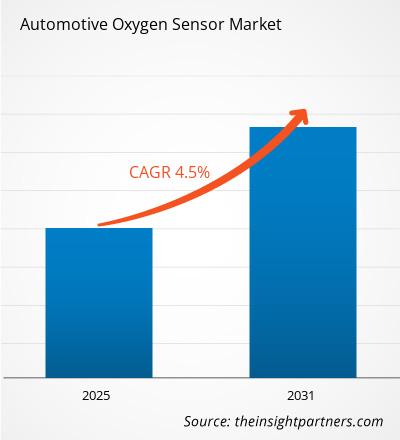
The Automotive Oxygen Sensor Market was valued at US$ 6.0 Billion in 2025 and is projected to reach US$ 11.07 Billion by 2034, registering a CAGR of 7.04% during the forecast period 2026–2034. Market growth is driven by increasingly stringent emission regulations, growing adoption of hybrid vehicles, expanding vehicle production, and rising demand for replacement oxygen sensors in aging vehicle fleets. Continuous advancements in ceramic sensing materials, heater technologies, contamination resistance, and wideband sensing capabilities continue supporting market expansion across global automotive industries.
Key Market Insights
- Market Size (2025): US$ 6.0 Billion
- Forecast Market Size (2034): US$ 11.07 Billion
- CAGR (2026–2034): 7.04%
- Key Growth Driver: Rising demand for emission control systems and advanced engine management technologies
- Major Trend: Increasing adoption of wideband zirconia oxygen sensors for improved fuel efficiency and emission compliance
- Forecast Period: 2026–2034
Get a Sample PDF of the Report: https://www.theinsightpartners.com/sample/TIPRE00013529
Market Drivers
Stringent Vehicle Emission Regulations
Governments across major automotive markets continue implementing stricter emission standards, increasing demand for highly accurate oxygen sensors that improve combustion efficiency and reduce harmful exhaust emissions.
Growth of Hybrid Vehicle Production
Hybrid powertrains require precise air-to-fuel ratio control under varying operating conditions, driving the adoption of advanced oxygen sensing technologies.
Expanding Automotive Aftermarket
Aging vehicle fleets are creating sustained replacement demand as oxygen sensors gradually lose responsiveness, affecting fuel economy, engine performance, and emissions compliance.
Advancements in Engine Management Systems
Modern engine control units rely on high-performance oxygen sensors to support real-time combustion optimization, catalyst protection, and onboard diagnostic functions.
Market Trends
Growing Adoption of Wideband Sensors
Automotive manufacturers are increasingly implementing wideband zirconia oxygen sensors that provide more accurate air-to-fuel ratio measurements across a broader operating range.
Improved Heater Technologies
Manufacturers are developing faster warm-up heaters that reduce cold-start emissions while improving sensor response times and overall engine efficiency.
Enhanced Ceramic Materials
Continuous advancements in zirconia ceramics and protective coatings are improving sensor durability, contamination resistance, and long-term operational reliability.
Expansion of Hybrid Powertrains
Growing production of hybrid passenger vehicles is increasing demand for advanced oxygen sensors capable of supporting frequent engine start-stop operations and dynamic combustion control.
Get the Premium Research Report @ https://www.theinsightpartners.com/buy/TIPRE00013529
Regional Analysis
North America
North America accounted for approximately 22%–26% of the global market in 2025 and is projected to grow at a CAGR of 5.8%–6.8% during 2026–2034. Market growth is supported by mandatory vehicle inspection programs, expanding hybrid vehicle fleets, aging gasoline-powered vehicles, and increasing aftermarket replacement demand. The US represented approximately 80%–85% of North America’s market in 2025 and is expected to register a CAGR of 5.9%–6.9%, driven by light truck production, advanced diagnostics, emissions compliance requirements, and replacement sensor demand.
Europe
Europe held approximately 24%–28% of the market in 2025 and is anticipated to grow at a CAGR of 5.4%–6.4%. Germany, France, the UK, Italy, and Spain continue investing in advanced engine technologies, emissions reduction systems, and hybrid vehicle production to comply with increasingly stringent environmental regulations.
Asia-Pacific
Asia-Pacific captured approximately 38%–42% of the global market in 2025 and is projected to register the fastest regional growth with a CAGR of 7.8%–8.8% during 2026–2034. China, Japan, South Korea, India, and Southeast Asian countries continue expanding automotive manufacturing, hybrid vehicle production, and emissions control technologies, creating significant opportunities for oxygen sensor manufacturers.
Middle East and Africa
The Middle East and Africa are gradually increasing investments in automotive manufacturing, vehicle maintenance services, emissions monitoring, and transportation infrastructure, supporting long-term demand for automotive oxygen sensors.
Segment Analysis
By Product Type
The Narrow Band Zirconia Sensor segment accounted for approximately 44%–48% of the market in 2025 and is projected to grow at a CAGR of 5.9%–6.9% through 2034. Continued deployment across conventional gasoline-powered vehicles and established engine management systems supports the segment’s dominant market position.
By Product Type
The Wideband Zirconia Sensor segment represented approximately 30%–34% of the market in 2025 and is expected to register the fastest growth with a CAGR of 8.2%–9.2%. Increasing adoption in modern gasoline engines, hybrid vehicles, advanced engine management systems, and stringent emissions compliance applications continues driving rapid market expansion.
Competitive Landscape
The Automotive Oxygen Sensor Market remains highly competitive as global automotive component manufacturers continue investing in advanced ceramic sensing technologies, emissions control solutions, and intelligent engine management systems. Companies are strengthening their competitive positions through innovations in zirconia sensor materials, fast-response heater technologies, contamination-resistant coatings, calibration accuracy, extended service life, and OEM-qualified product portfolios. Strategic collaborations with vehicle manufacturers, engine developers, aftermarket distributors, and regional automotive suppliers continue accelerating market adoption across both original equipment and replacement applications.
Key Players
- Niterra Co., Ltd.
- Robert Bosch GmbH
- DENSO Corporation
- PHINIA Inc.
- Hyundai Kefico Corporation
- United Automotive Electronic Systems Co., Ltd.
- Zhejiang VOLKSE Auto Parts Co., Ltd.
- Pucheng Sensors (Shanghai) Co., Ltd.
- Airblue Auto Parts Co., Ltd.
- Trans Auto Parts Co., Ltd.
- PAILE International Trade Co., Ltd.
- ACHR Autoparts Co., Ltd.
Emerging Trends
The automotive oxygen sensor industry is evolving through advanced wideband sensing technologies, fast light-off heater systems, improved zirconia ceramic materials, contamination-resistant coatings, enhanced onboard diagnostics integration, hybrid powertrain optimization, intelligent calibration technologies, expanded aftermarket product coverage, durable connector systems, and next-generation emissions monitoring solutions. Manufacturers are developing high-performance oxygen sensors that deliver faster response times, improved fuel efficiency, superior emissions control, greater thermal stability, longer operational life, enhanced diagnostic accuracy, and compliance with evolving global emission standards. These technological advancements are expected to create significant growth opportunities across passenger vehicles, commercial vehicles, hybrid powertrains, aftermarket services, and automotive OEM production throughout the forecast period.
Future Outlook
The future outlook for the Automotive Oxygen Sensor Market remains positive as global vehicle production, hybrid vehicle adoption, and emission compliance requirements continue expanding. Ongoing innovation in sensing materials, engine management technologies, onboard diagnostics, and emissions control systems is expected to support sustained market growth through 2034.
Related Market Research Reports
Large Format Inkjet Printers LFP Market Size, Share & Demand by 2034
Emerging Lighting Technologies Market Size, Growth & Demand by 2034
Coriolis Mass Flow Controller Market Share, Demand & Forecast 2031
Motor Controller Market Growth & Key Opportunities 2034
About The Partners
The Insight Partners is a Insight global leader in market research, delivering comprehensive analysis and actionable insights across diverse industries. The company empowers decision-makers with data-driven intelligence to navigate evolving markets and accelerate growth.
Contact Us:
- Contact Person: Ankit Mathur
- E-mail: ankit.mathur@theinsightpartners.com
- Phone: +1-646-491-9876
