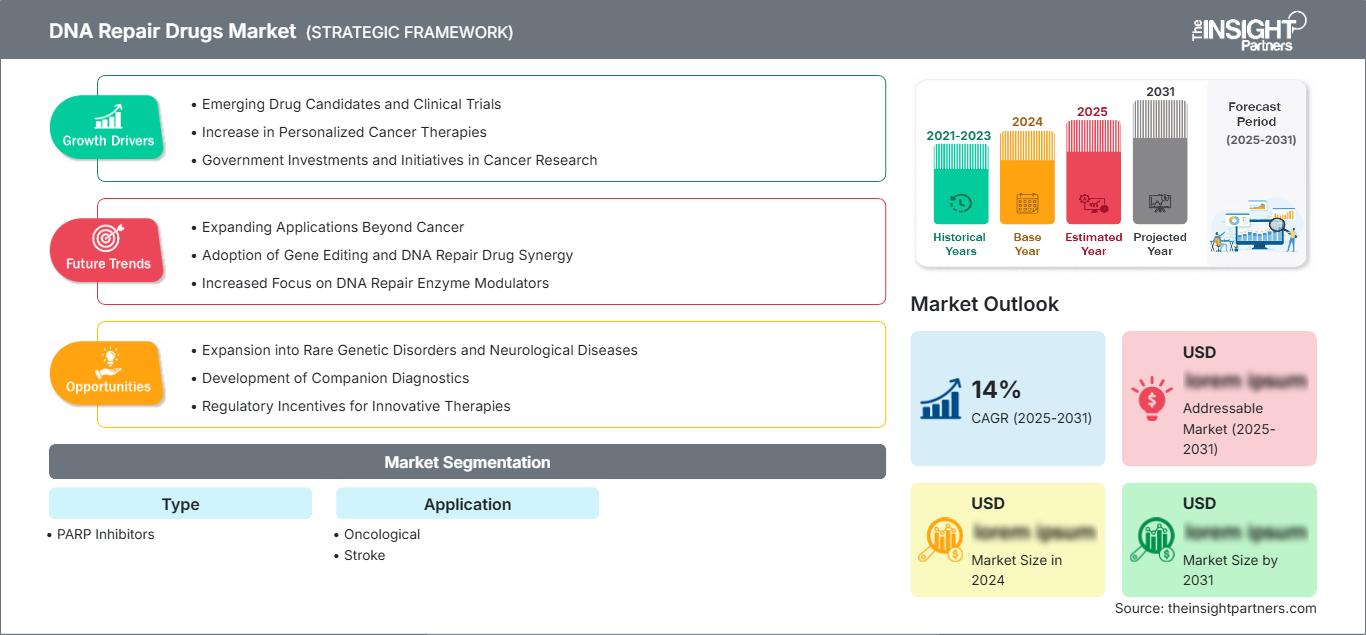
The global DNA repair drugs industry is gaining significant attention as precision medicine and targeted therapeutics continue to reshape modern healthcare. Growing investments in oncology research, advancements in molecular diagnostics, and expanding clinical pipelines are strengthening the development of innovative treatment options.
The DNA Repair Drugs Market was valued at US$ 8.22 billion in 2025 and is projected to reach US$ 16.86 billion by 2034, registering a CAGR of 8.31% during the forecast period 2026 to 2034. DNA Repair Drugs Market is witnessing steady expansion due to increasing demand for personalized cancer therapies and the emergence of novel drug candidates. The rising prevalence of cancer, supportive government initiatives, and continuous research into DNA damage response pathways are contributing to sustained industry growth.
Get Sample PDF @ https://www.theinsightpartners.com/sample/TIPRE00008173
Growing Role of DNA Repair Therapies in Precision Medicine
DNA repair drugs are designed to target cellular mechanisms responsible for repairing damaged DNA, making them particularly effective in treating cancers with defective DNA repair pathways. PARP inhibitors remain the most established class of these therapies and continue to gain widespread clinical acceptance for ovarian, breast, prostate, and pancreatic cancers.
The increasing adoption of genomic profiling has accelerated the identification of patients who can benefit from targeted DNA repair therapies. Healthcare providers are increasingly integrating biomarker testing into treatment protocols, allowing physicians to personalize therapies while improving treatment outcomes and reducing unnecessary toxicity.
In addition to oncology, researchers are exploring the potential application of DNA repair mechanisms in neurological disorders, inherited genetic diseases, and autoimmune conditions, significantly expanding future therapeutic opportunities.
Key Growth Drivers Supporting Industry Expansion
Several important factors are accelerating the adoption of DNA repair drugs across global healthcare systems.
One of the primary drivers is the growing pipeline of investigational therapies entering clinical trials. Numerous pharmaceutical and biotechnology companies are investing heavily in research programs focused on next generation DNA repair targets, increasing the likelihood of new product approvals throughout the forecast period.
The rapid evolution of personalized oncology is another major growth catalyst. Precision medicine relies on understanding the genetic profile of tumors, making DNA repair therapies highly valuable for patients carrying BRCA mutations and other DNA repair deficiencies.
Government funding for cancer research also continues to strengthen innovation. Public health organizations, academic institutions, and private companies are collaborating to develop advanced therapies through grants, clinical partnerships, and regulatory support.
Emerging Trends Transforming the Industry
The DNA repair drugs landscape is evolving beyond traditional oncology applications.
Researchers are investigating therapies that target DNA repair pathways in neurodegenerative diseases such as Alzheimer’s disease and Parkinson’s disease. These expanding indications may significantly increase long term commercial opportunities.
Another important trend is the growing integration of gene editing technologies with DNA repair therapeutics. Future combination approaches involving CRISPR based gene editing and DNA repair modulation may enable highly targeted treatment strategies for complex genetic disorders.
In addition, pharmaceutical companies are focusing on DNA repair enzyme modulators that selectively regulate enzymes involved in DNA damage response pathways. These innovative approaches may enhance treatment effectiveness while minimizing adverse effects.
Regional Outlook and Competitive Landscape
North America continues to maintain a leading position due to strong biotechnology infrastructure, extensive clinical research activities, high healthcare spending, and supportive regulatory frameworks. The United States remains a major contributor because of increasing personalized cancer therapies, active clinical trials, and government investments in oncology research.
Europe also represents a significant regional contributor through strong academic research networks and growing adoption of precision medicine. Meanwhile, Asia Pacific is expected to witness rapid growth supported by expanding healthcare infrastructure, increasing cancer incidence, improving research capabilities, and rising pharmaceutical investments in countries such as China, Japan, and India.
The report covers North America, Europe, Asia Pacific, South and Central America, and the Middle East and Africa, providing detailed country level analysis and market forecasts through 2034.
Key Players
- 4SC AG
- Bristol Myers Squibb
- British Columbia Cancer Agency
- Cambridge University Hospitals NHS Foundation Trust
- Genentech
- Jiangsu Hengrui Medicine
- Johnson & Johnson
- Jonsson Comprehensive Cancer Center
- Karyopharm Therapeutics
- TESARO, Inc.
These organizations continue to strengthen their competitive positions through clinical research, strategic collaborations, product innovation, and expansion of precision oncology portfolios.
Market Segmentation Overview
Based on type, the market is segmented into PARP Inhibitors and Other therapies. PARP inhibitors currently account for a significant share due to their established clinical effectiveness across multiple cancer indications.
By application, the market is categorized into Oncological and Stroke applications. Oncology remains the dominant segment as DNA repair therapies continue to become an integral component of targeted cancer treatment strategies.
Interested in Purchasing this Report? Click here @ https://www.theinsightpartners.com/buy/TIPRE00008173
Future Outlook
The future of the DNA Repair Drugs Market remains highly promising as advances in genomics, biomarker driven treatment selection, and targeted therapeutics continue to reshape disease management. Continued investment in clinical research, expanding applications beyond cancer, development of companion diagnostics, and supportive regulatory incentives are expected to unlock substantial growth opportunities.
Related Report:
1) Bone Cement Market Analysis, Size, and Share by 2031
2) Anesthesia Drugs Market Analysis, Trends, and Forecast by 2031
3) Bipolar Disorders Treatment Market Analysis and Forecast by Size, Share, Growth, Trends 2031
About Us –
The Insight Partners provides comprehensive syndicated and tailored market research services in the healthcare, technology, and industrial domains. Renowned for delivering strategic intelligence and practical insights, the firm empowers businesses to remain competitive in ever-evolving global markets.
Contact Us:
Ankit Mathur | The Insight Partners
E-mail: ankit.mathur@theinsightpartners.com
Phone: +1-646-491-9876
Also Available in : Korean German Japanese French Chinese Italian Spanish
