Naval warfare and maritime security operations are undergoing a profound transformation worldwide. As global geopolitical tensions rise and critical maritime routes face increasing threats, the demand for advanced underwater surveillance and mine countermeasure (MCM) solutions has intensified. Among these technologies, mine hunting sonar systems play a pivotal role in detecting, classifying, and identifying sea mines, ensuring safe passage for commercial ships and naval fleets alike.
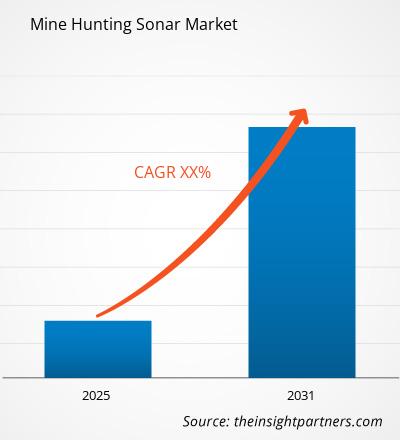
According to a comprehensive research report by The Insight Partners, the Mine Hunting Sonar Market size is expected to reach US$ 1,069.12 Million by 2034 from US$ 378.56 Million in 2025. The market is estimated to record a CAGR of 12.23% from 2026 to 2034. This strong growth rate underscores the critical role underwater detection systems play in modern defense strategies and maritime traffic security.
Market Dynamics and Growth Drivers
The primary factor propelling the mine hunting sonar market is the continuous modernization of defense fleets across major naval powers. Traditional naval mine countermeasures often relied on risky, human-centric operations that placed divers and ships at direct risk. Modern mine hunting sonar systems, especially those integrated into unmanned underwater vehicles (UUVs) and autonomous underwater vehicles (AUVs), allow naval forces to scan large ocean areas safely and efficiently from a distance.
Key factors contributing to market expansion include:
Escalating Geopolitical Tensions: Territorial disputes, littoral warfare concerns, and security risks near critical chokepoints (such as straits and major shipping channels) have prompted defense agencies to invest heavily in advanced mine countermeasure capabilities.
Shift Towards Autonomous Platforms: The integration of Synthetic Aperture Sonar (SAS) and multi-beam sonar systems onto autonomous platforms has revolutionized underwater mapping. Autonomous systems provide high-resolution imaging capable of identifying buried or stealth sea mines in complex coastal environments.
Upgradation of Legacy Systems: Defense ministries globally are upgrading older surface vessels and submarines with modern high-frequency sonar solutions to replace outdated sonar technologies.
Get a PDF Sample- https://www.theinsightpartners.com/sample/TIPRE00019767
Key Market Players
The mine hunting sonar industry is characterized by strong competition among global defense contractors and specialized marine technology companies. These organizations continue to invest heavily in research and development to introduce lightweight, high-resolution sonar systems tailored for both crewed vessels and unmanned platforms.
Prominent players operating in the global mine hunting sonar market include:
ARMELSAN
ATLAS ELEKTRONIK GmbH
Cirrus
Kongsberg Maritime
Kraken Robotics
Northrop Grumman
Raytheon Technologies
Sonardyne
Thales Group
BAE Systems
These key market participants focus on strategic collaborations, government defense contracts, and continuous product innovation to strengthen their presence in the global maritime defense sector.
Technological Advancements and Trends
Technological innovations have significantly enhanced the performance of mine hunting sonars. Early sonar systems often struggled with target classification in cluttered or shallow waters. Modern systems overcome these hurdles by leveraging advanced signal processing, high-frequency imaging, and artificial intelligence (AI) algorithms.
Synthetic Aperture Sonar (SAS): SAS technology offers significantly higher spatial resolution compared to conventional side-scan sonars. This enables operators to distinguish between harmless seafloor debris and actual naval mines with far greater accuracy, reducing false alarm rates.
Multi-Frequency Systems: Dual and multi-frequency sonar solutions allow defense personnel to perform long-range detection while simultaneously obtaining high-resolution imagery for precise mine identification.
AI and Machine Learning Integration: Integrating AI algorithms into sonar software enables real-time automated target recognition (ATR). ATR rapidly analyzes vast amounts of acoustic data, identifying potential mine-like objects faster than human operators can manually process raw sonar feeds.
Get Full Copy of This Report- https://www.theinsightpartners.com/buy/TIPRE00019767
Regional Insights
North America and Europe currently represent significant shares in the mine hunting sonar market due to substantial defense budgets, strong naval traditions, and the presence of major industry key players. European nations, in particular, are heavily focused on joint MCM programs aimed at securing critical European sea lanes.
Meanwhile, the Asia-Pacific region is projected to experience rapid growth over the forecast period. Increased maritime disputes, expanding naval fleets in countries like India, Japan, and South Korea, and growing investments in maritime domain awareness drive the adoption of modern sonar systems across the region.
Future Outlook
The future of the mine hunting sonar market is poised for transformative growth as naval doctrine increasingly prioritizes unmanned, network-centric warfare. Over the next decade, the market will witness heightened reliance on AI-driven automated target recognition, allowing autonomous underwater vehicles to detect, classify, and neutralize underwater threats with minimal human intervention. As maritime security risks evolve and nations seek to safeguard strategic sea lines of communication, mine hunting sonar systems will remain an essential cornerstone of global naval defense capabilities through 2034 and beyond.
Related Reports-
About Us
The Insight Partners is a one-stop industry research provider of actionable intelligence. We help our clients in getting solutions to their research requirements through our syndicated and consulting research services. We specialize in industries such as Semiconductor and Electronics, Aerospace and Defense, Automotive and Transportation, Biotechnology, Healthcare IT, Manufacturing and Construction, Medical Devices, Technology, Media, and Telecommunications, as well as chemicals and Materials.
Contact Us
If you have any queries about this report or if you would like further information, don’t hesitate to get in touch with us:
Contact Person: Ankit Mathur
E-mail: ankit.mathur@theinsightpartners.com
