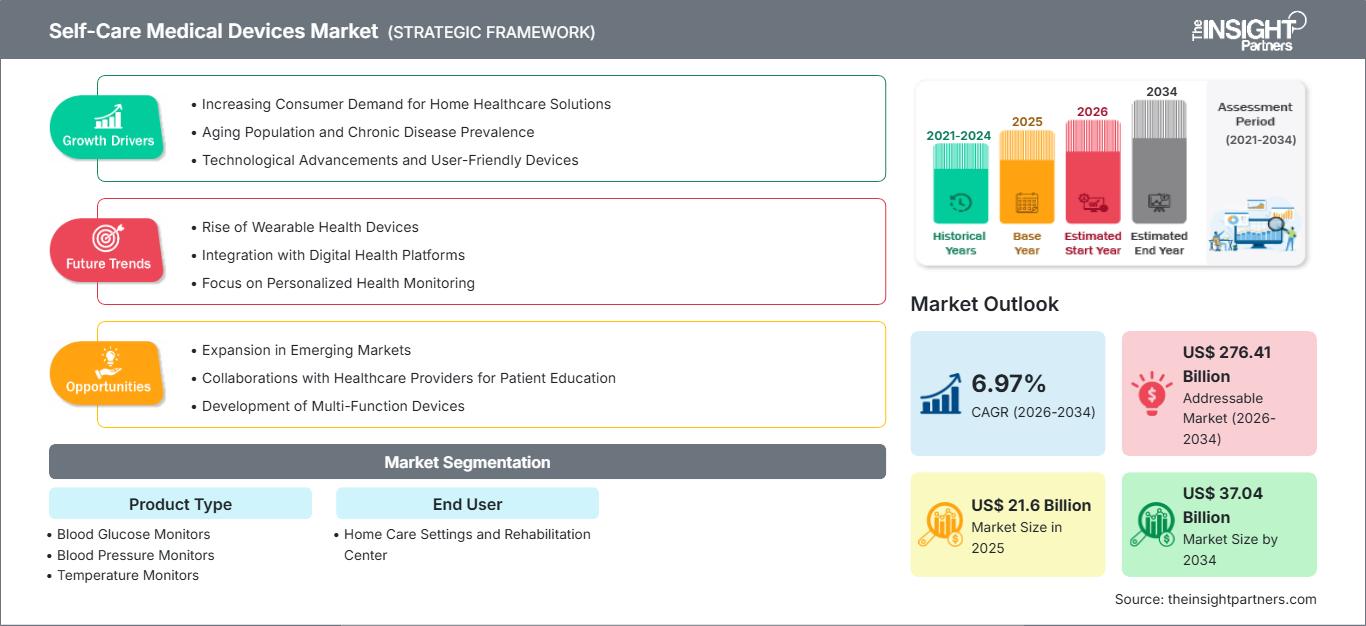
The Self-Care Medical Devices Market size is expected to reach US$ 37.04 Billion by 2034 from US$ 21.6 Billion in 2025. The market is estimated to record a CAGR of 6.97% from 2026 to 2034.
The market is experiencing sustained growth as consumers increasingly adopt connected healthcare devices that allow regular monitoring of vital health parameters. The growing popularity of remote patient monitoring, wearable technologies, and digital health platforms is transforming personal healthcare management. Healthcare providers are also encouraging patients to use self-monitoring devices to improve disease management, reduce hospital visits, and support long-term treatment adherence.
Get Sample PDF – https://www.theinsightpartners.com/sample/TIPRE00040121
Key Market Drivers
The rising burden of chronic diseases such as diabetes, hypertension, cardiovascular disorders, and respiratory illnesses remains one of the major factors driving demand for self-care medical devices. Patients increasingly rely on home monitoring devices to track their health conditions and share data with healthcare professionals for timely clinical decisions.
Growing awareness regarding preventive healthcare is also encouraging consumers to regularly monitor blood pressure, blood glucose, body temperature, oxygen saturation, and body weight using user-friendly medical devices. Early detection of health abnormalities allows timely medical intervention and improves overall health management.
The rapid expansion of telemedicine and remote healthcare services is creating additional opportunities for market growth. Self-care medical devices play a critical role in enabling physicians to remotely monitor patients while reducing the need for frequent hospital visits. This trend is particularly beneficial for elderly patients and individuals with long-term medical conditions.
Increasing healthcare expenditure, aging populations, and greater consumer interest in wellness and fitness are further contributing to the adoption of advanced home healthcare technologies worldwide.
Technological Advancements Transforming Home Healthcare
Technological innovation continues to reshape the self-care medical devices market. Manufacturers are introducing smart, connected devices capable of transmitting real-time health data through wireless connectivity and mobile applications.
Artificial intelligence and cloud-based healthcare platforms are improving disease monitoring by providing personalized insights and enabling early identification of potential health risks. Integration with smartphones and wearable ecosystems enhances user convenience while supporting continuous health tracking.
Miniaturization of medical sensors has led to the development of compact, lightweight, and portable devices that are easier for patients to use at home. Improved battery life, digital displays, automated measurements, and user-friendly interfaces continue to increase consumer acceptance across all age groups.
Manufacturers are also focusing on improving device accuracy, cybersecurity, and interoperability to ensure reliable healthcare data management within digital health ecosystems.
Expanding Applications Across Healthcare
Self-care medical devices are widely utilized for monitoring chronic diseases, preventive healthcare, rehabilitation, and general wellness management. Blood glucose monitoring systems remain essential for diabetes management, while blood pressure monitors support cardiovascular health monitoring.
Pulse oximeters have become valuable tools for monitoring respiratory conditions, whereas digital thermometers continue to play an important role in detecting infections and monitoring body temperature. Smart weighing scales, ECG monitoring devices, and wearable health trackers are increasingly integrated into daily healthcare routines.
Healthcare professionals are also recommending self-care devices for post-operative recovery, elderly care, pregnancy monitoring, and chronic disease management. Their ability to provide continuous health data improves treatment effectiveness and enhances patient engagement in personal healthcare.
Competitive Landscape
The self-care medical devices market is highly competitive, with leading companies focusing on product innovation, digital integration, strategic collaborations, and expanding global distribution networks. Manufacturers continue investing in connected healthcare technologies that improve monitoring accuracy, patient convenience, and remote clinical support.
Partnerships between medical device manufacturers, healthcare providers, and digital health companies are accelerating the development of comprehensive home healthcare solutions. Continuous investments in research and development are expected to introduce increasingly sophisticated self-monitoring technologies during the forecast period.
Top Players in the Self-Care Medical Devices Market
- Omron Healthcare
- Abbott Laboratories
- Philips Healthcare
- Medtronic
- F. Hoffmann-La Roche
- Johnson & Johnson
- Dexcom
- GE Healthcare
- Withings
- A&D Medical
Regional Market Insights
North America holds a significant share of the self-care medical devices market due to its advanced healthcare infrastructure, widespread adoption of digital health technologies, and growing demand for home healthcare services. High healthcare expenditure, increasing chronic disease prevalence, and favorable reimbursement policies continue to support market expansion across the region.
Europe remains an important market driven by rising awareness of preventive healthcare, expanding elderly populations, and continuous innovation in connected medical devices. Healthcare providers across the region are increasingly promoting home-based patient monitoring to improve healthcare efficiency.
Get Full Copy of This Report @ https://www.theinsightpartners.com/buy/TIPRE00040121
The Asia-Pacific region is expected to experience strong growth owing to expanding healthcare infrastructure, increasing disposable incomes, rising adoption of digital health technologies, and growing awareness of personal health management. Rapid urbanization and increasing investments in healthcare modernization are further contributing to regional market development.
Future Outlook
The future of the self-care medical devices market remains highly promising as healthcare systems increasingly emphasize preventive care, remote patient monitoring, and personalized healthcare management. Continuous advancements in artificial intelligence, wearable technologies, wireless connectivity, and cloud-based healthcare platforms will further enhance the capabilities of self-care medical devices.
Growing consumer preference for home-based healthcare, expanding telemedicine services, and increasing adoption of connected health ecosystems are expected to create significant growth opportunities throughout the forecast period. As healthcare providers continue encouraging patient-centered care and digital health integration, the demand for innovative self-care medical devices is anticipated to grow steadily through 2034, supporting improved healthcare accessibility, patient engagement, and long-term disease management.
Related Reports @
Patient Monitoring Device Market Drivers, Opportunities, Trends, and Forecasts by 2034
Homecare Medical Beds Market Size, Growth & Trends by 2034
About Us –
The Insight Partners provides comprehensive syndicated and tailored market research services in the healthcare, technology, and industrial domains. Renowned for delivering strategic intelligence and practical insights, the firm empowers businesses to remain competitive in ever-evolving global markets.
Contact Us:
Contact Person: Ankit Mathur
E-mail: ankit.mathur@theinsightpartners.com
Phone: +1-646-491-9876
